
The Question of Texture: A Guide to Upholstery
Sheepskin: the one that cannot be replicated
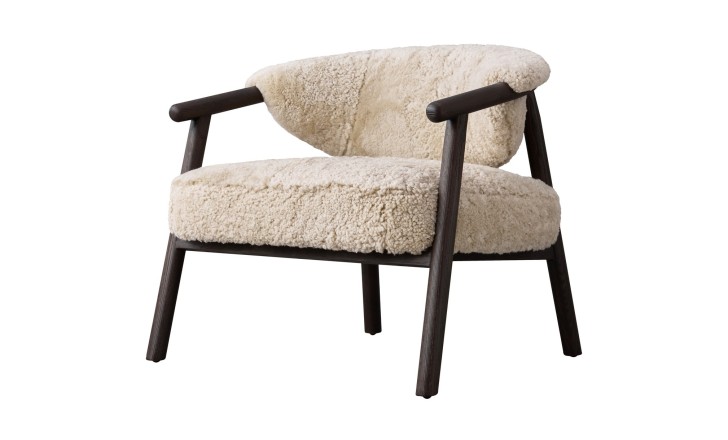
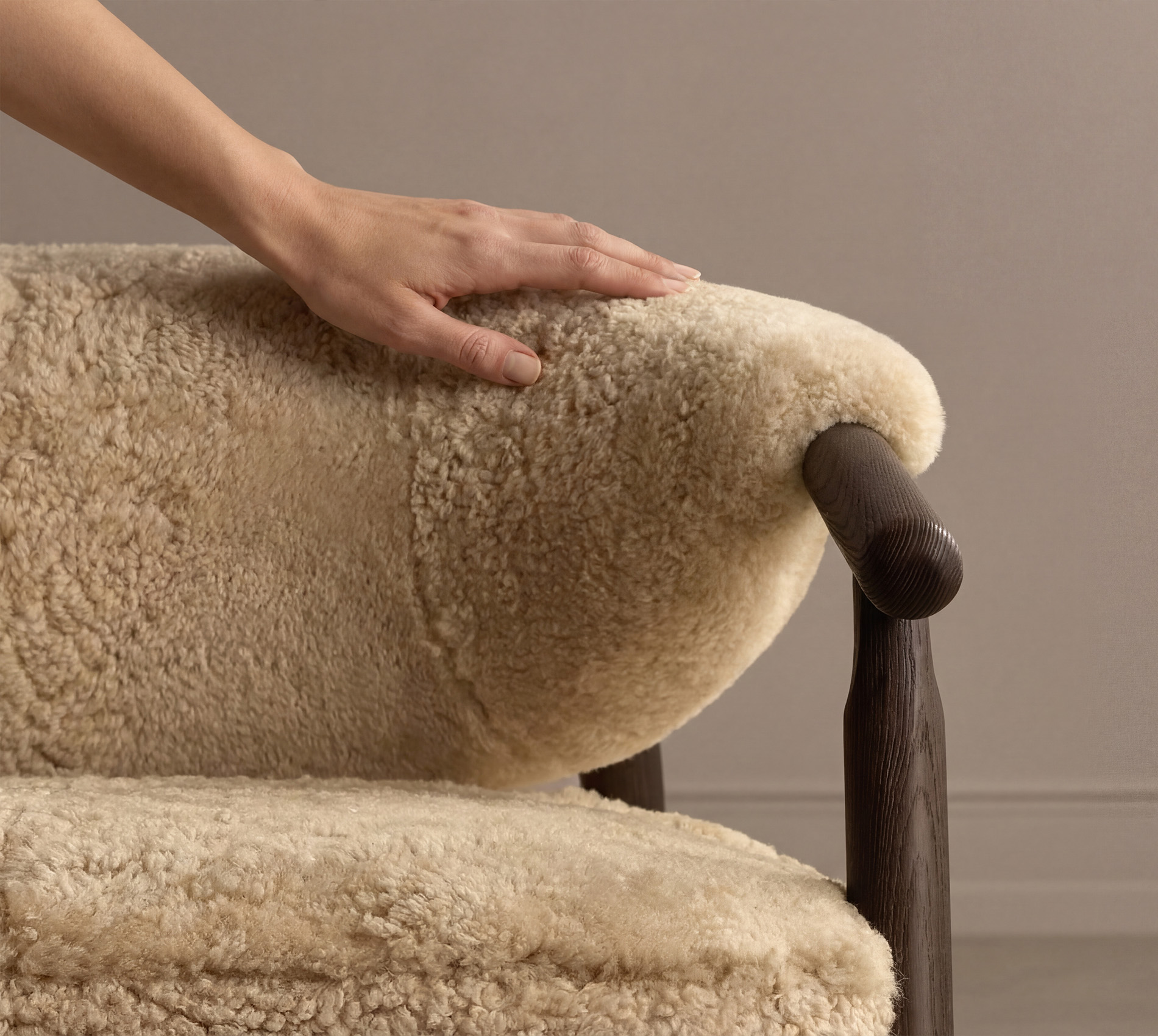
Natural sheepskin occupies a category of its own. The surface is alive in a way that no manufactured fabric quite achieves – each piece differs slightly in the density and direction of its curl, which means no two chairs are identical. In strong light, sheepskin appears almost sculptural; in softer light, it becomes something closer to warmth made visible.
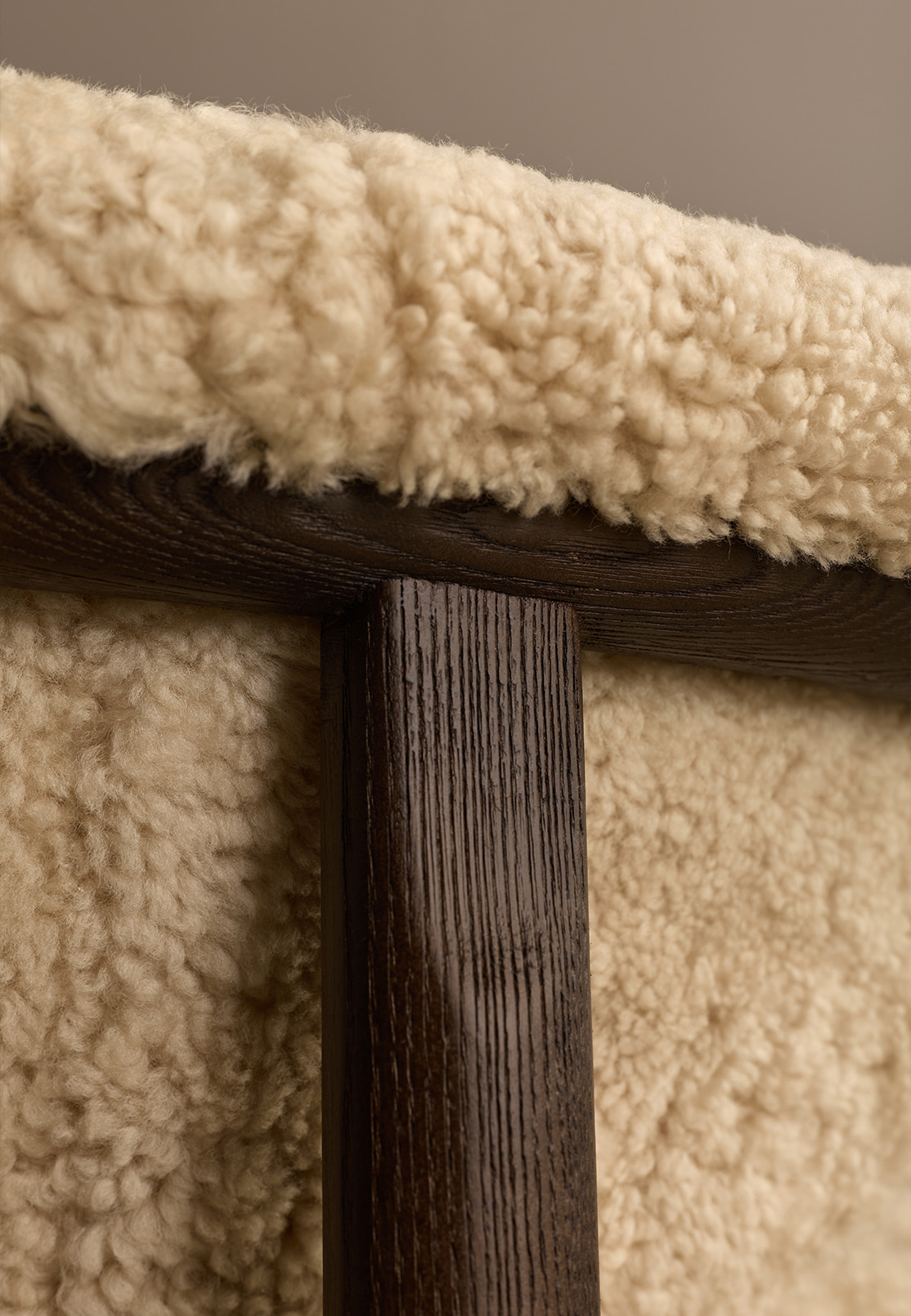
There is also a quality that photographs cannot communicate: the way sheepskin responds to touch. A hand resting on the arm of the chair, or brushing the back as you sit down, almost instinctively begins to smooth the pile. It is the most unapologetically tactile choice in the collection – and like all natural materials, it improves with time, softening gradually without losing its character.
Smooth pile: when the fabric steps back
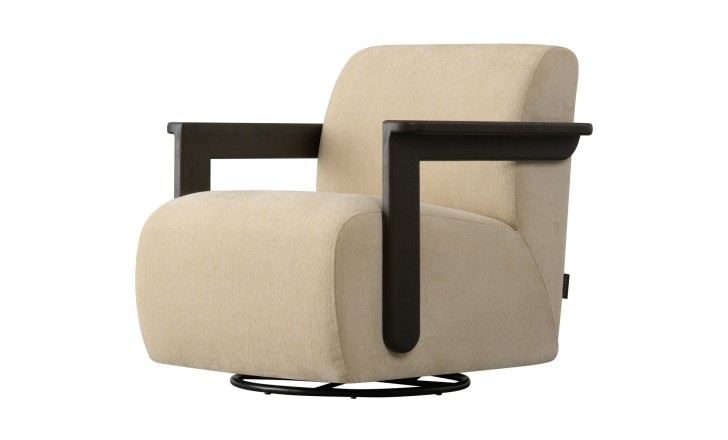
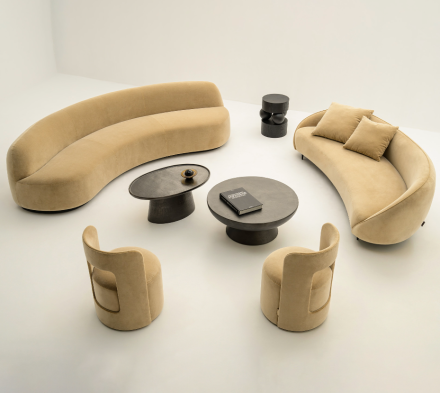
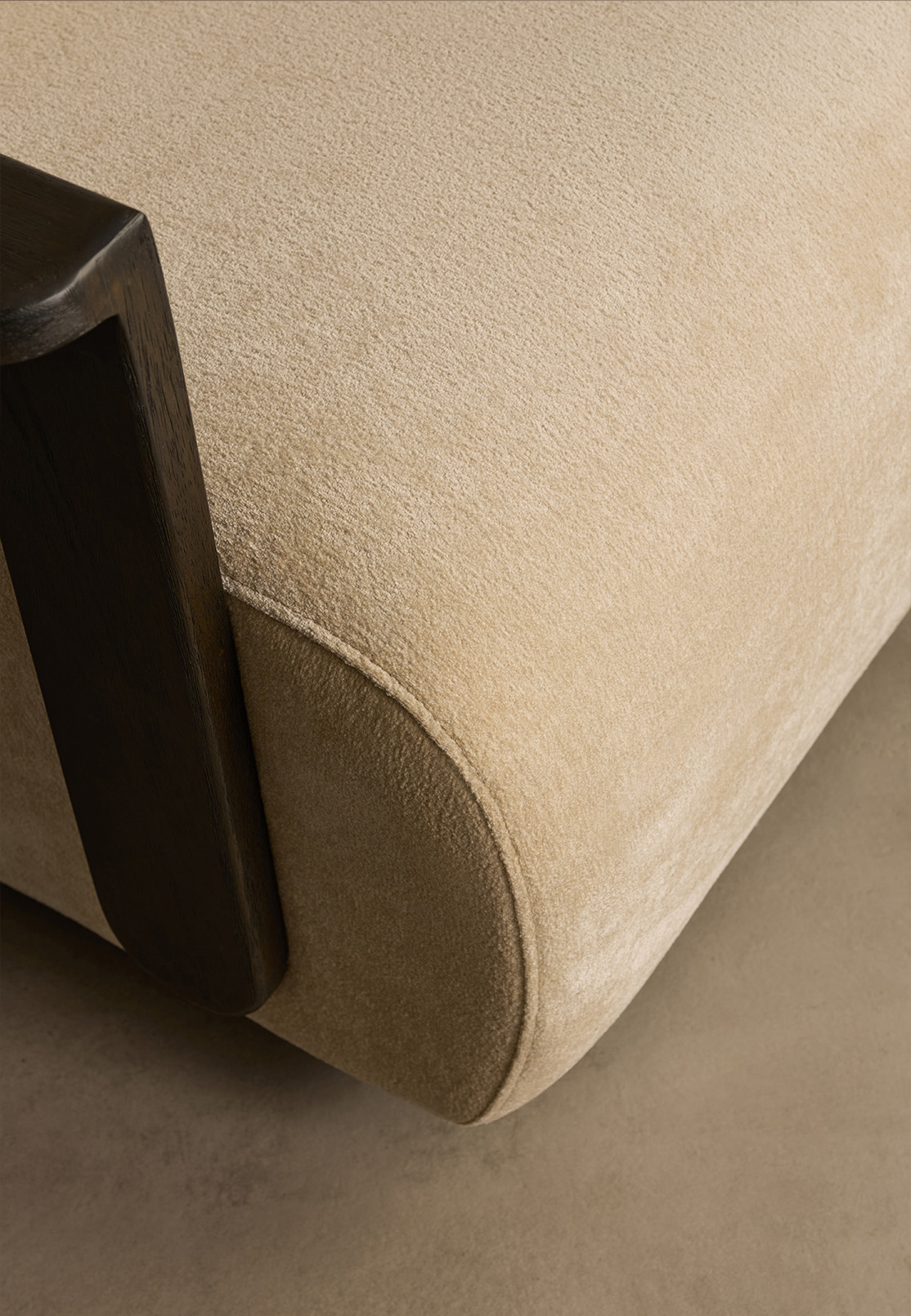
Not every fabric wants to be noticed. Micro-pile and alpaca-like surfaces – fine, flat, with an almost imperceptible nap – do something different: they let the form of the piece come forward. Rather than scattering or absorbing light, they let it settle, creating soft gradients that follow the curves of the upholstery. In a pale sand or beige, this kind of fabric makes a chair feel almost weightless – the upholstery equivalent of negative space. It is also one of the more practical choices for high-use pieces: the flat surface is easy to brush clean and does not trap dust the way looped fabrics can.
Velvet and chenille: the ones that hold the light
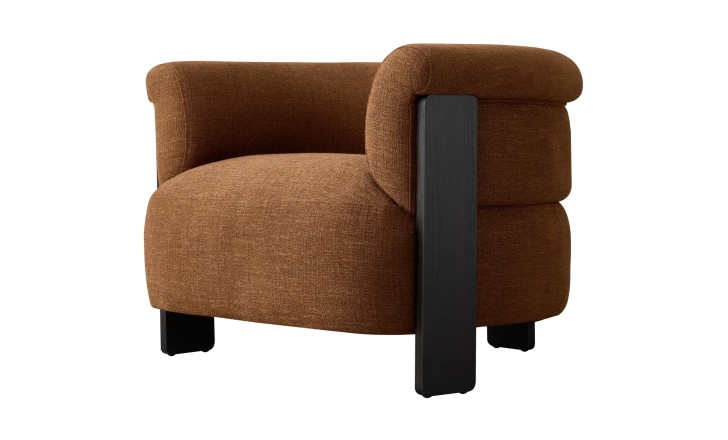
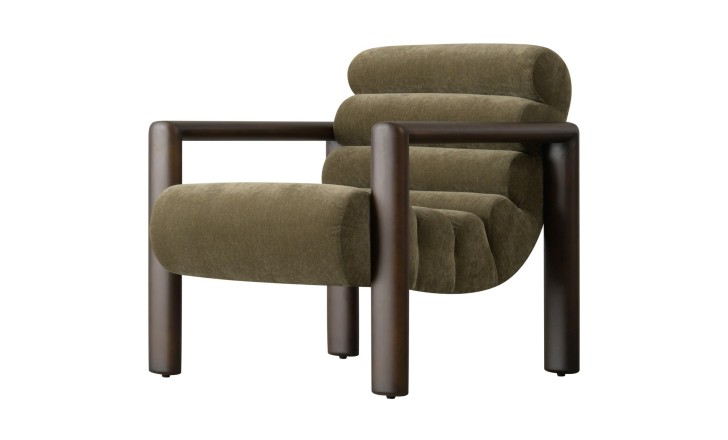
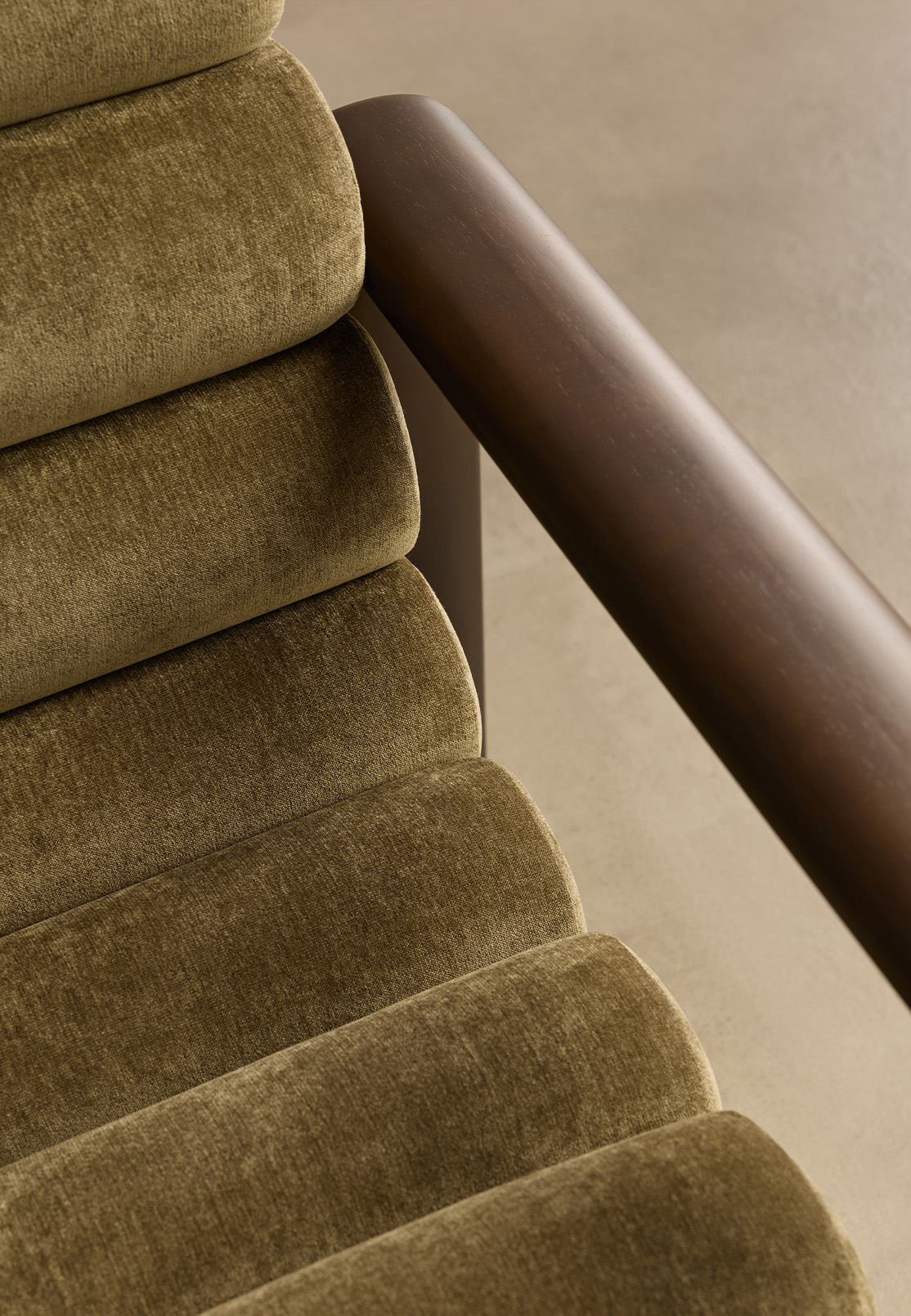
Some fabrics scatter light, others absorb it. Velvet and chenille do neither – they hold it, and release it selectively depending on the angle. Run a hand across velvet and the colour shifts; catch it from the side in afternoon sun and it deepens. Chenille has a slightly rougher hand than velvet proper, with a more visible fibre structure, but shares the same fundamental quality: a surface that makes colour look richer than it is. In golden amber or deep olive, these fabrics have a warmth that is particular to the well-appointed interior – the kind of room that looks better as the day gets later. Both reward occasional brushing in the direction of the pile, though neither is as demanding as their reputation suggests.
Bouclé: one family, many characters
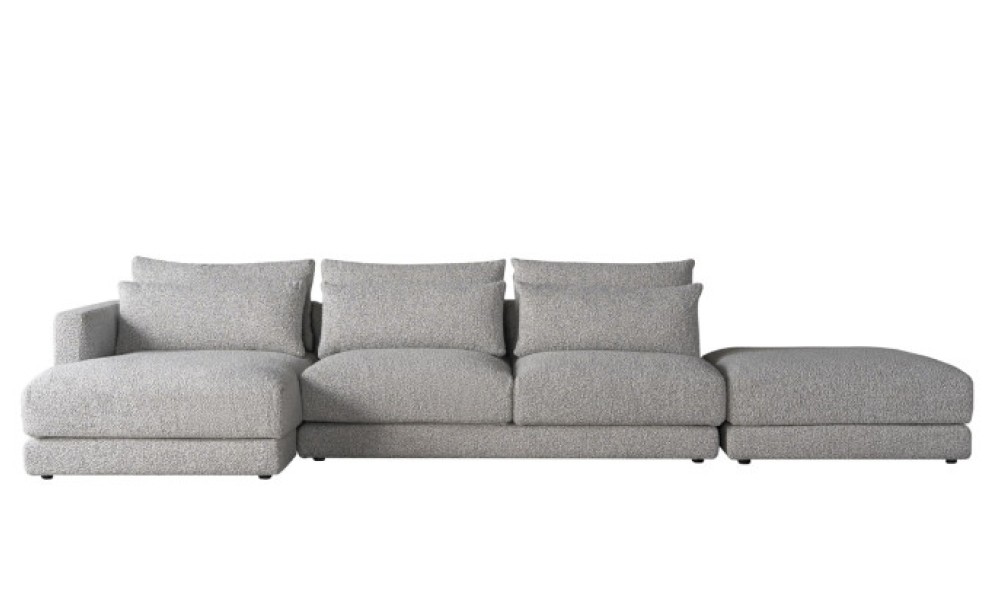
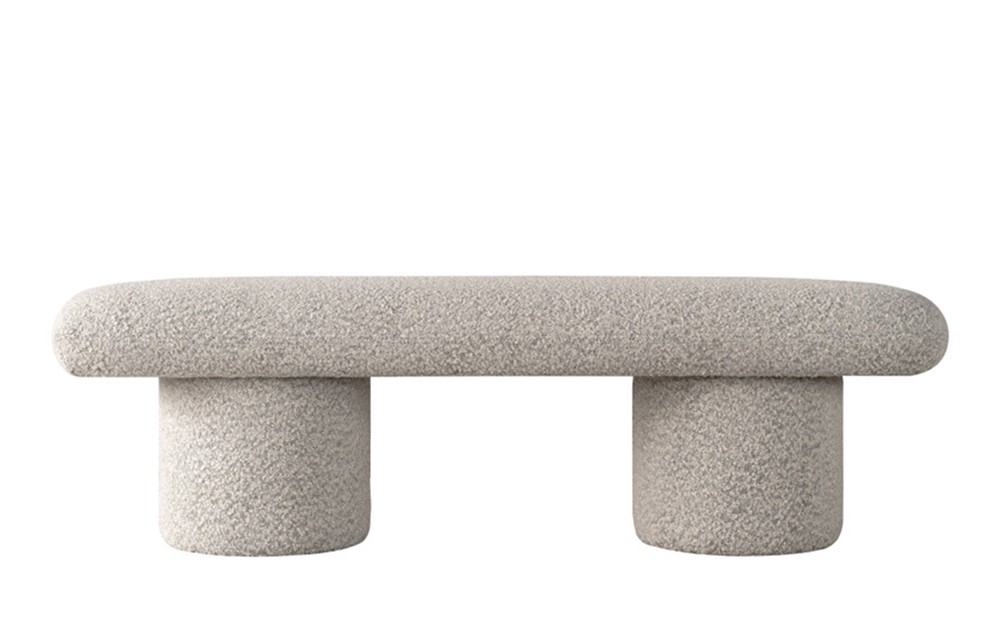
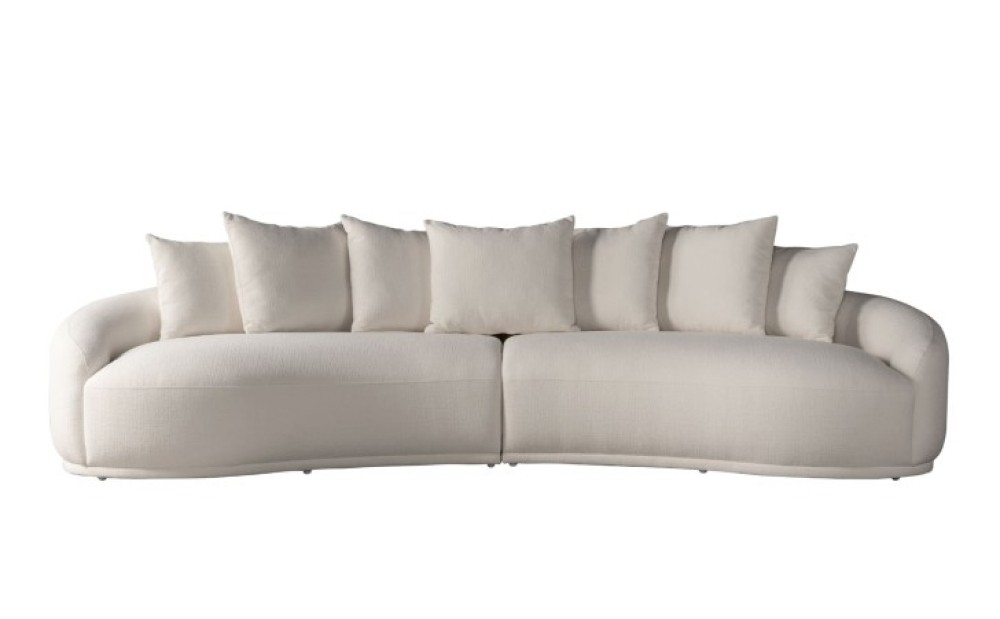
Bouclé is perhaps the most varied fabric category in the collection – and the most misunderstood. The defining feature is the looped yarn, but the scale of the loop, the density of the weave, and the colour mix can produce results that feel almost unrelated to one another. It is less a single fabric than a family of surfaces, each with a distinct character.
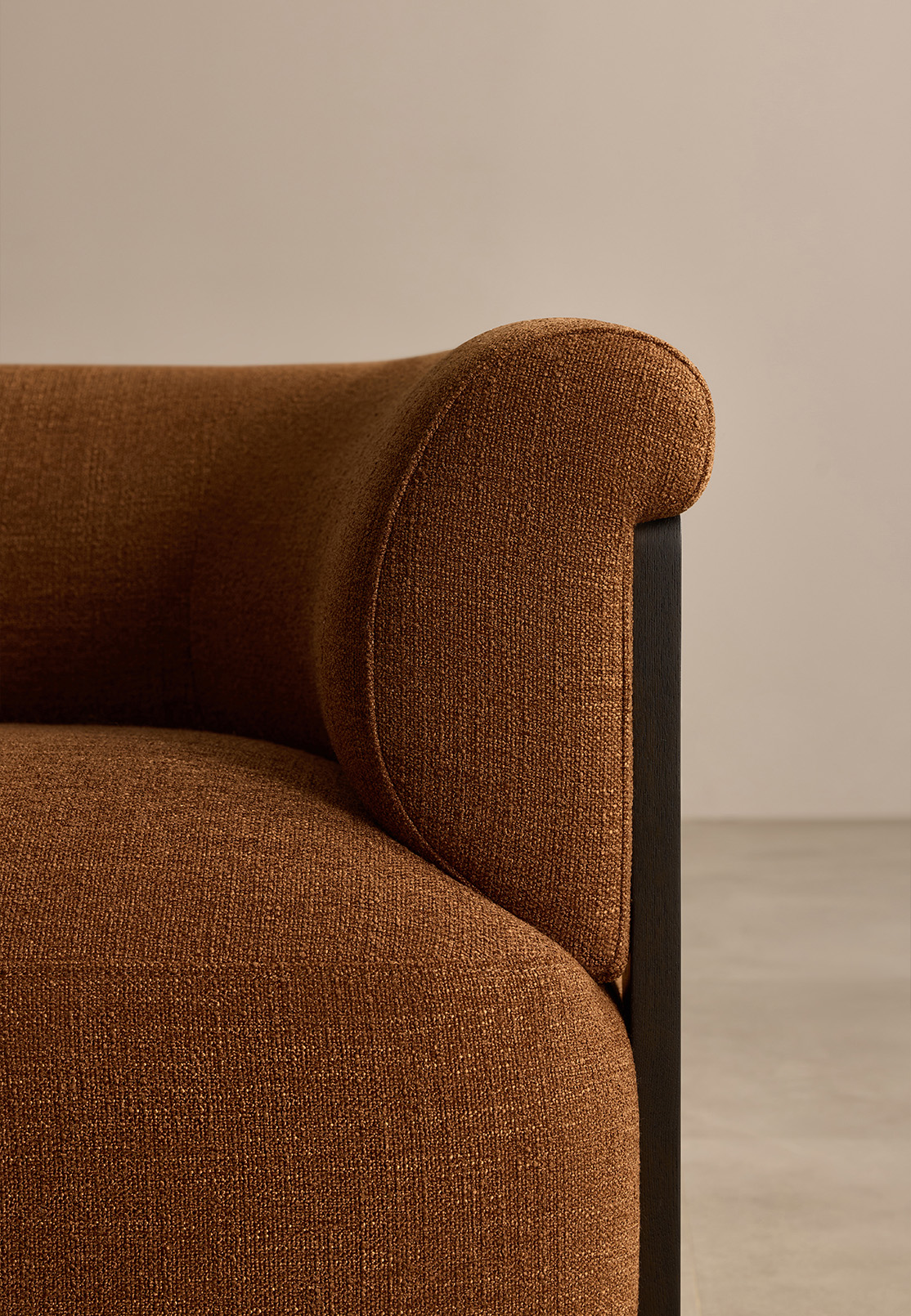
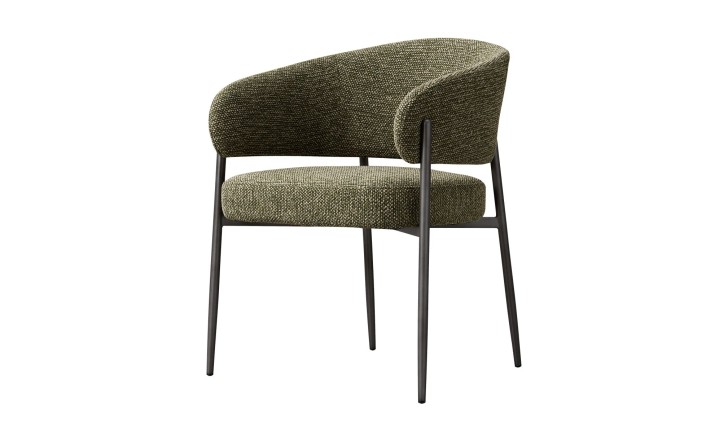
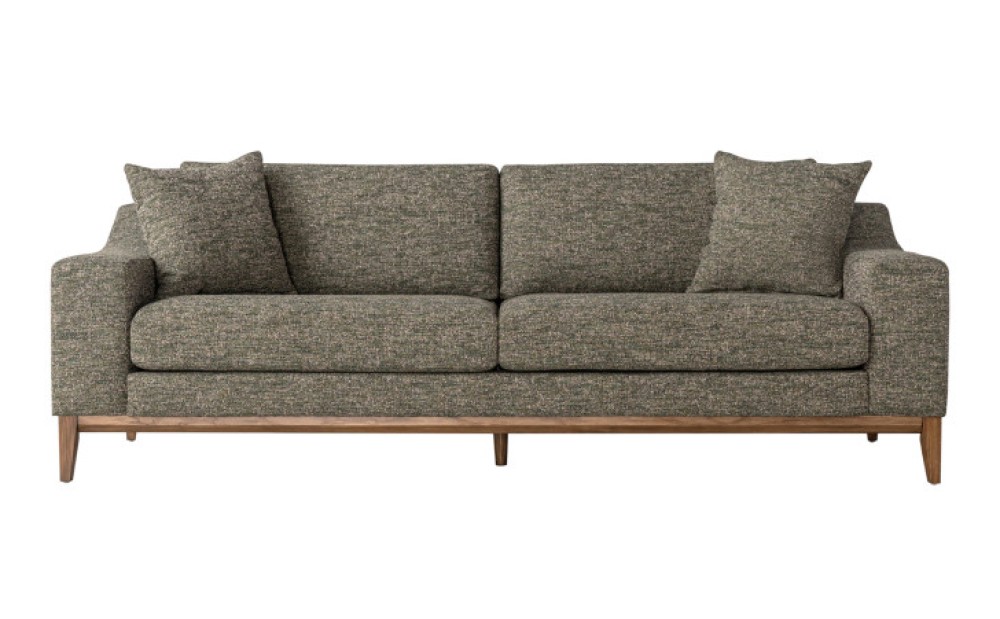
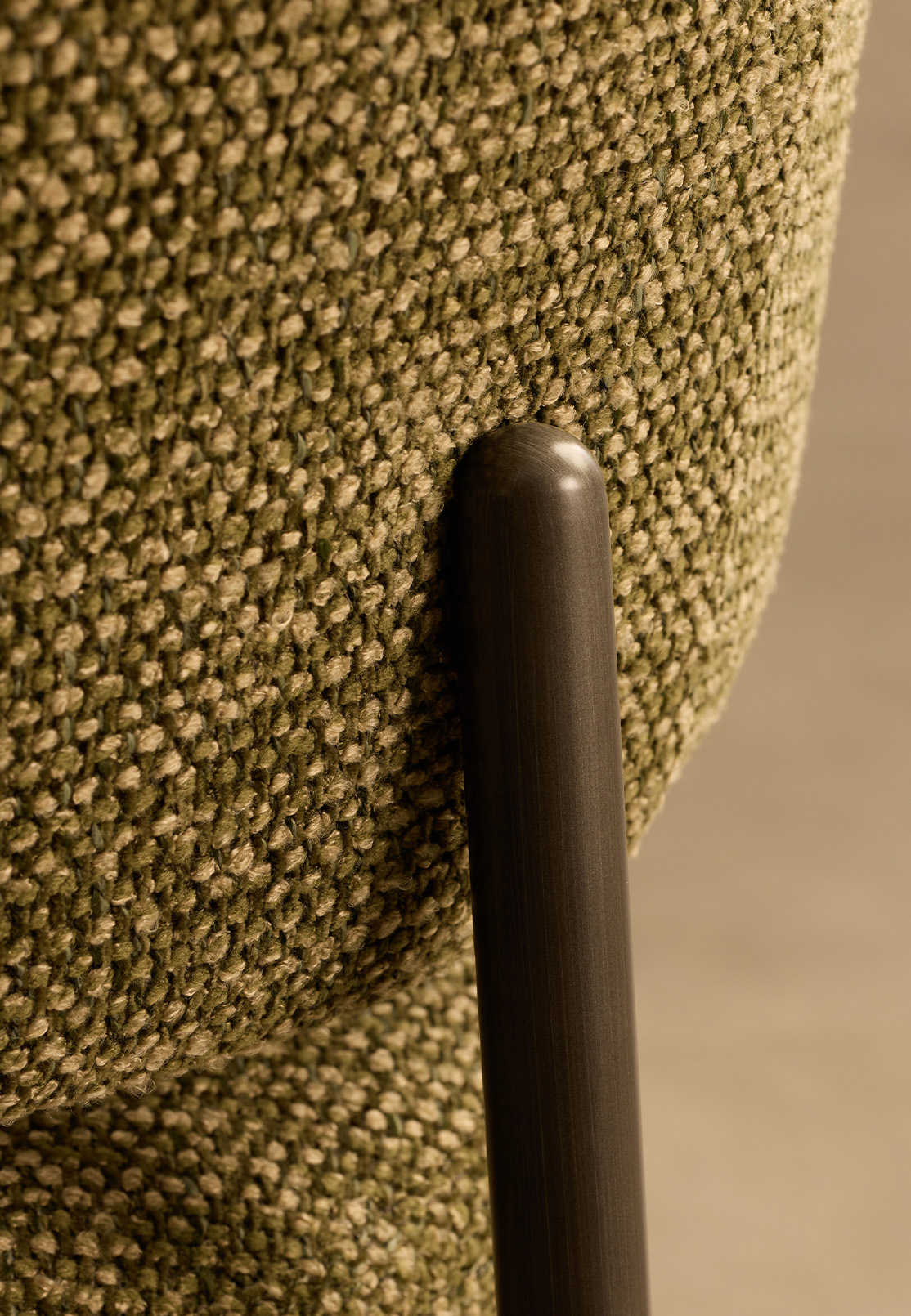
At its most compact and densely woven, bouclé reads as a strong, almost mineral surface – particularly in olive, khaki, copper or warm brown. In these tones, paired with a dark wood or metal frame, it carries a directness that has nothing to do with the soft, pale image the fabric sometimes has. What changes the mood entirely is the palette: bouclé in dark, earthy tones has an almost rugged quality that bears little resemblance to its paler counterparts.
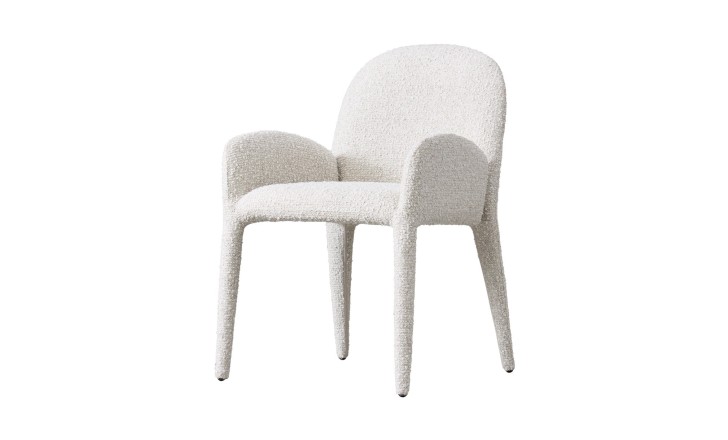
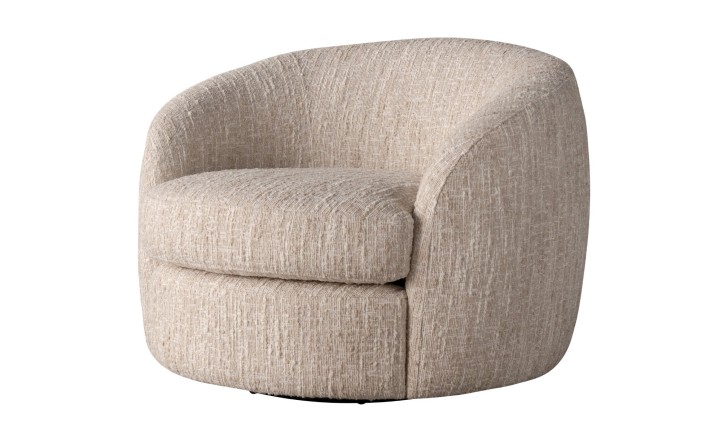
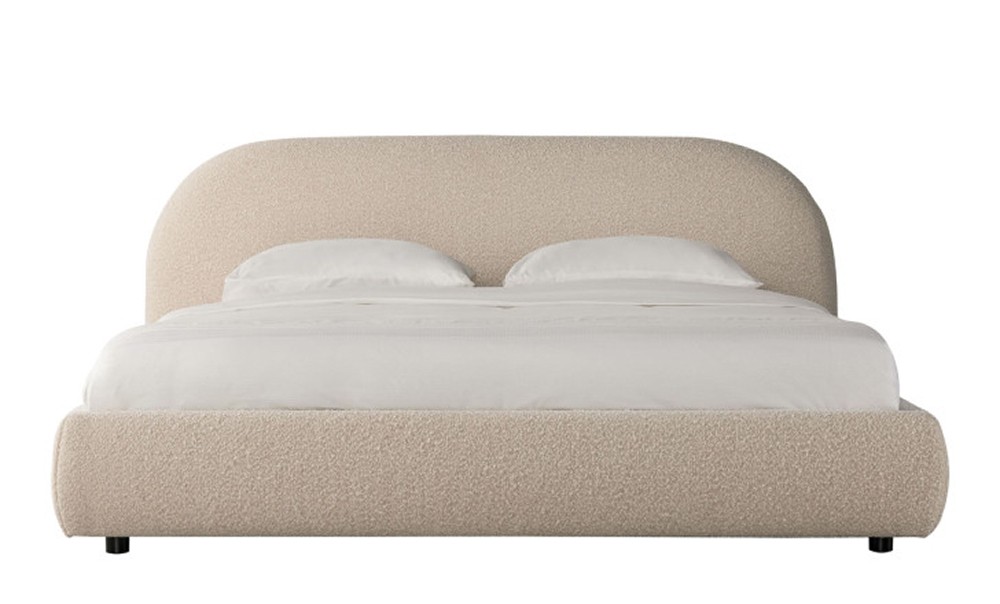
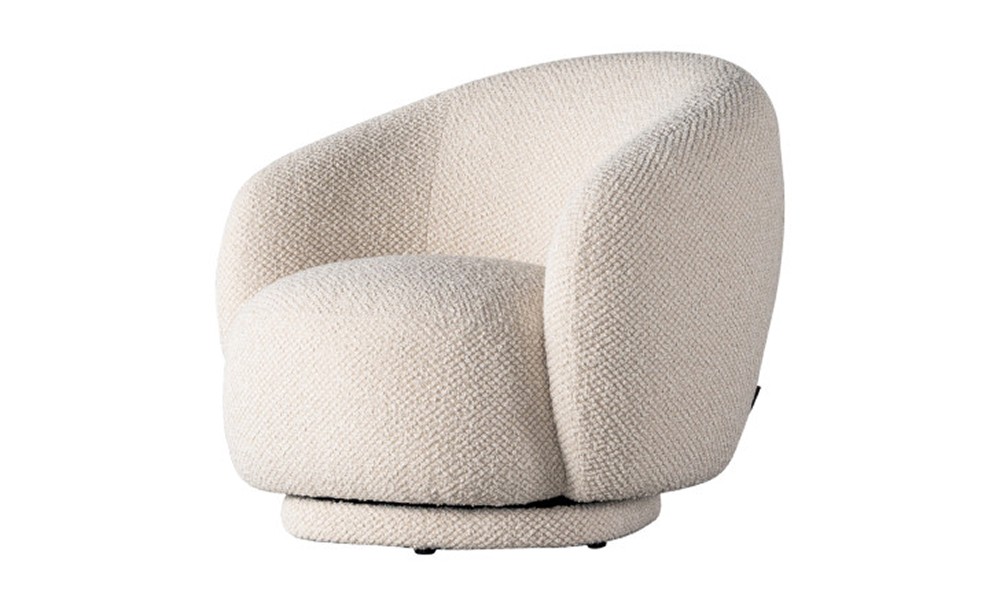
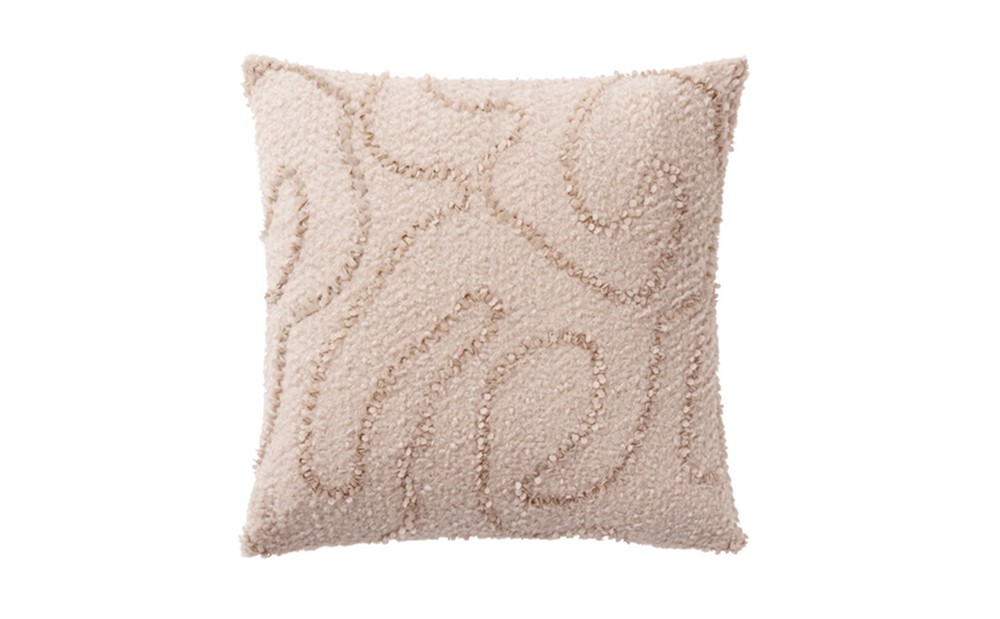
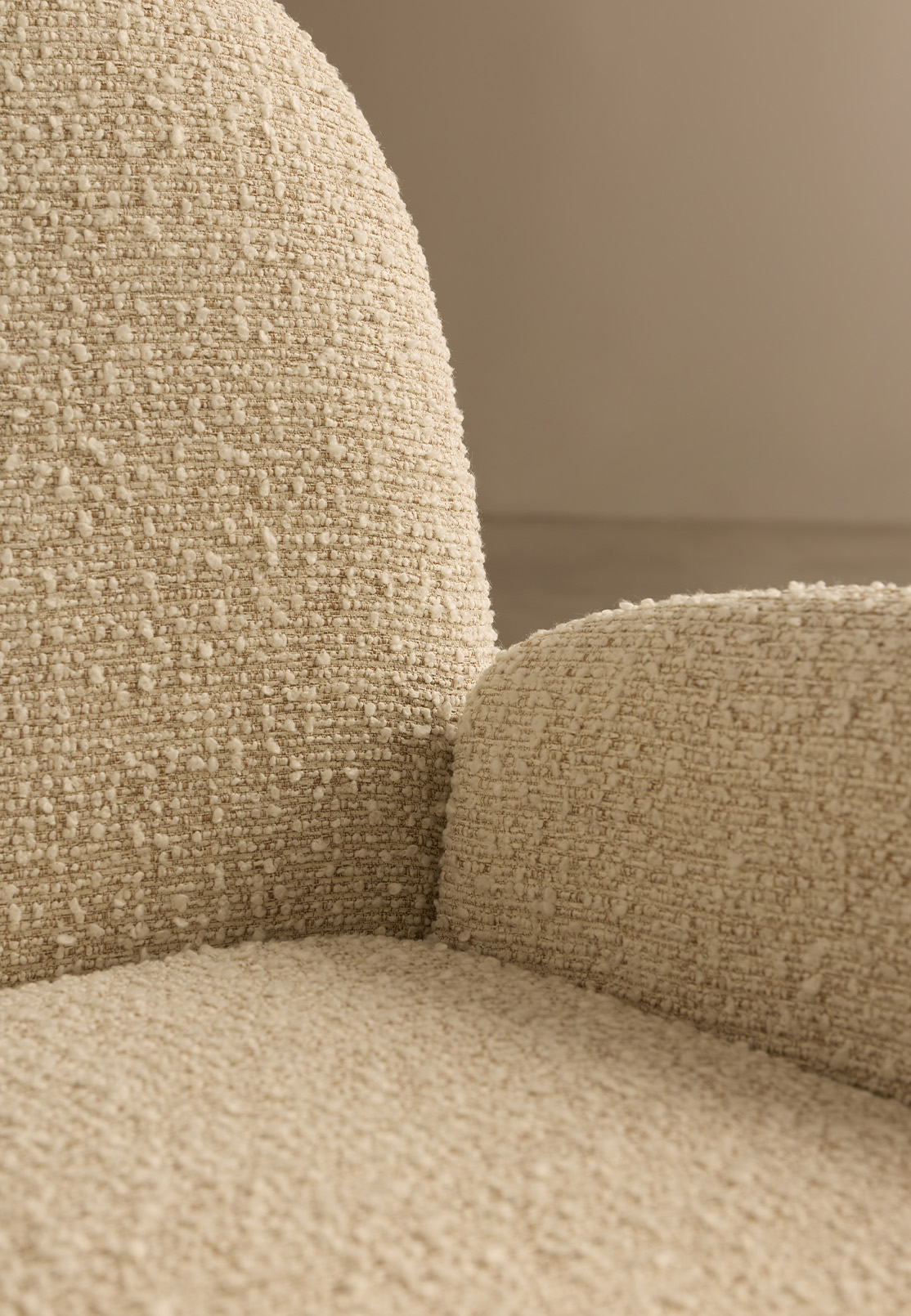
At its most open, with larger and less uniform knots, bouclé becomes something livelier – a surface that catches light irregularly and gives a piece a handmade, almost artisanal feel. In cream or ivory, this version is warm without being heavy, textured without being loud. And on a single piece, both weights can coexist: a finer weave on the seat, a more generous one on the back, creating a subtle but visible layering within the same upholstery.
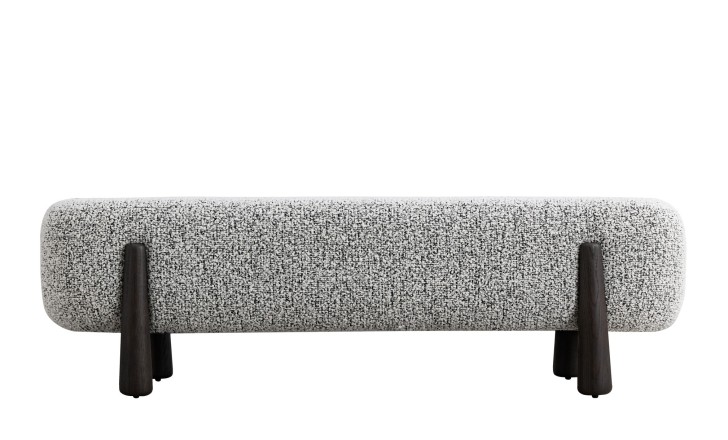
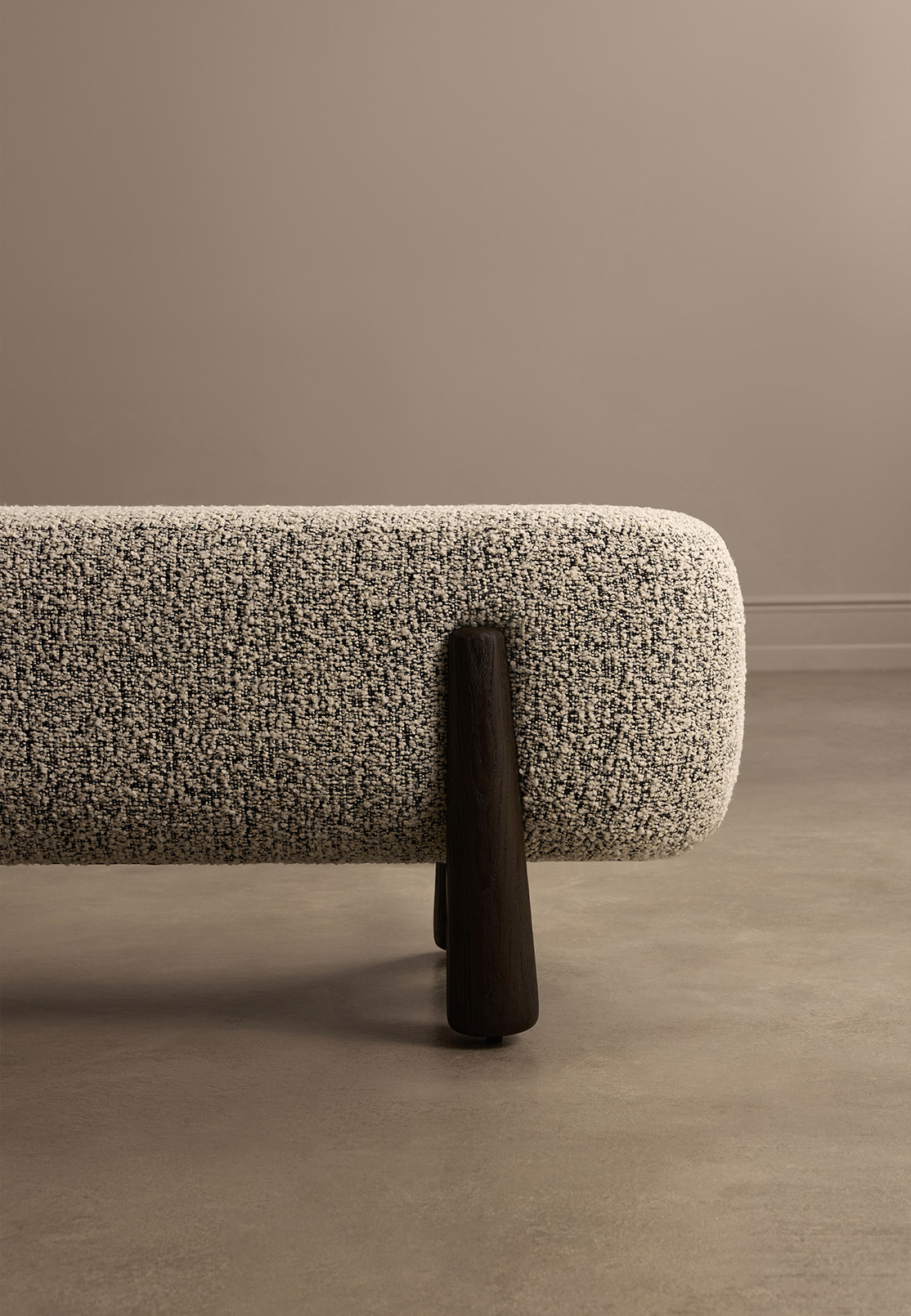
Then there is the graphic end of the spectrum: a contrast bouclé in near-monochrome, where a dark ground is punctuated by bright looped knots. This version introduces pattern without print, a visual rhythm that gives a piece a stronger presence in the room.
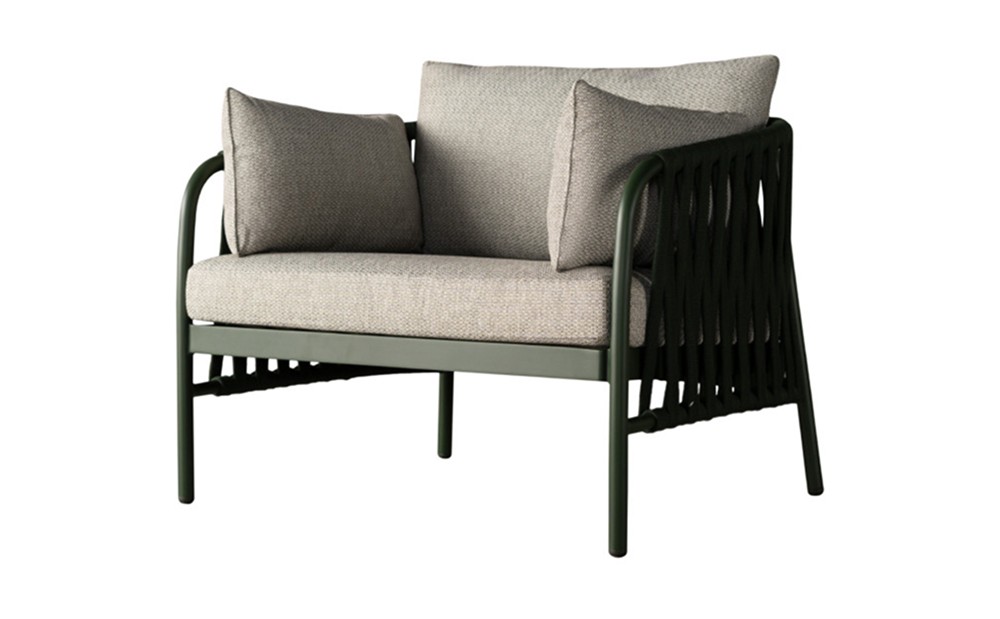
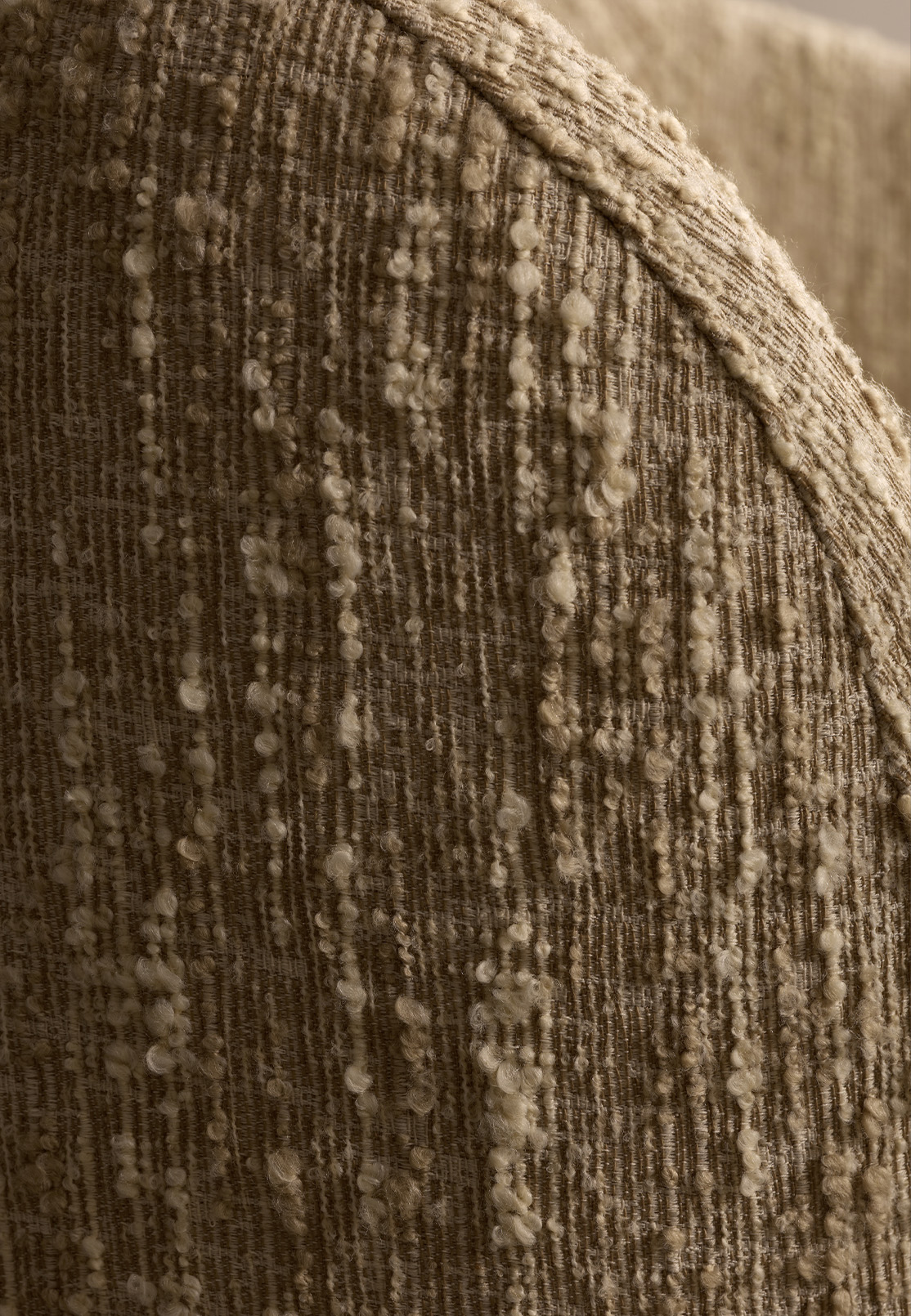
Within the same family sits a more unusual variant: a dark woven base with isolated knots rising from the surface at irregular intervals, closer to a constellation than an even texture. And at the furthest structural end – a flat, open weave where the interlacing of the threads creates a visible grid-like pattern without any loop at all. In cream or ivory, this reads as almost linen-like: daytime, architectural, unhurried. Both belong to the broader bouclé sensibility, even as they push it in different directions.
Across all its forms, bouclé shares one practical advantage: the looped structure holds its shape well under daily use and shows wear far less readily than smoother fabrics – which may be why it has become, quietly, one of the most enduring choices in contemporary interiors.
The right fabric is a conversation, not a specification – book a consultation and we will take it from there
Items
All products