
Green at Home: From Moss Velvet to Eucalyptus Glaze
Of all the questions we hear in the showrooms this year, one comes up more often than any other: what do you have in green? It might be a green sofa, a green chair for the end of the dining table, or a rug to bring the colour in underfoot. So we went through the whole range and gathered every piece that answers it.
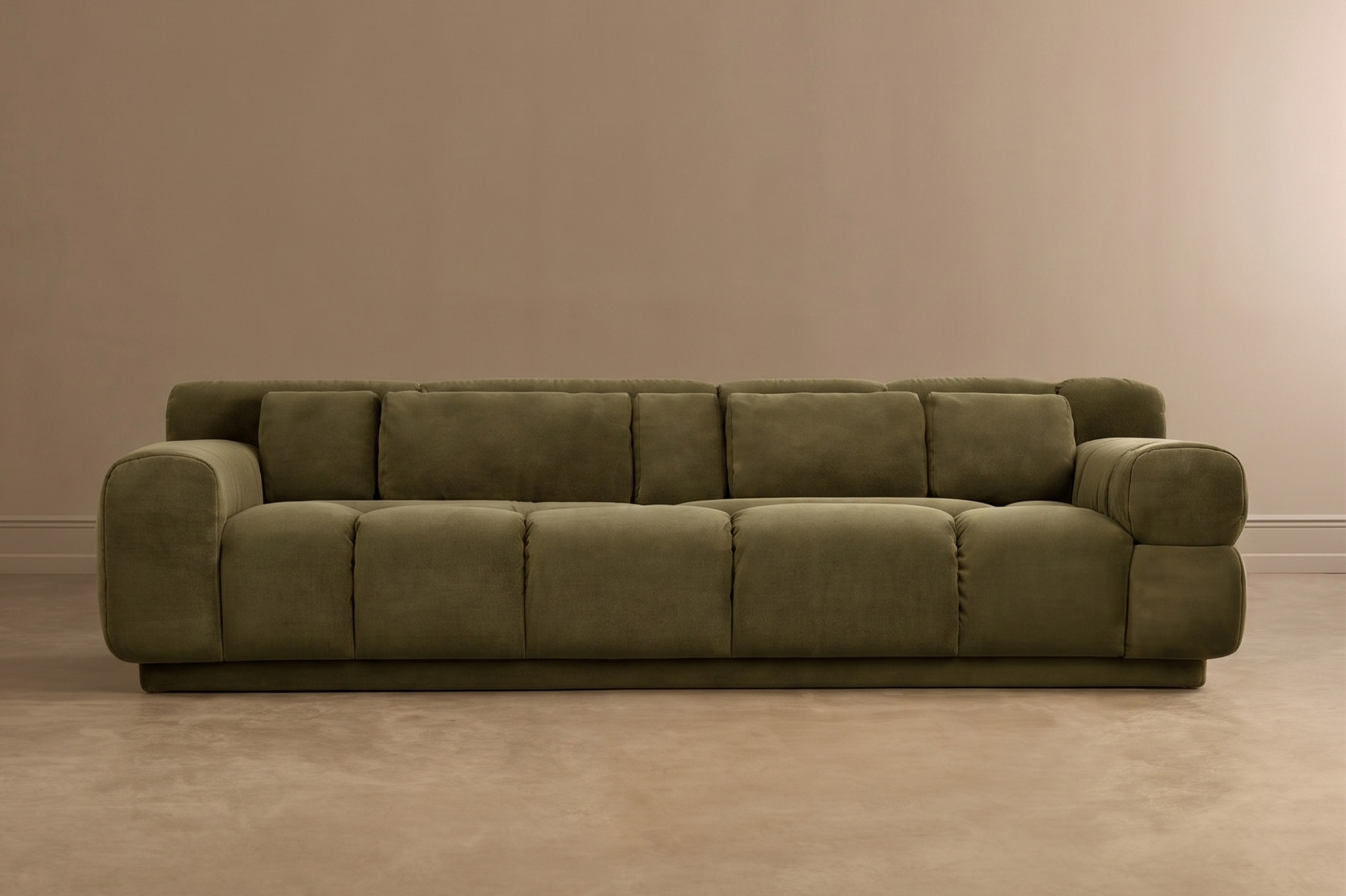
Green is the one saturated colour that behaves like a neutral. The eye has seen it outside every window all its life, so it settles into a room rather than demanding attention, and it sits easily beside oak, stone, linen and brass.
Green brings the outside in without asking the room to change around it: start with one piece, and the rest of the palette already agrees
It also ages well. Where a bright accent tires after a season, a good olive or moss reads the same in its fifth year as in its first. And it covers a wide range, from a warm olive that is almost brown to a deep emerald that belongs next to real planting, which is why it works as well on a three-metre sofa as on a dessert plate.
Sofas and Armchairs
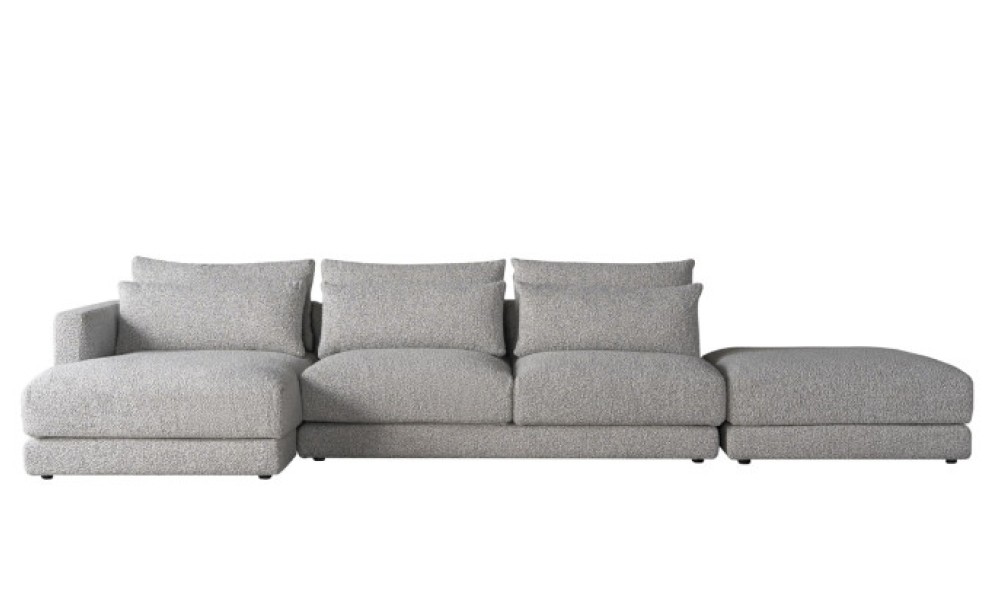
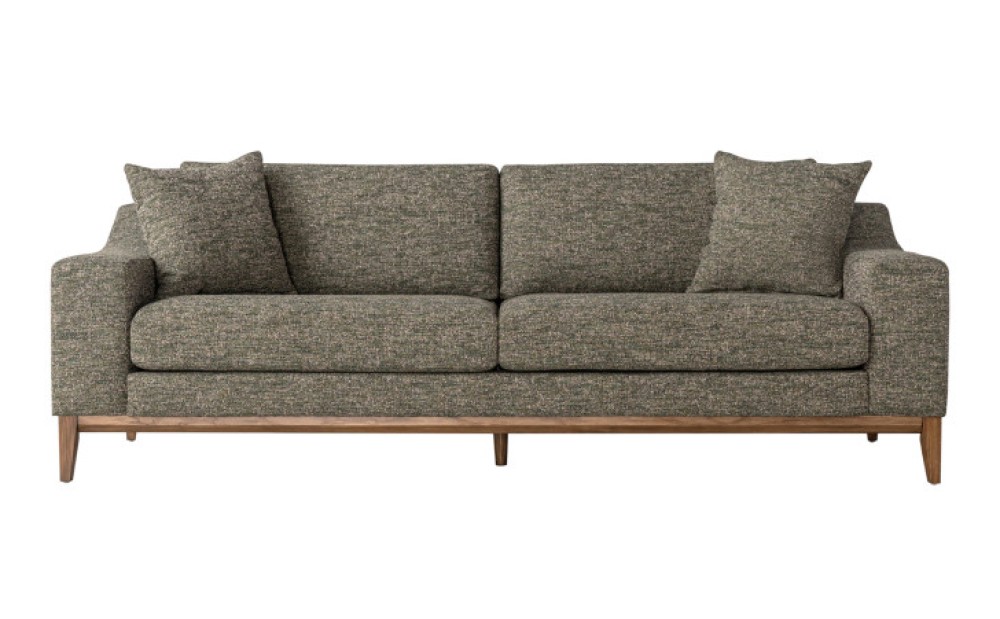
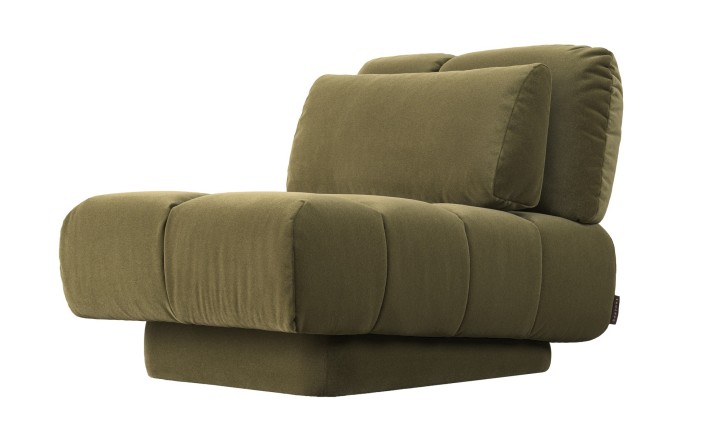
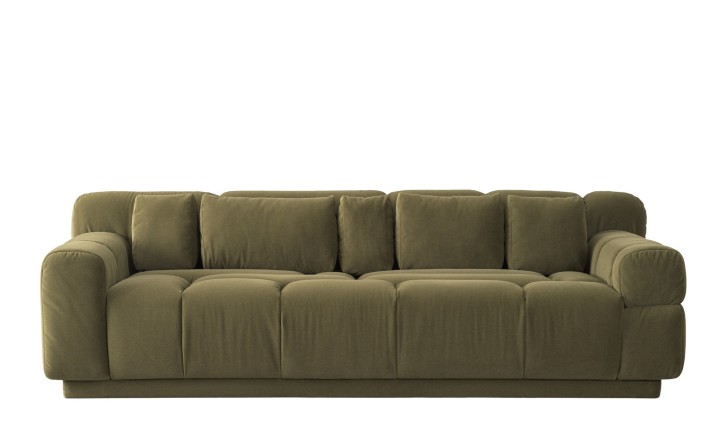
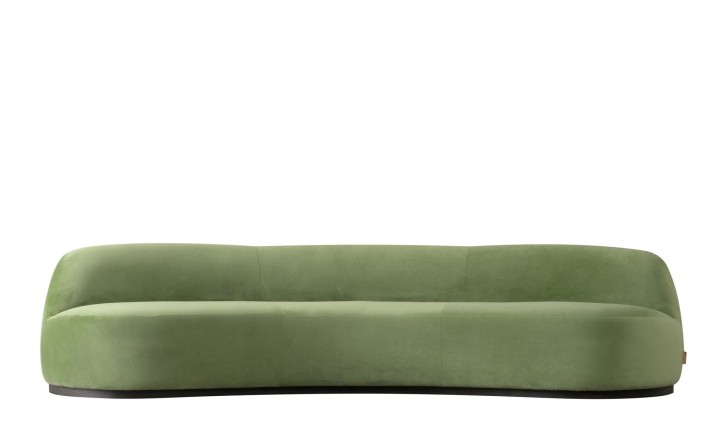
A green sofa changes the temperature of a room more than any other piece. The space feels slower, closer to a garden at the end of the afternoon, and everything around it, oak, linen, brass and stone, looks as though it was chosen to go with it.
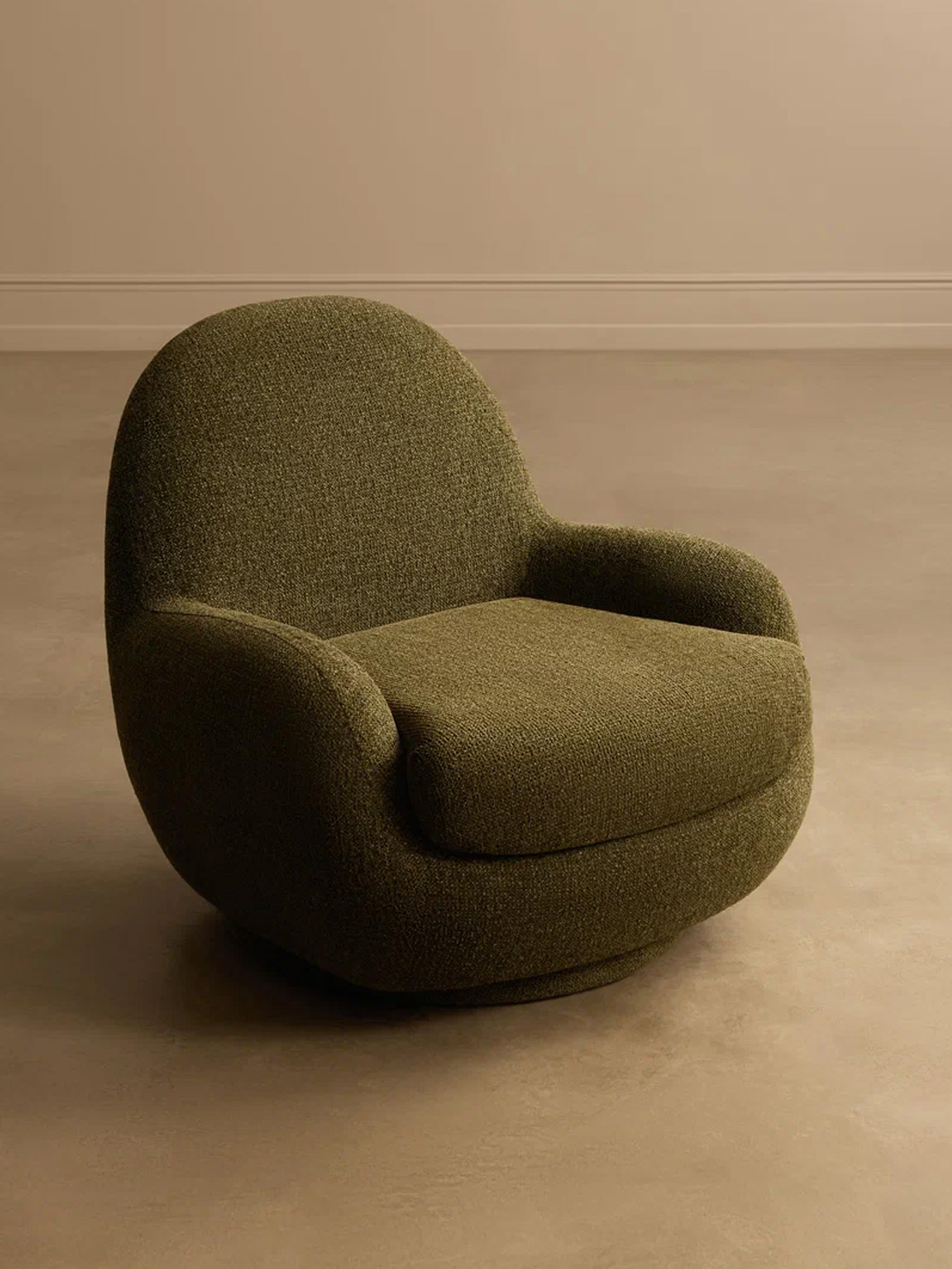
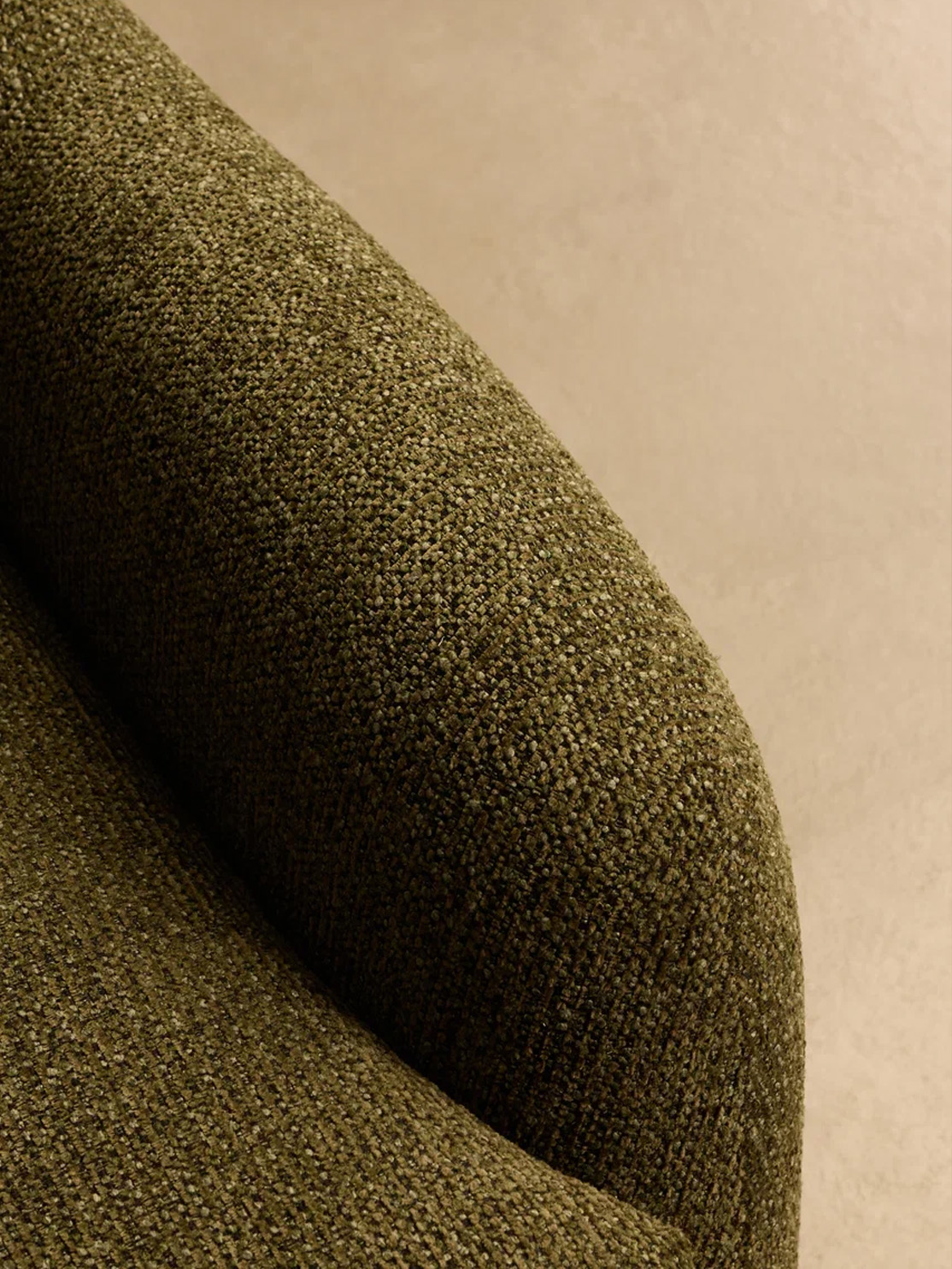
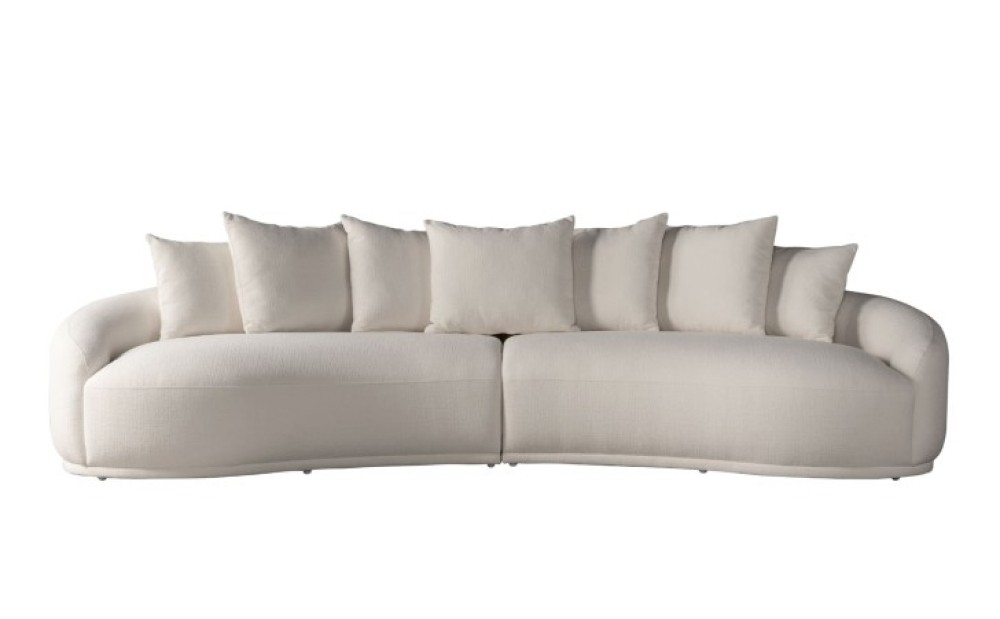
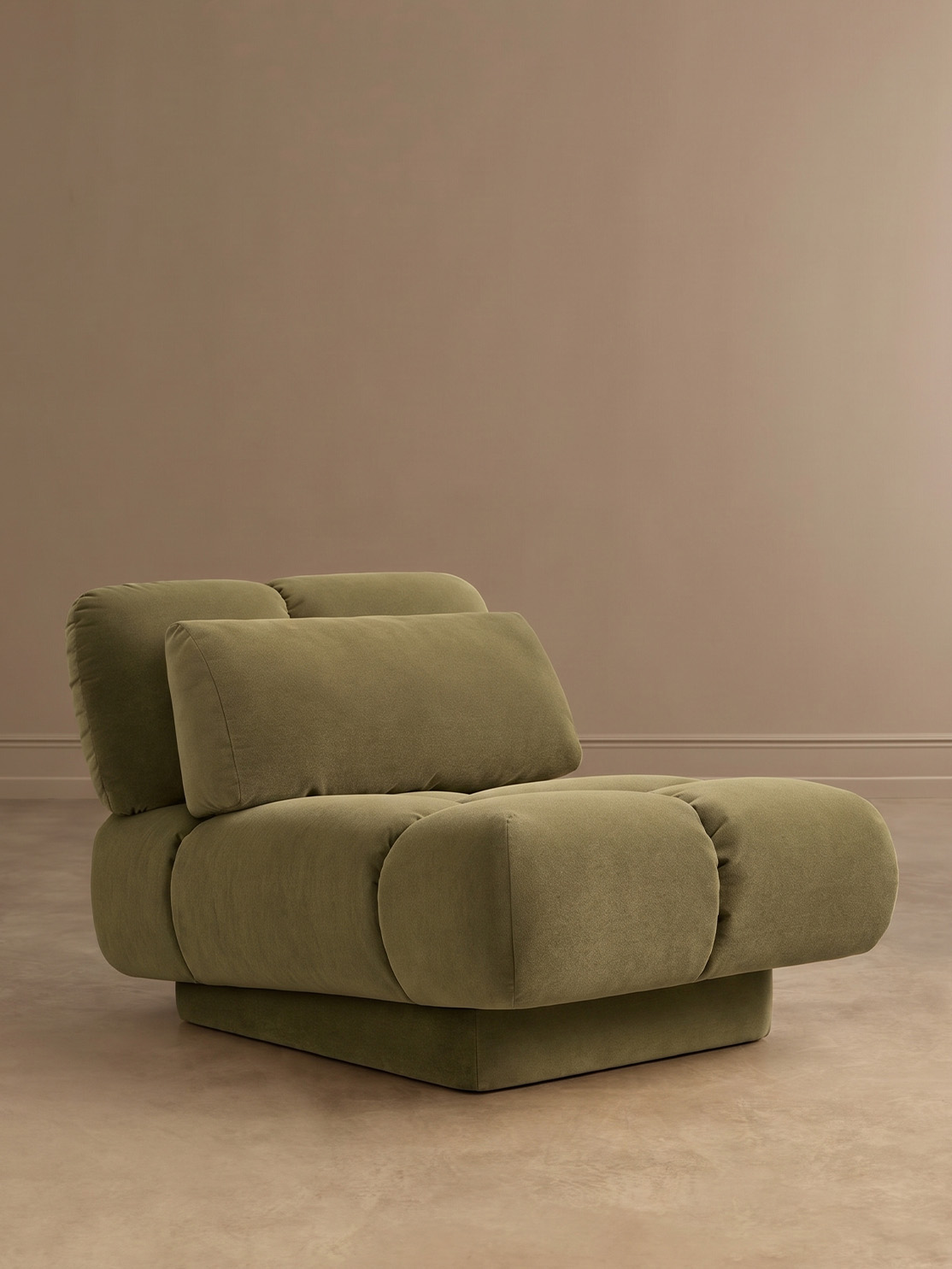
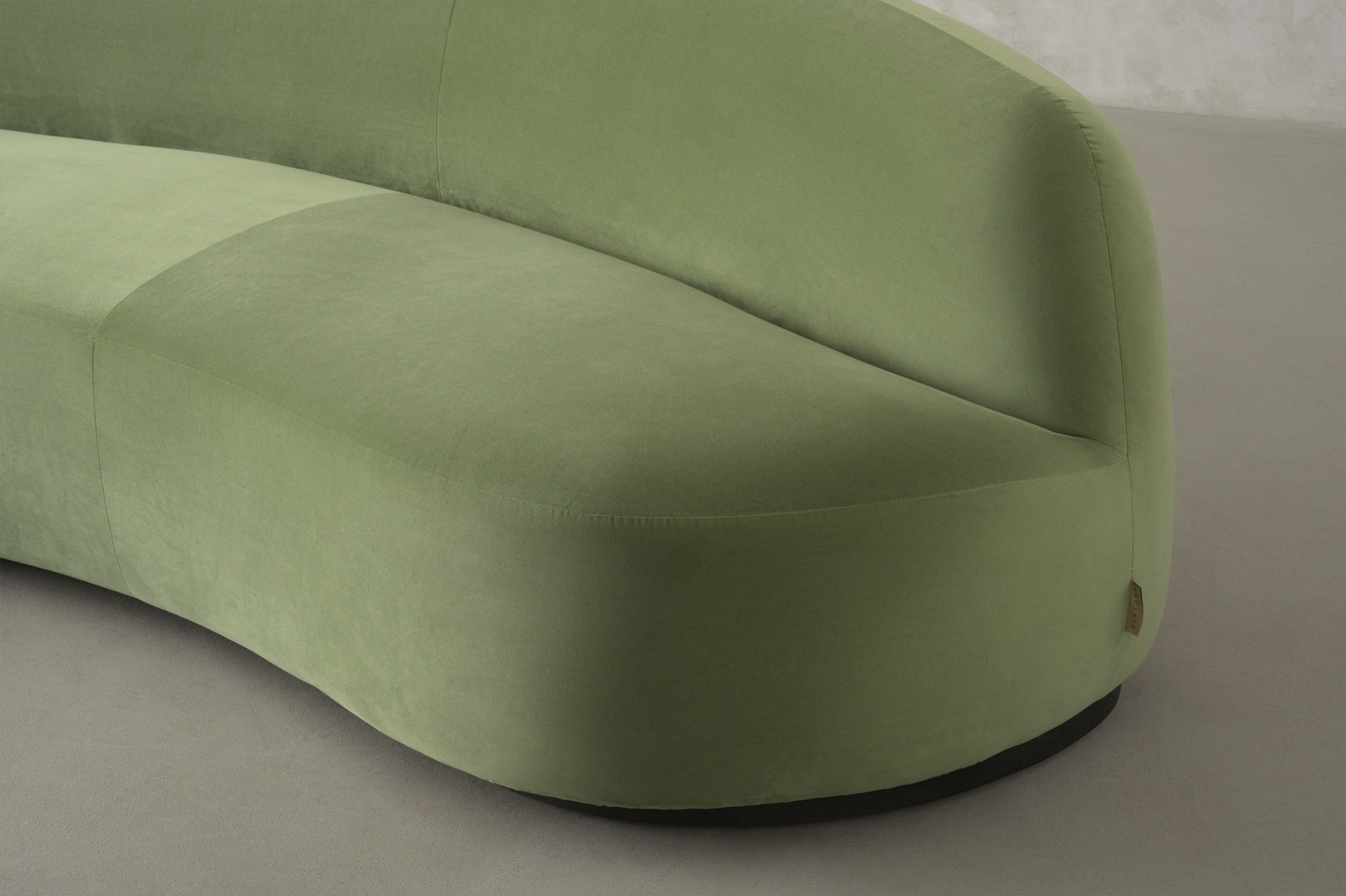
Velvet is where the colour feels most alive. It shifts from almost golden in the sun to deep moss in the shade, so the same room looks different at breakfast and after dark. Stella is long enough to lie across with a book. Bubble, by David Girelli, is the sofa people sink into and stay.
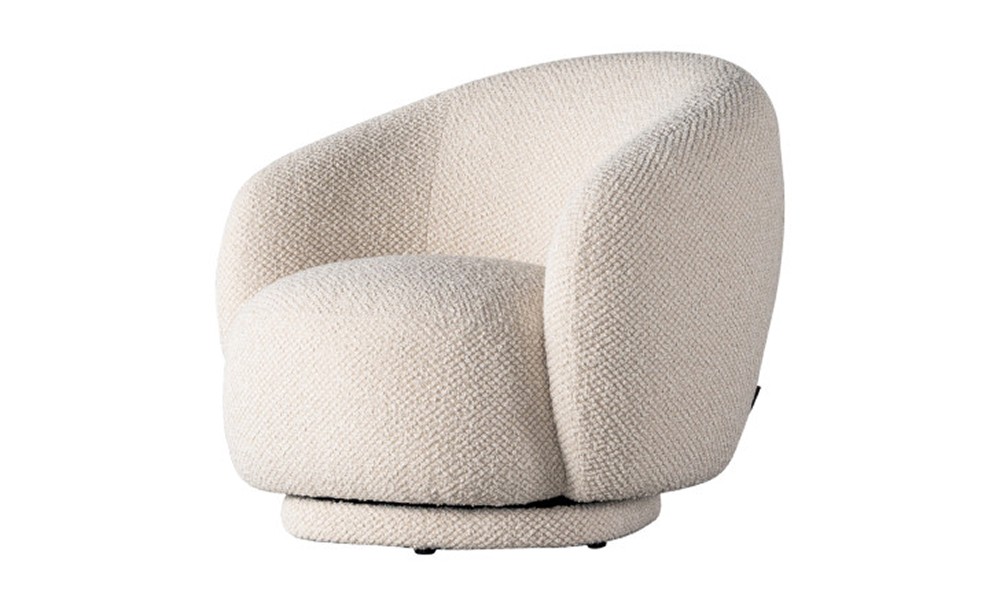
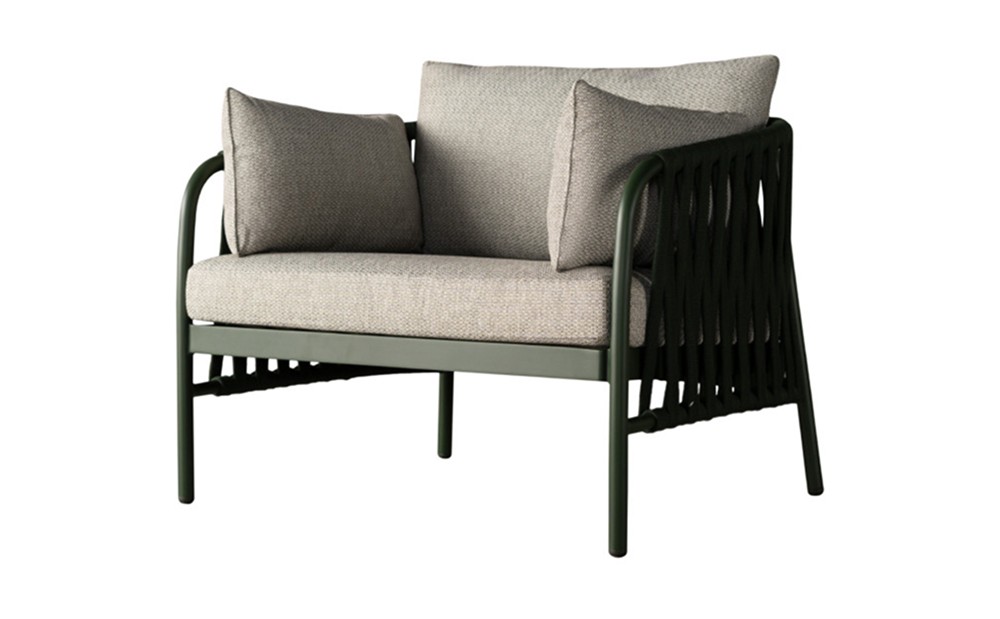
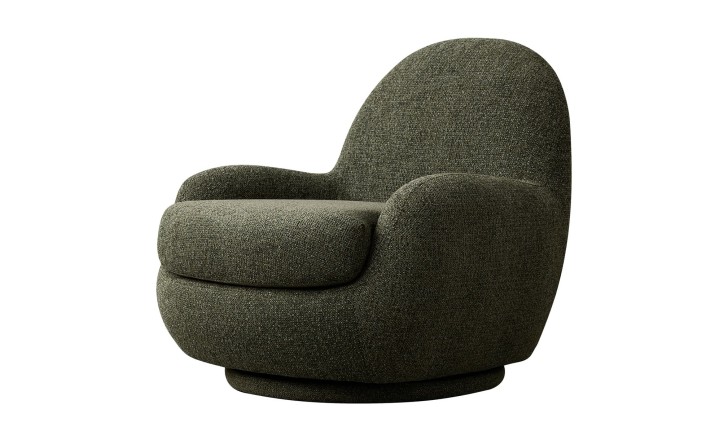
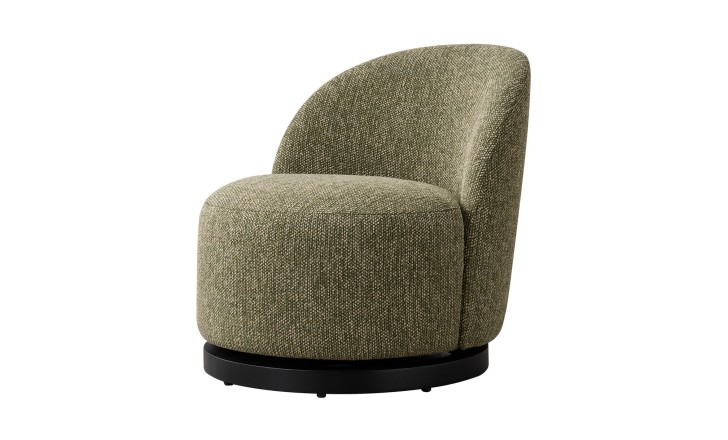
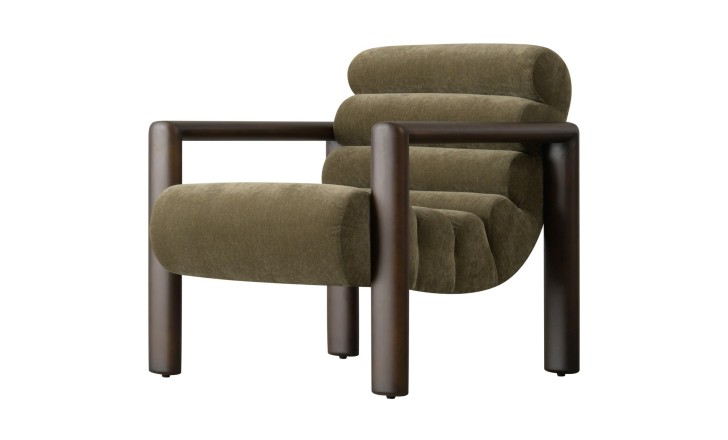
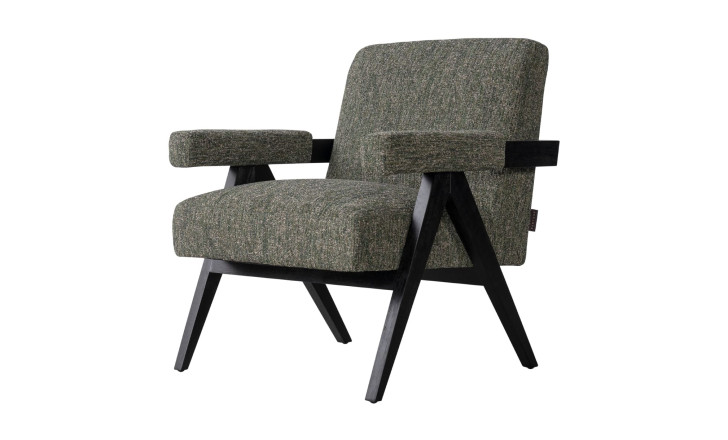
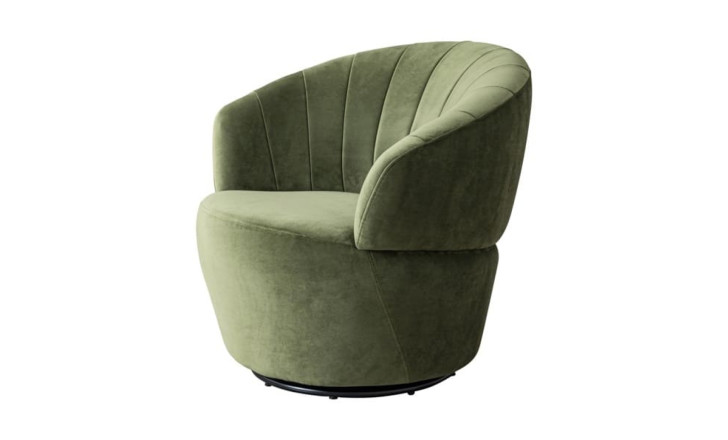
If the room is already furnished, start with a chair. One green armchair by the window soon becomes the seat everyone heads for first, and a swivel base lets it face the light in the morning and the room in the evening.
Chairs and Poufs
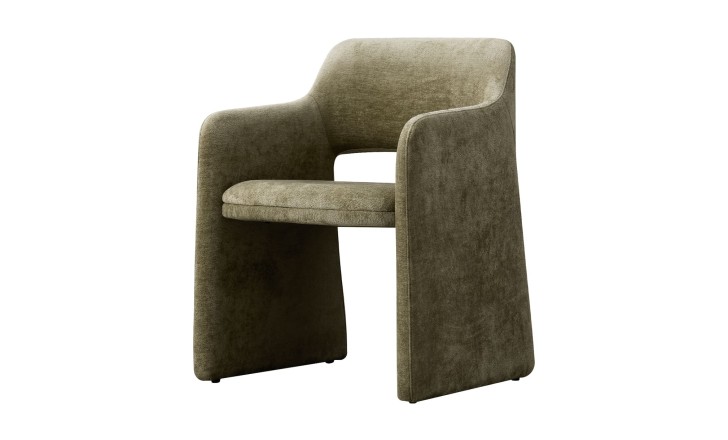
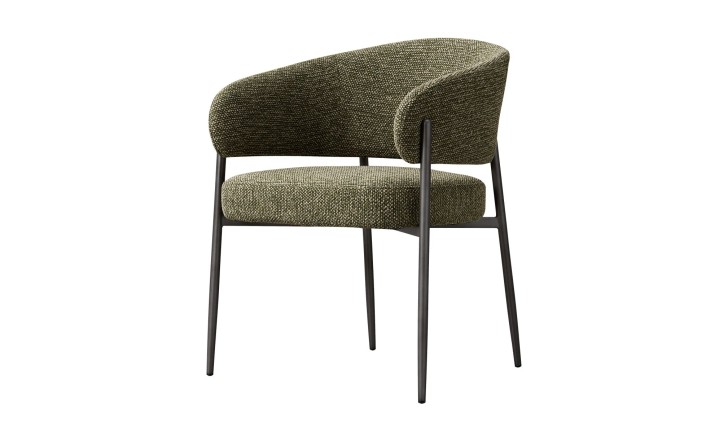
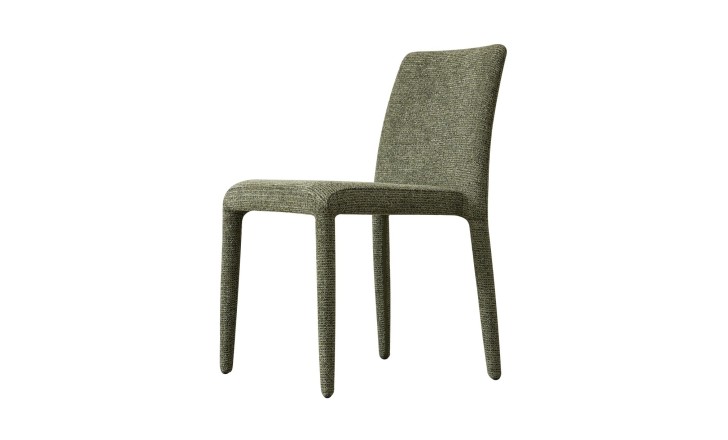
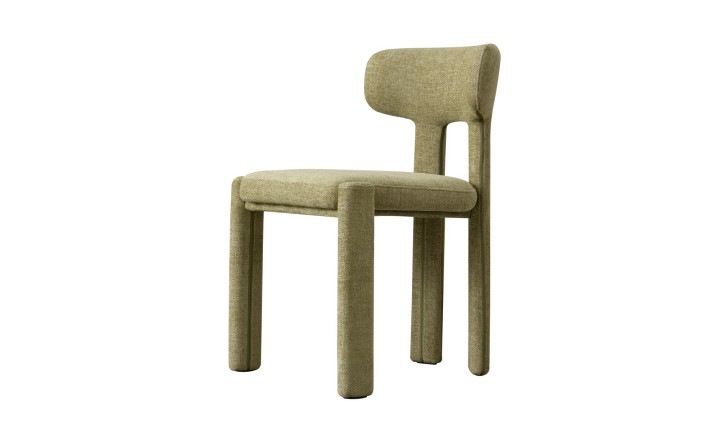
Around a table, green does something quietly sociable. Repeated at every place, it turns an ordinary supper into an occasion without anyone quite noticing why, and against dark wood it softens the whole setting.
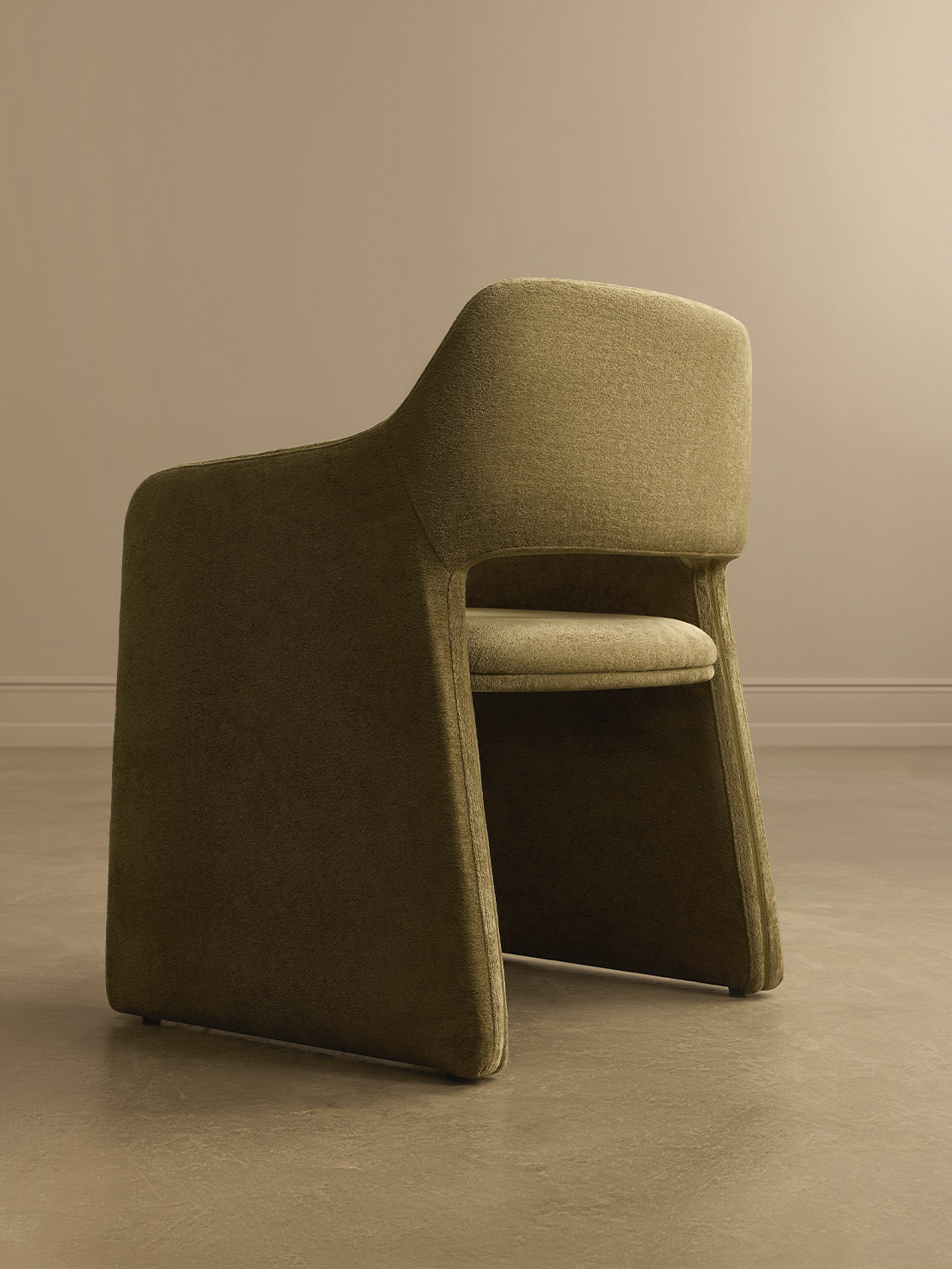
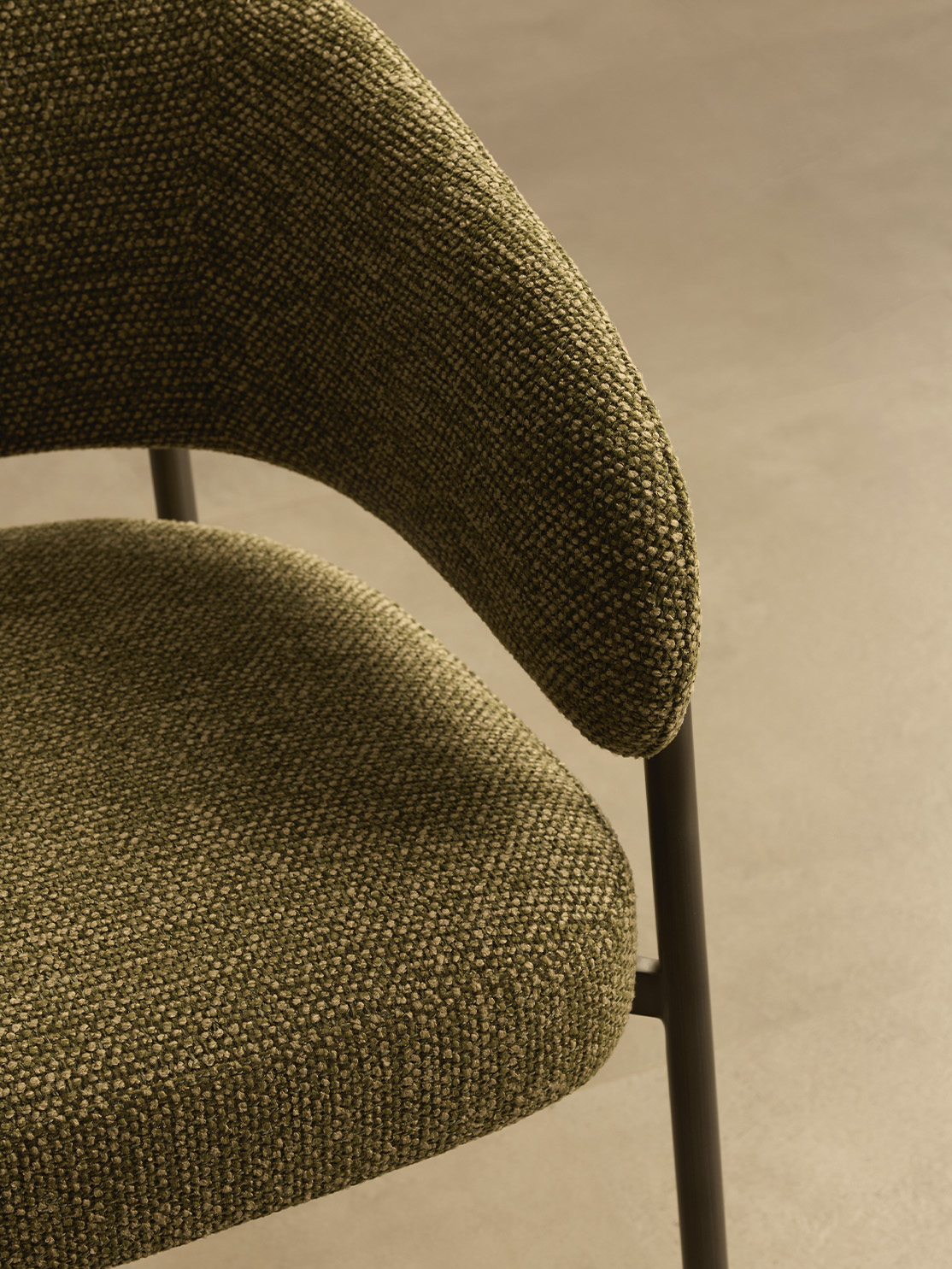
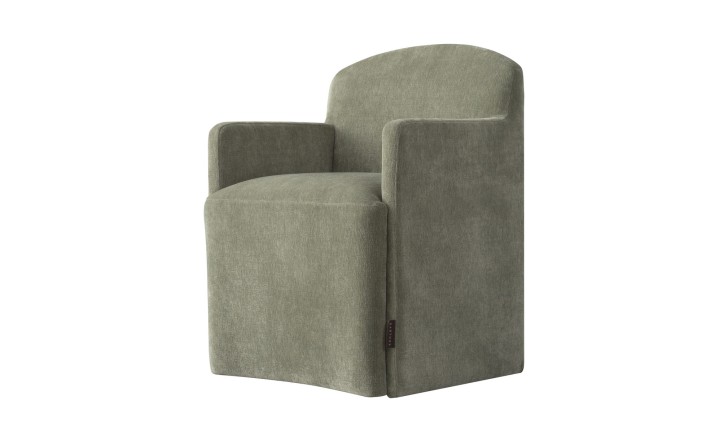
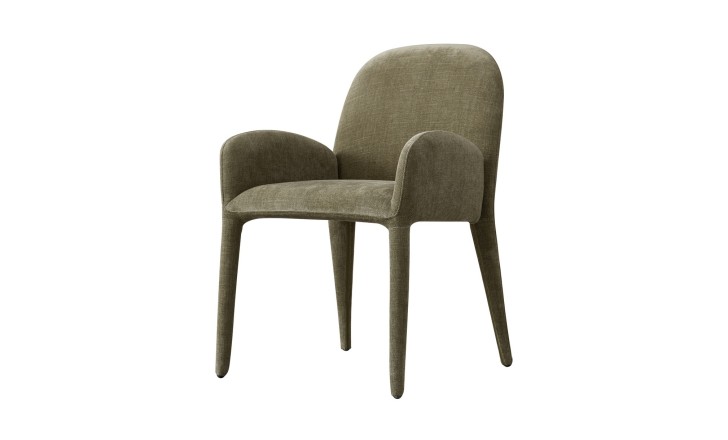
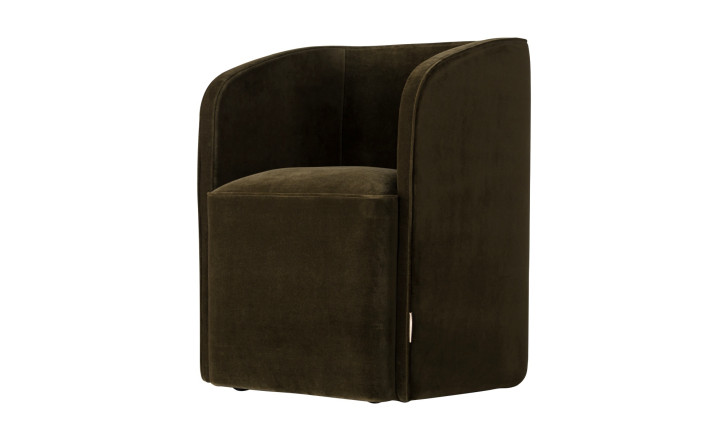
Chairs upholstered all the way to the floor feel more like small armchairs than dining chairs, which is exactly what keeps people at the table long after the plates are cleared. Those on castors move just as easily from dinner to the desk the next morning.
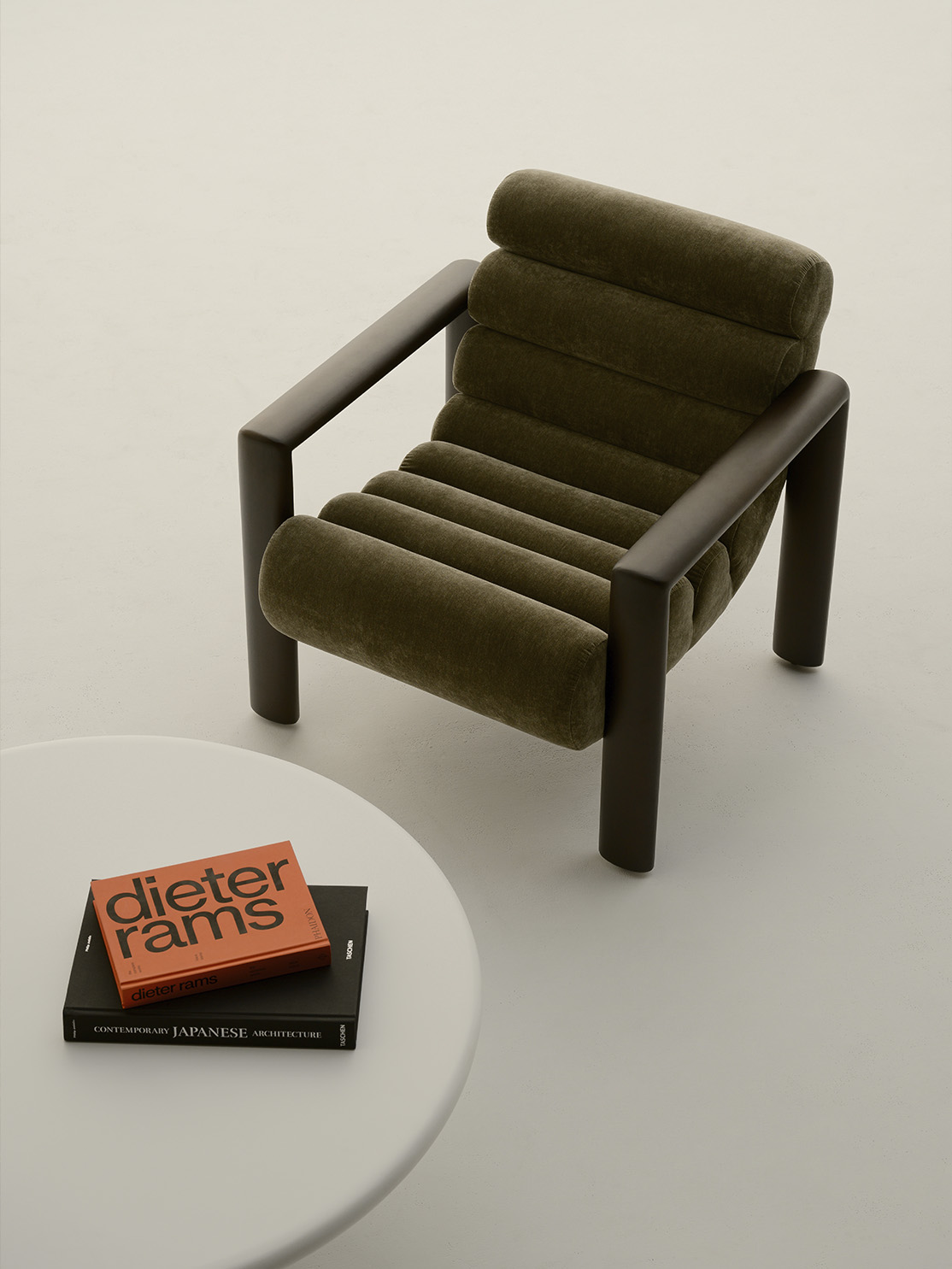
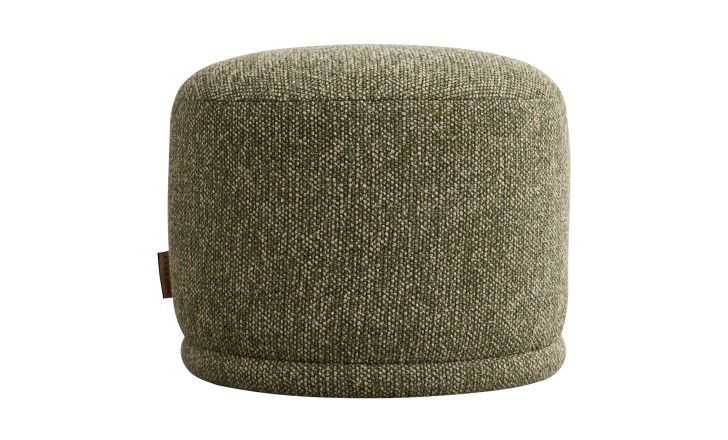
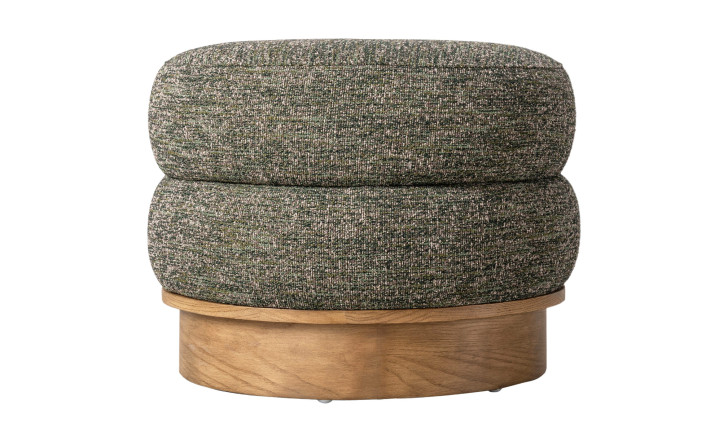
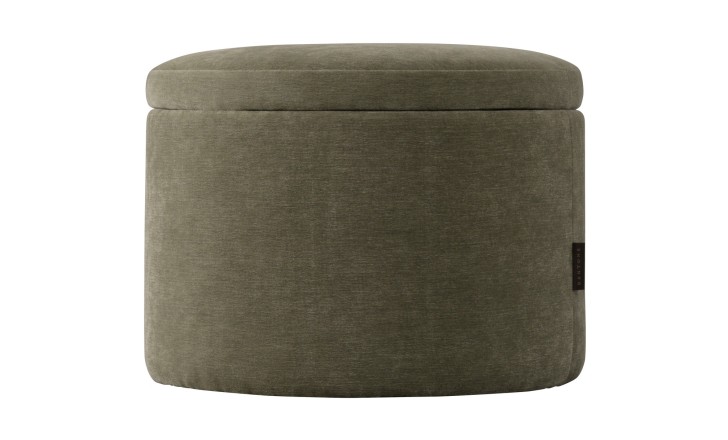
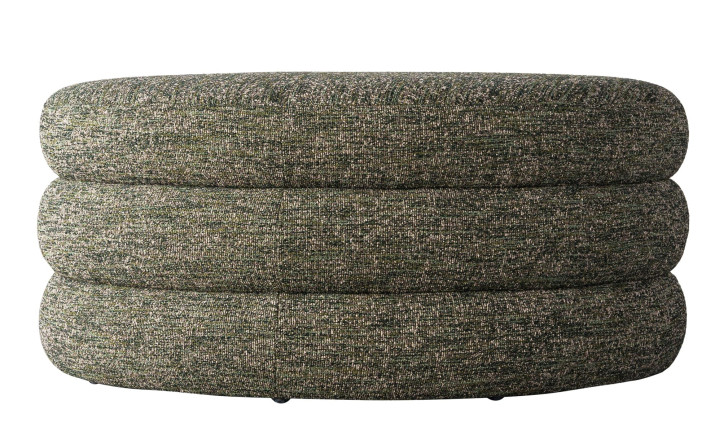
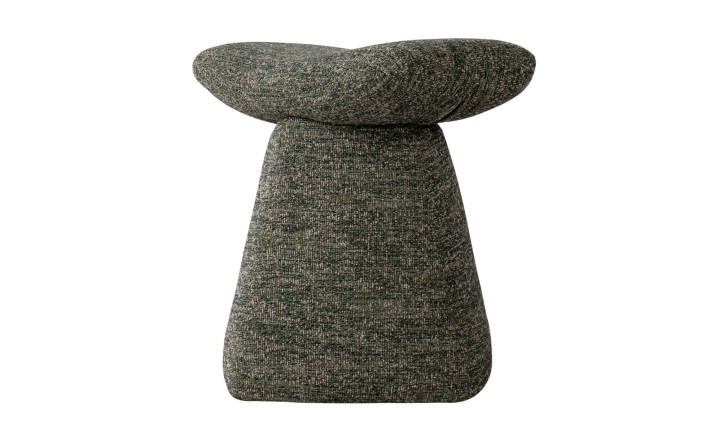
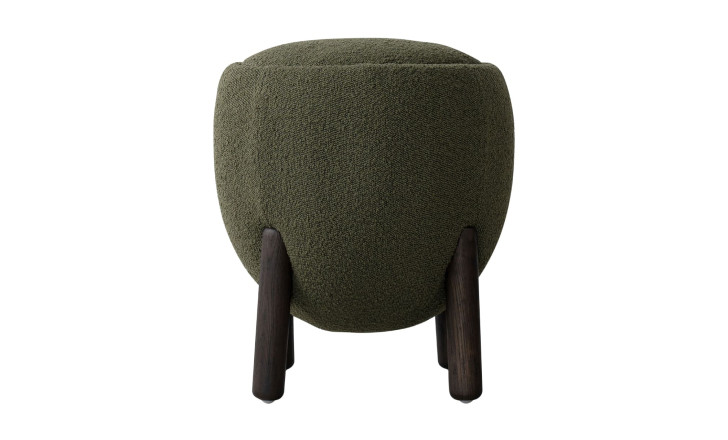
A pouf is the hardest-working thing in a living room: a footrest in the evening, an extra seat when friends drop by, somewhere to set down a tray. In green, beside an armchair in the same cloth, it pulls the whole corner together.
Outdoors
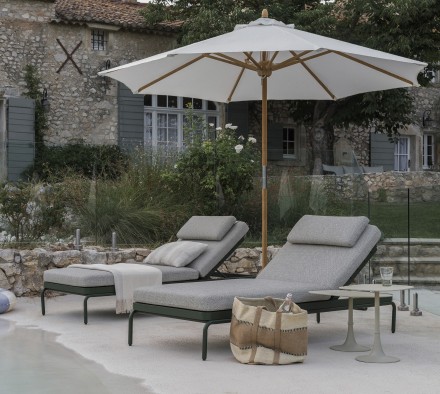
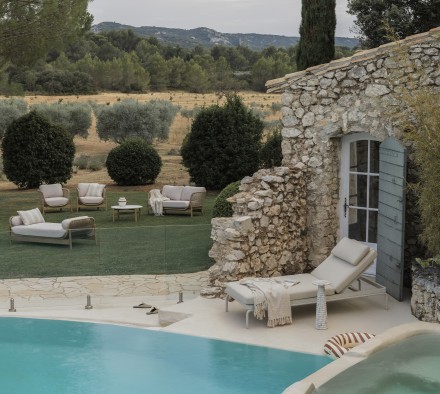
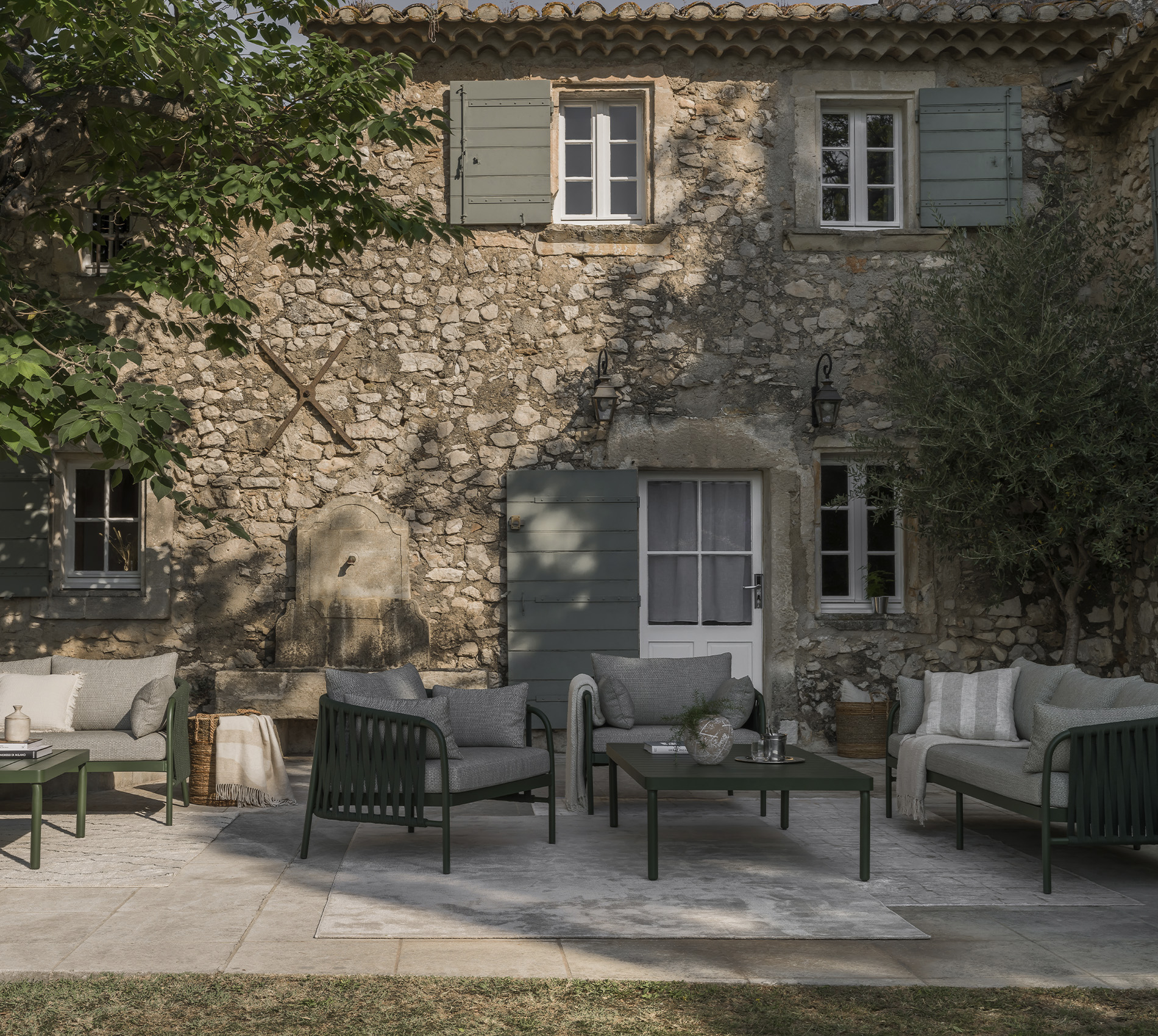
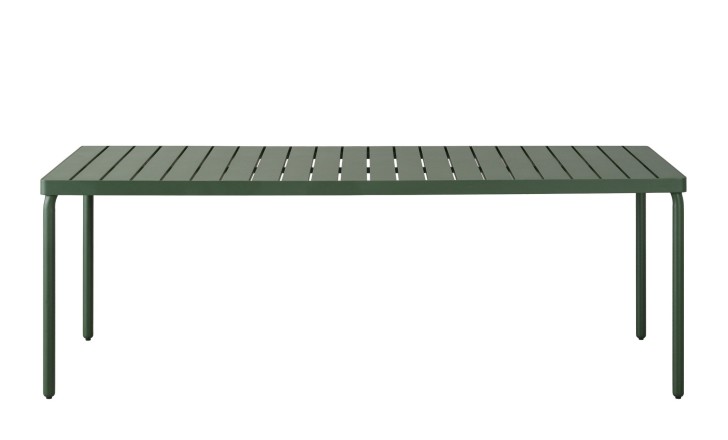
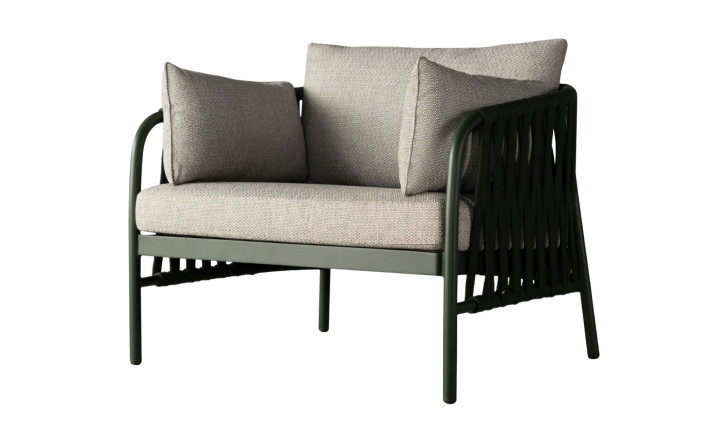
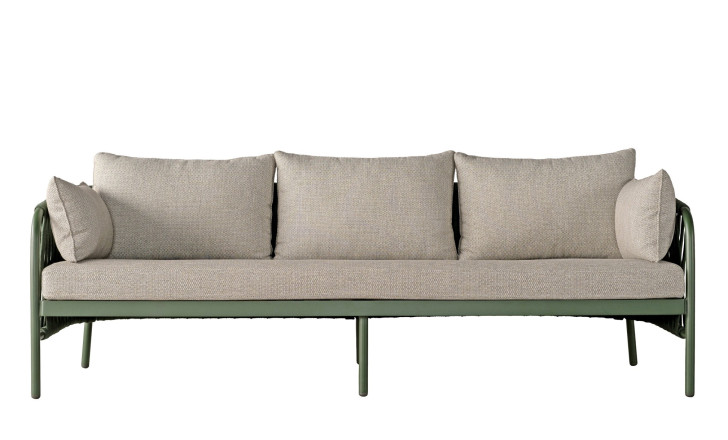
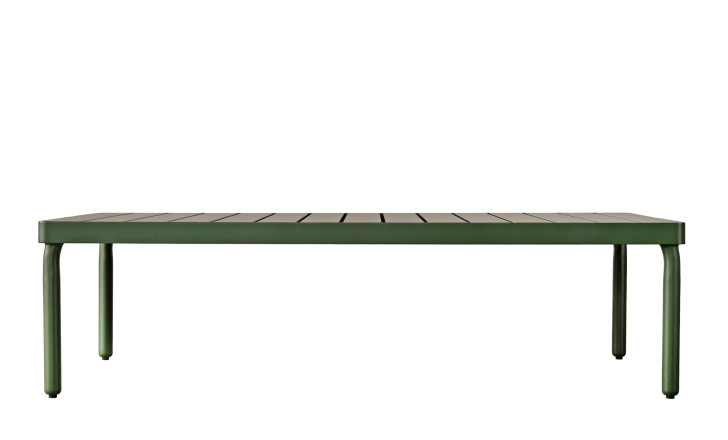
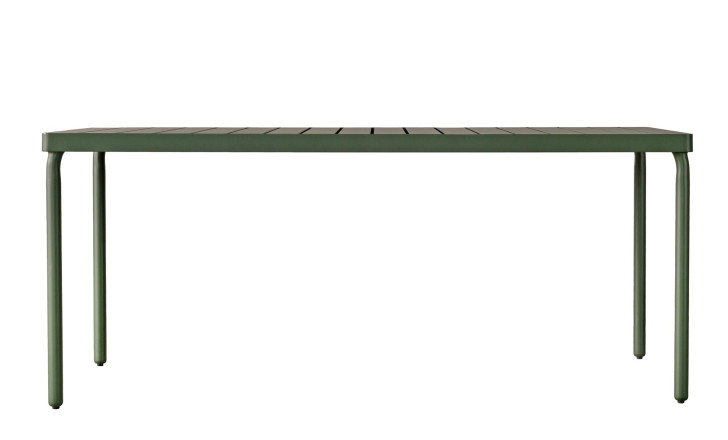
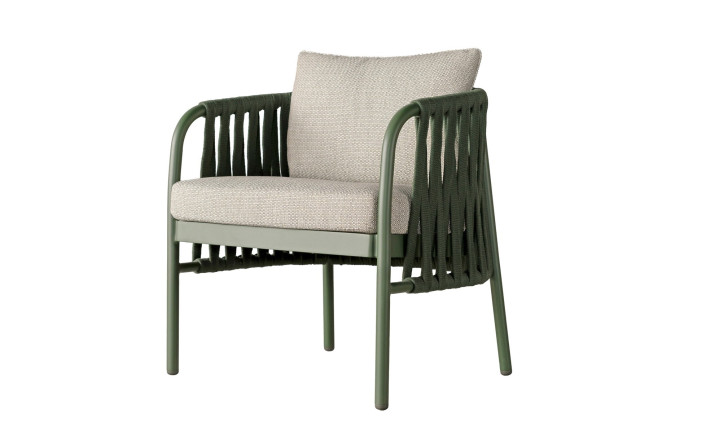
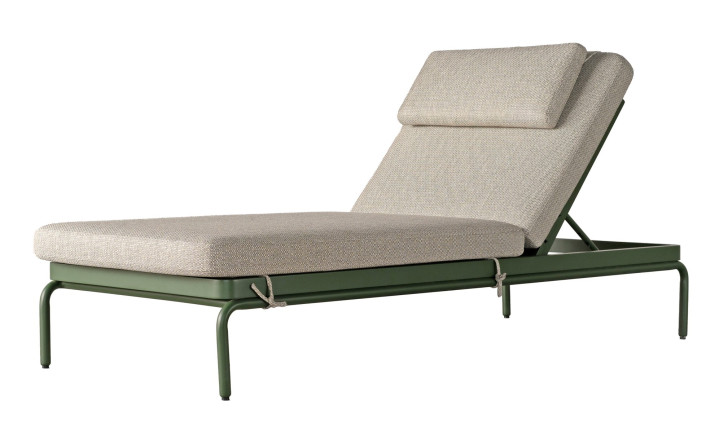
On a terrace, green stops being a colour you choose and becomes part of the view. Taormina’s deep emerald settles among the planting rather than in front of it, so the furniture looks as if it has always been there.
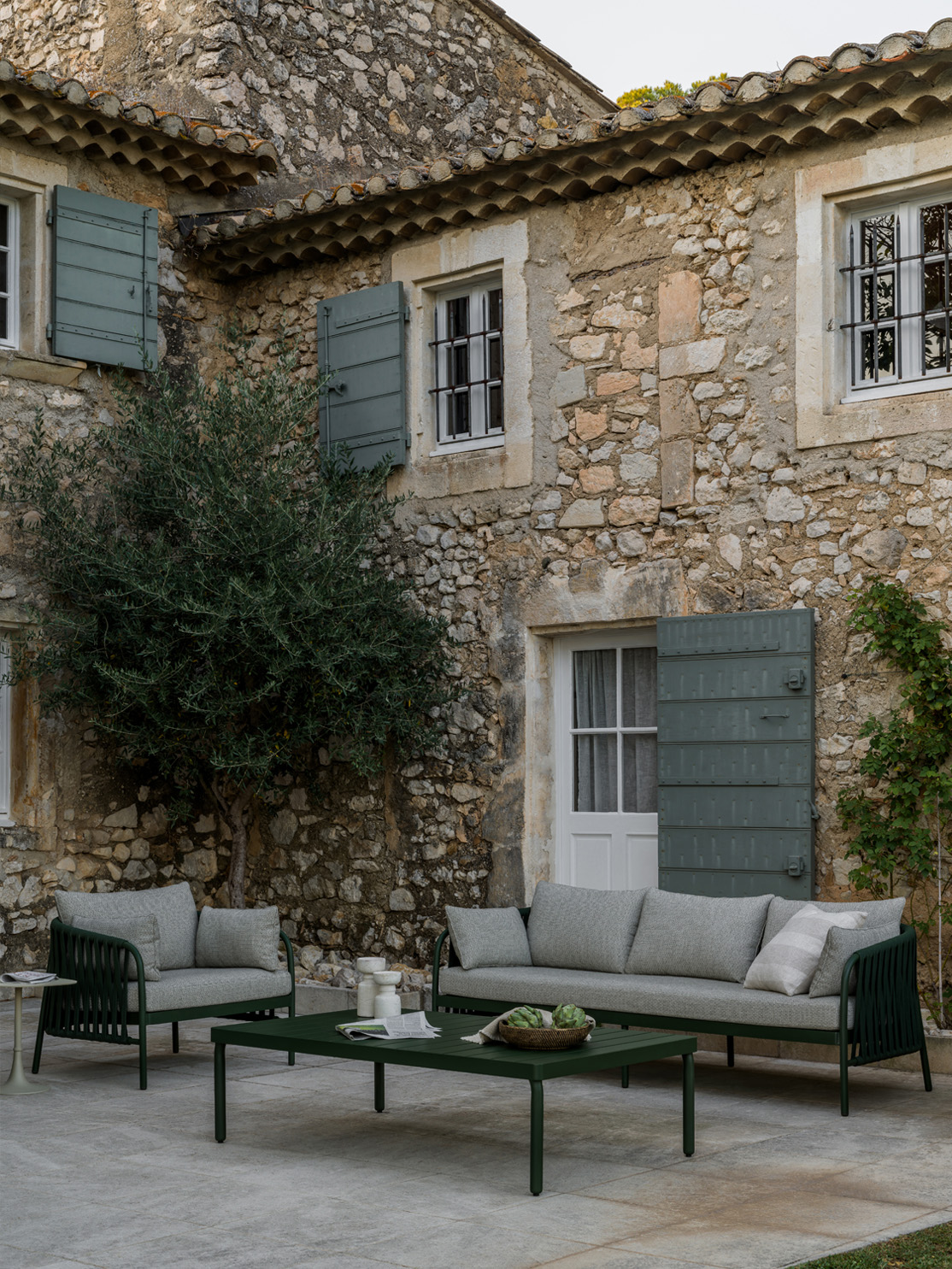
It is made for the long hours outside: coffee in the shade early in the day, dinner as the light goes, a book on the lounger with nowhere else to be.
Rugs, Cushions and Throws
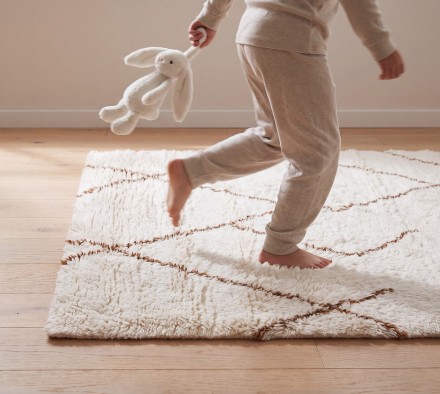
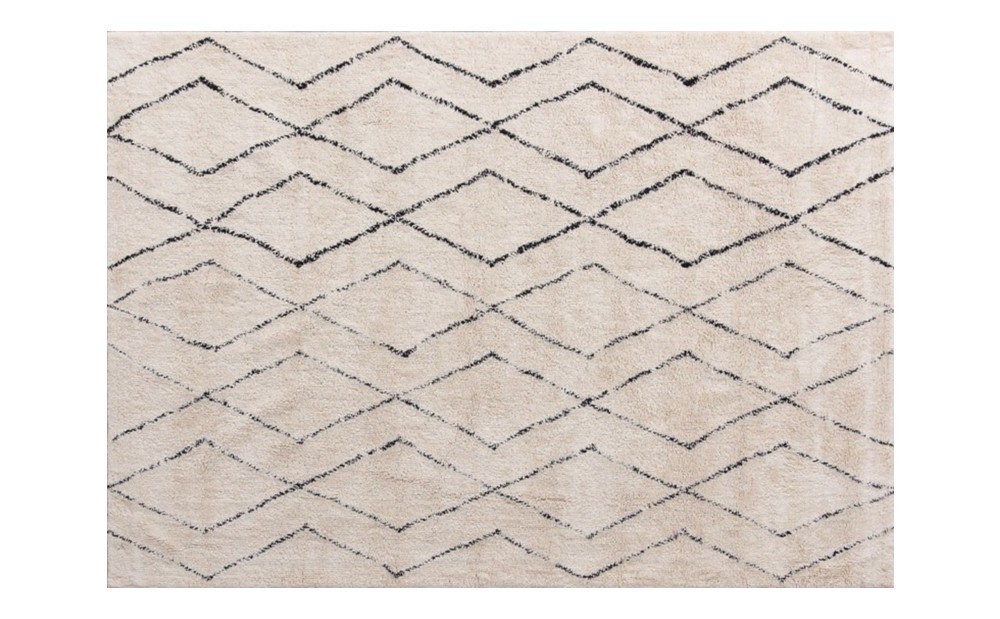
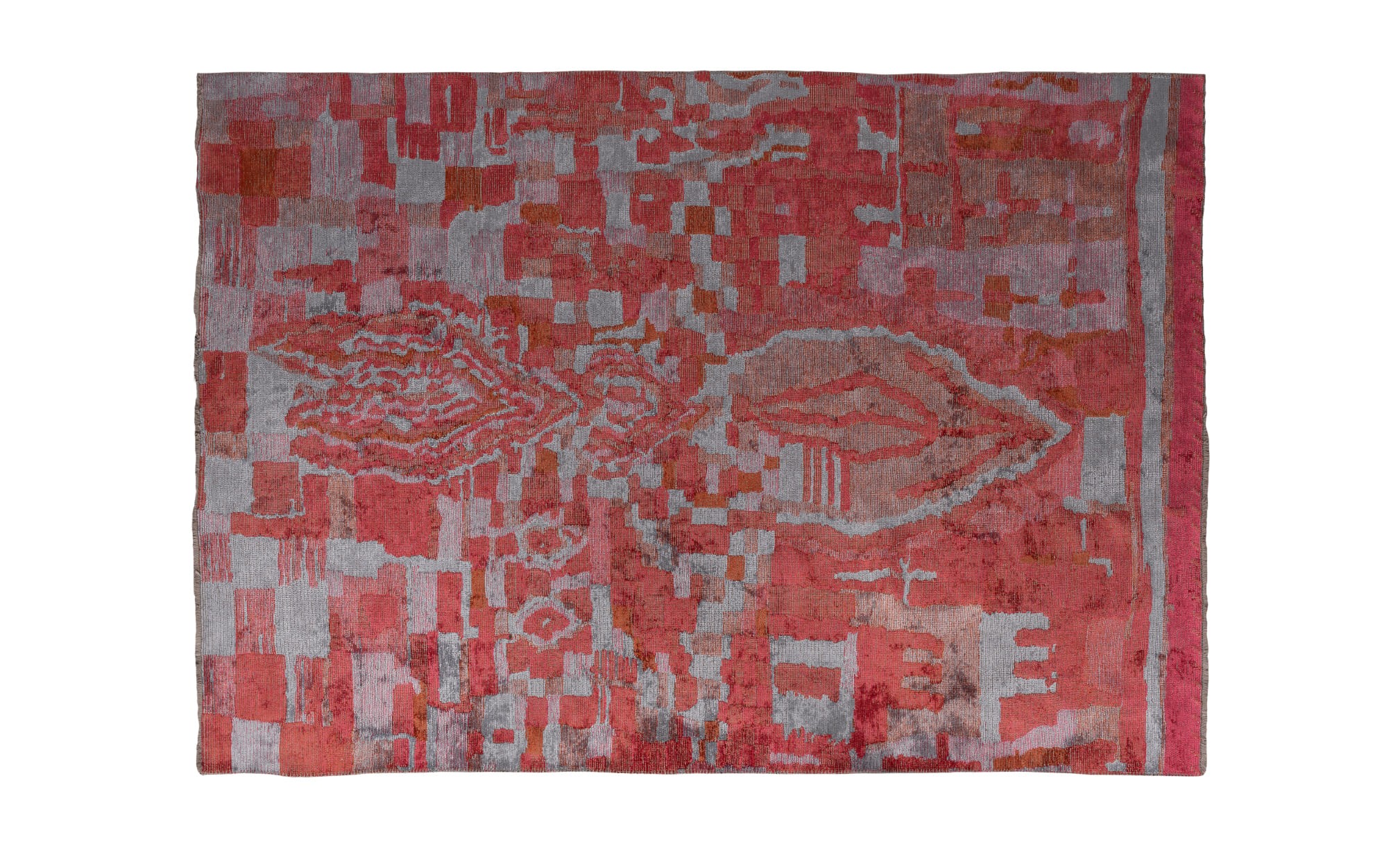
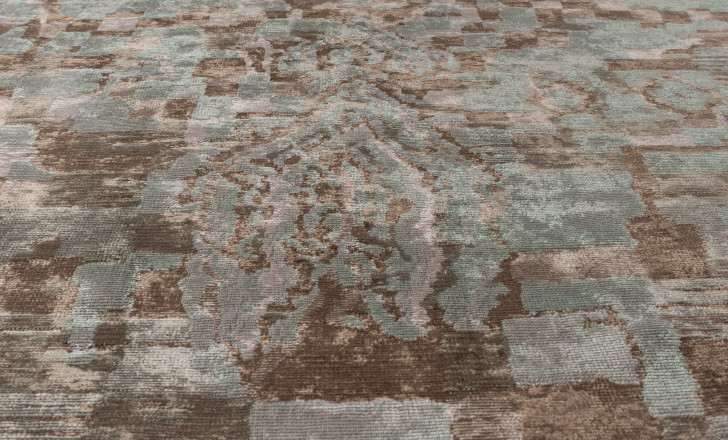
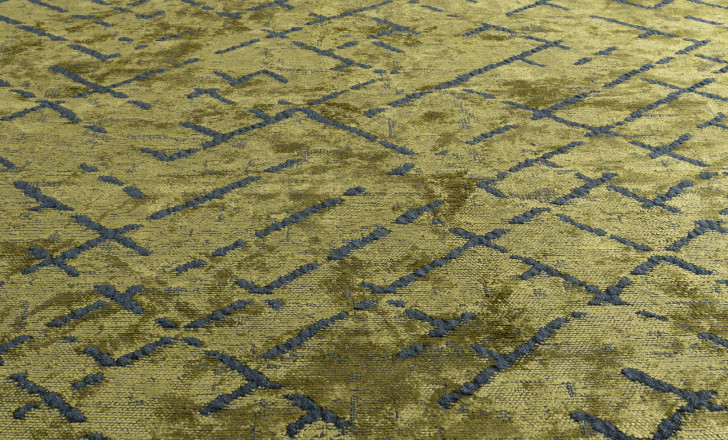
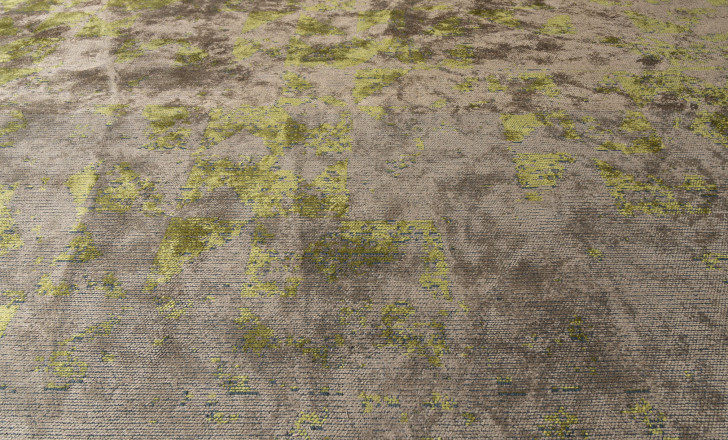
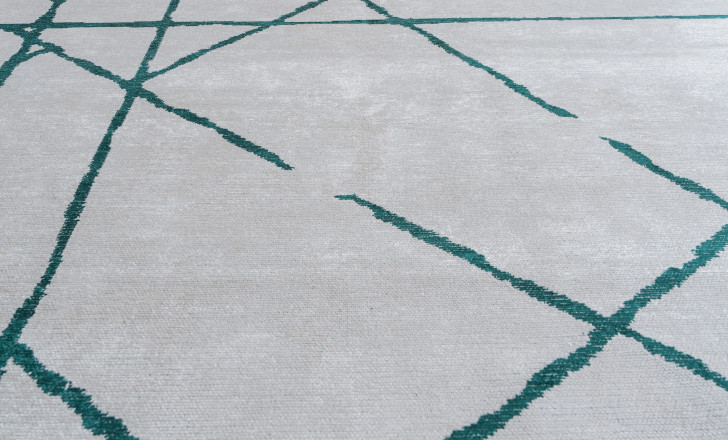
A rug colours a room from the ground up. Green underfoot feels closer to grass than to carpet, and it is kinder to everyday life than it sounds, forgiving the traffic a pale rug would record.
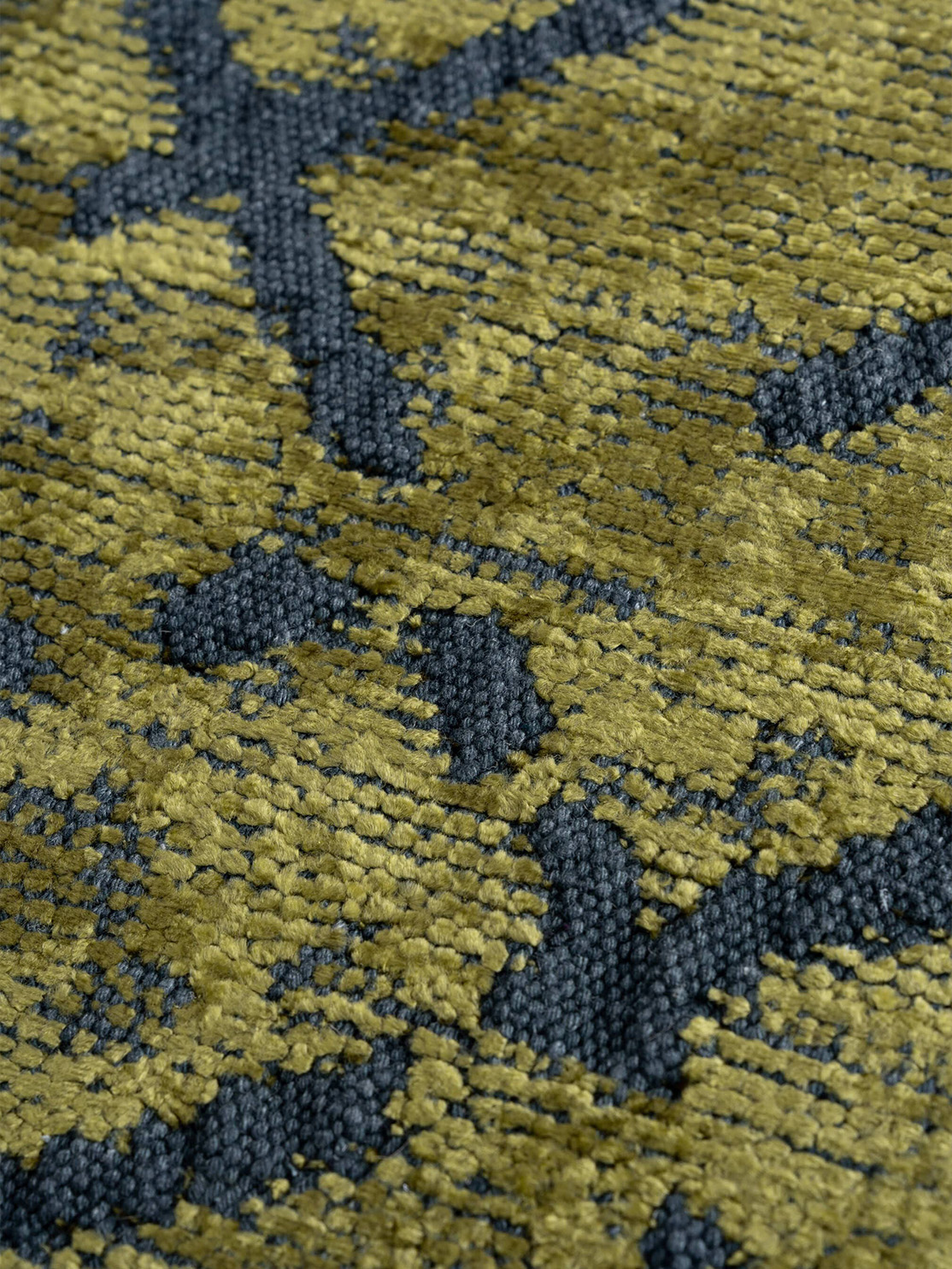
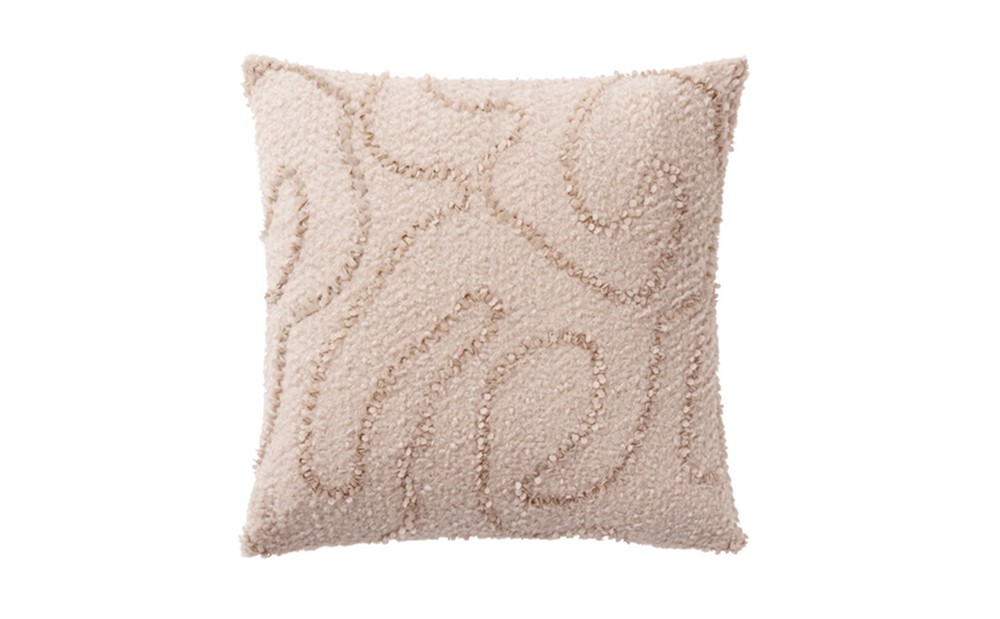
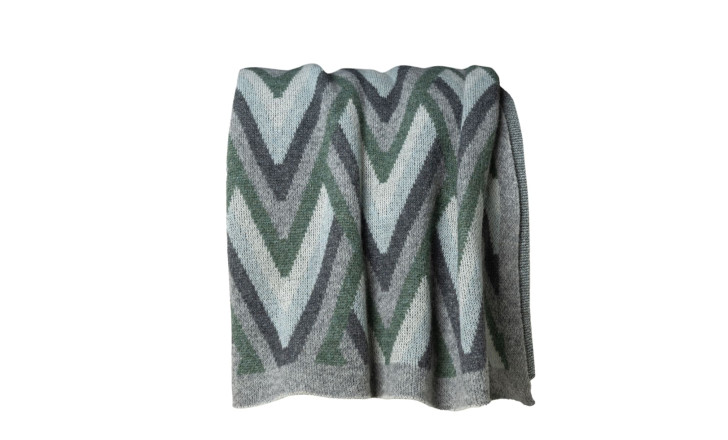
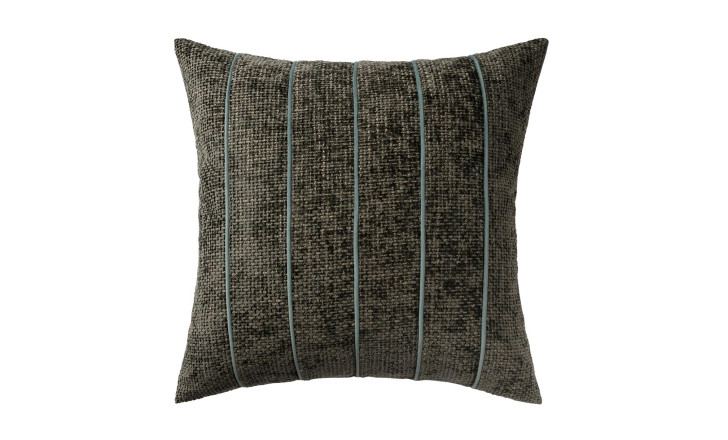
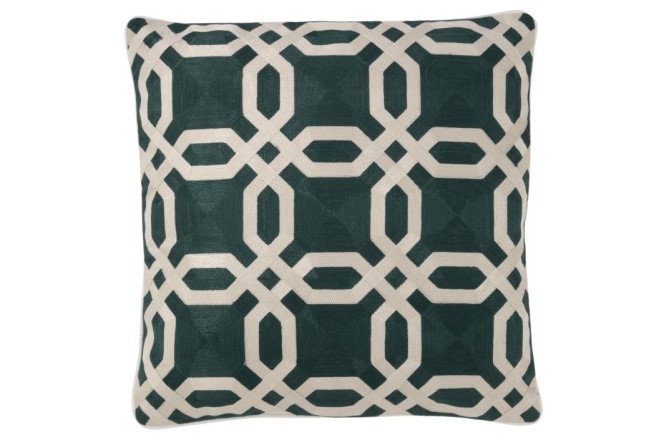
Cushions and throws are the lightest touch of all, and the easiest to change. A green cushion where the hand rests, a throw over the arm of the sofa for the evening, and the room moves with the season without a single piece of furniture shifting.


Wall Art
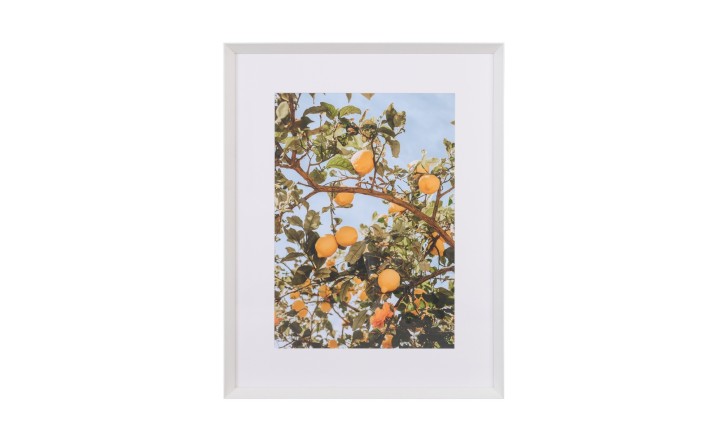
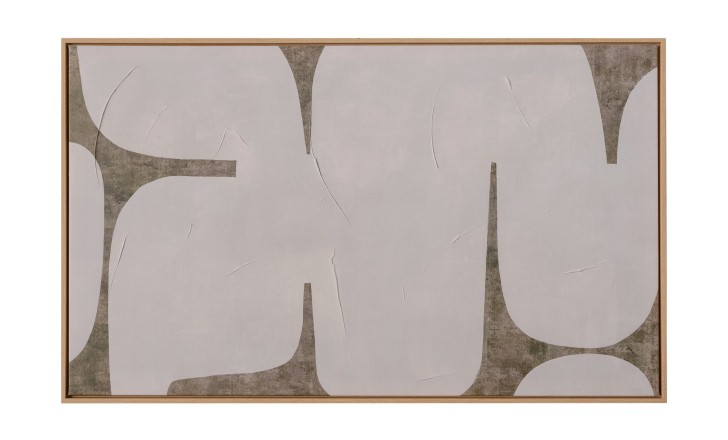
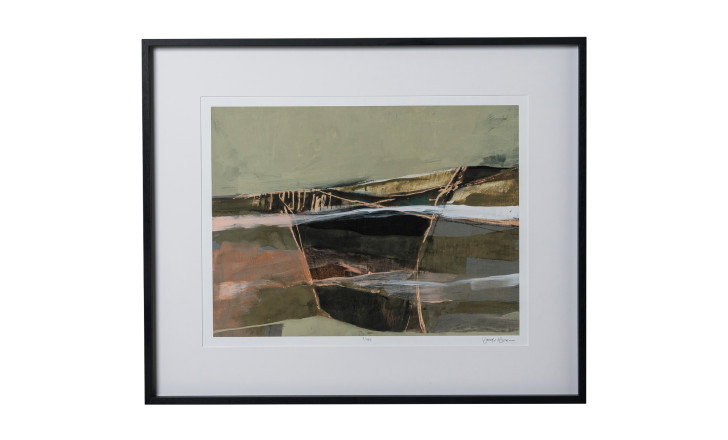
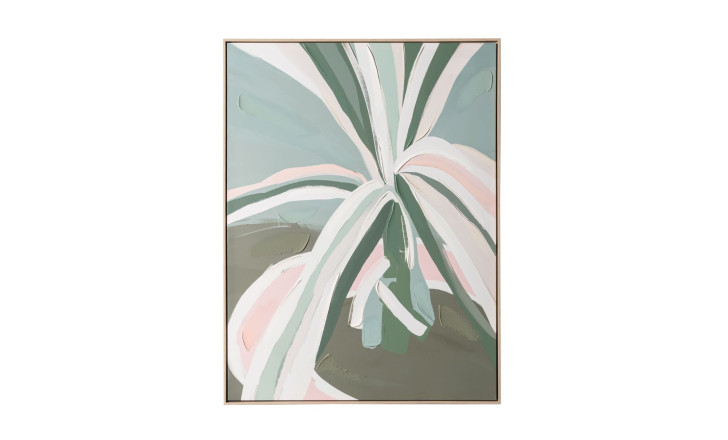
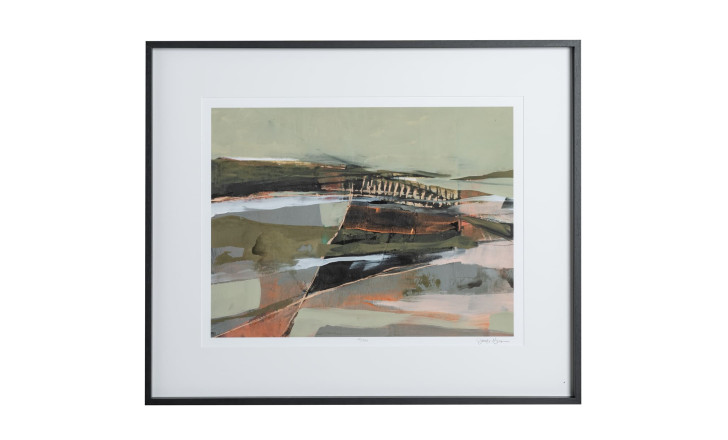
A painting brings green to eye level, where it does the most work. It can be the only green in the room and still set the mood of the whole space.
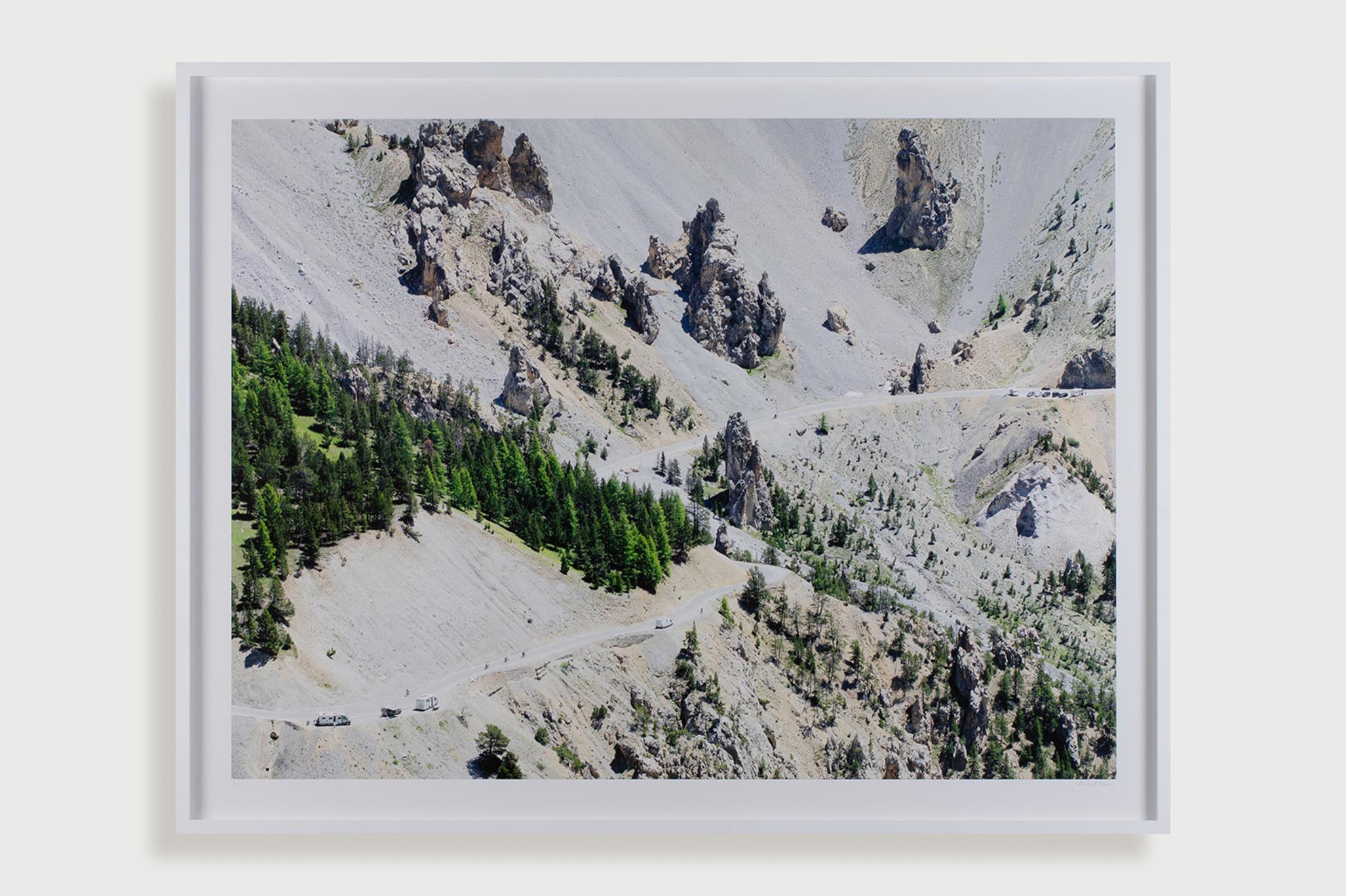
Some pieces work as a pair above a sofa, others as a single quiet note in a hallway or a kitchen. Col D’izoard 2, Michael Blann’s photograph of an Alpine pass printed in an edition of ten, is the one to build a wall around: open air and pine forest, every day.
On the Table
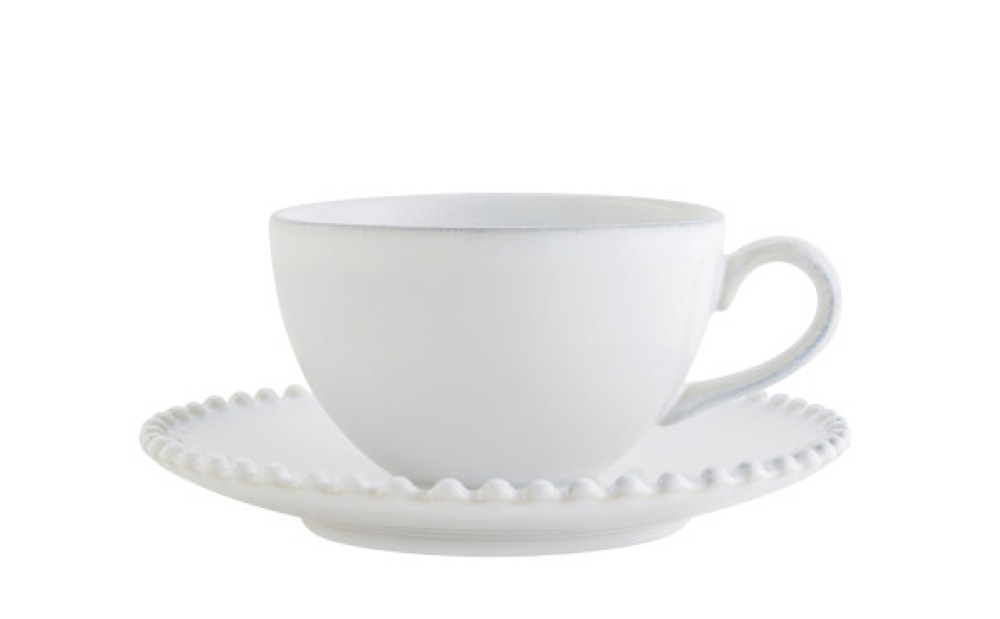
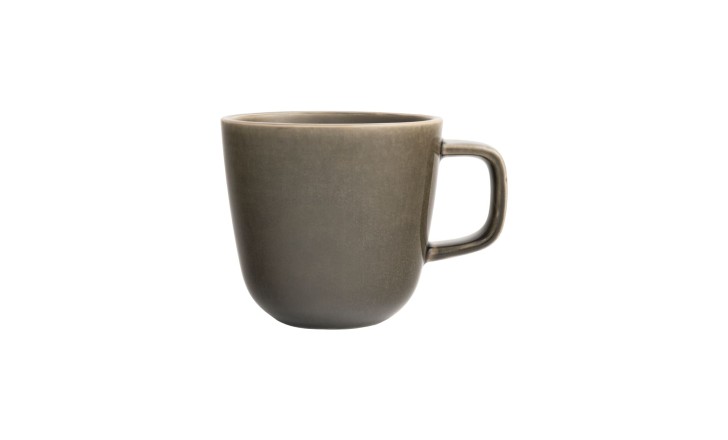
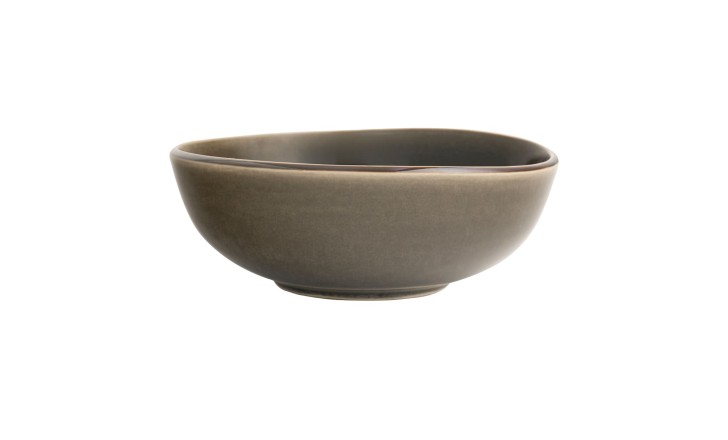
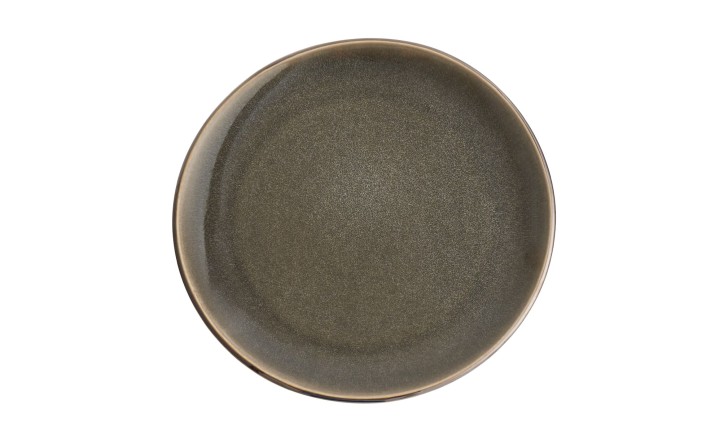
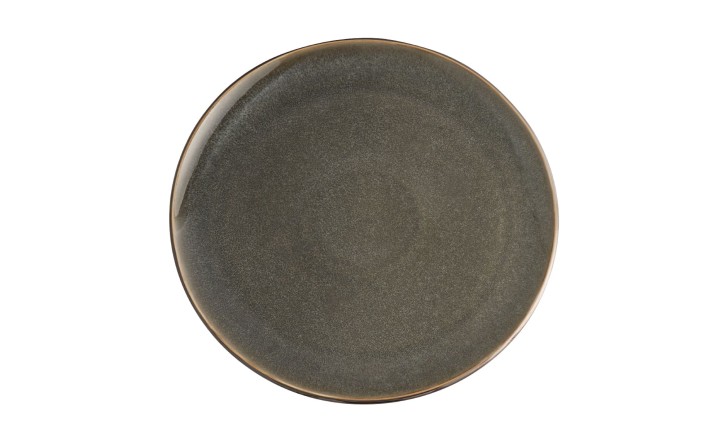
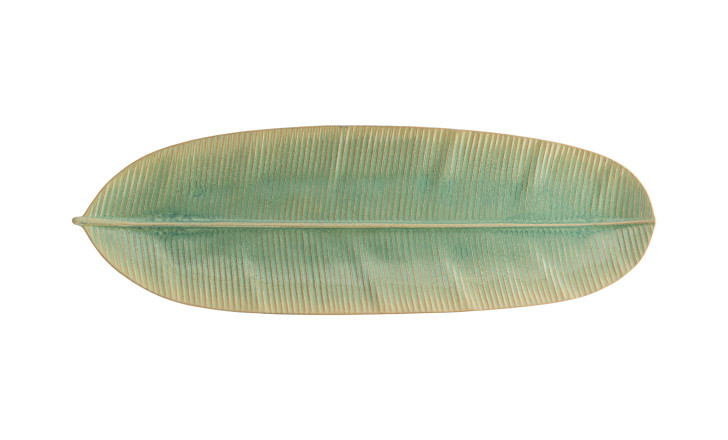
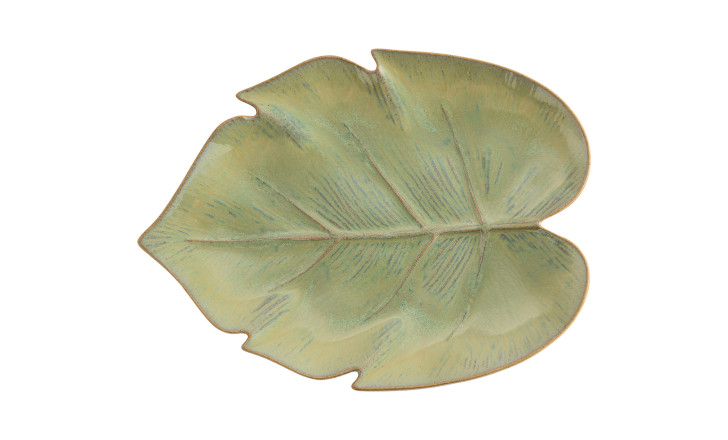
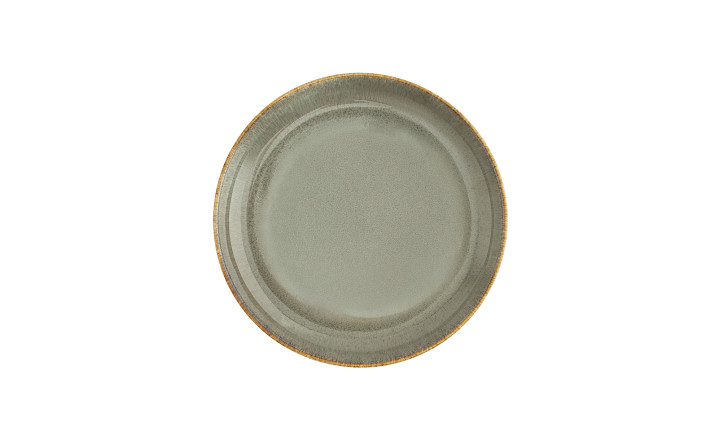
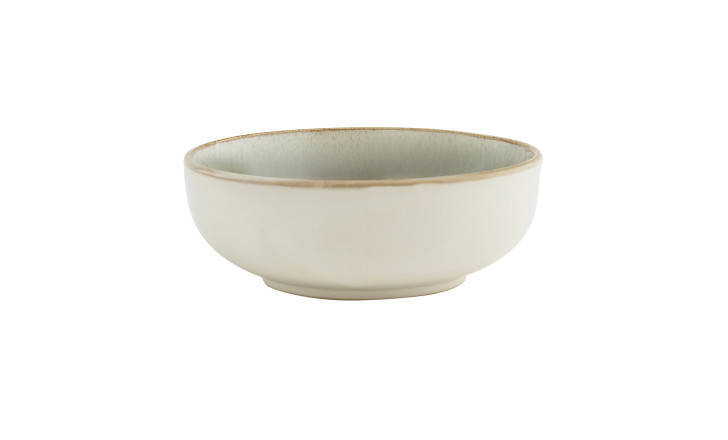
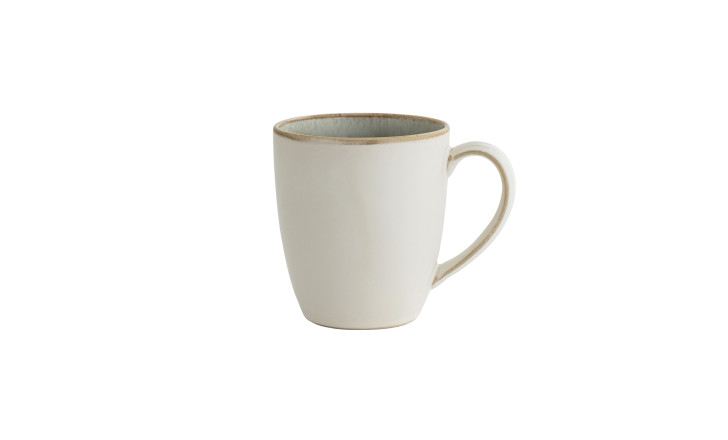
The table is where green is easiest to try. It changes the feel of every meal, and bread, fruit and salad simply look fresher on it than they do on white.
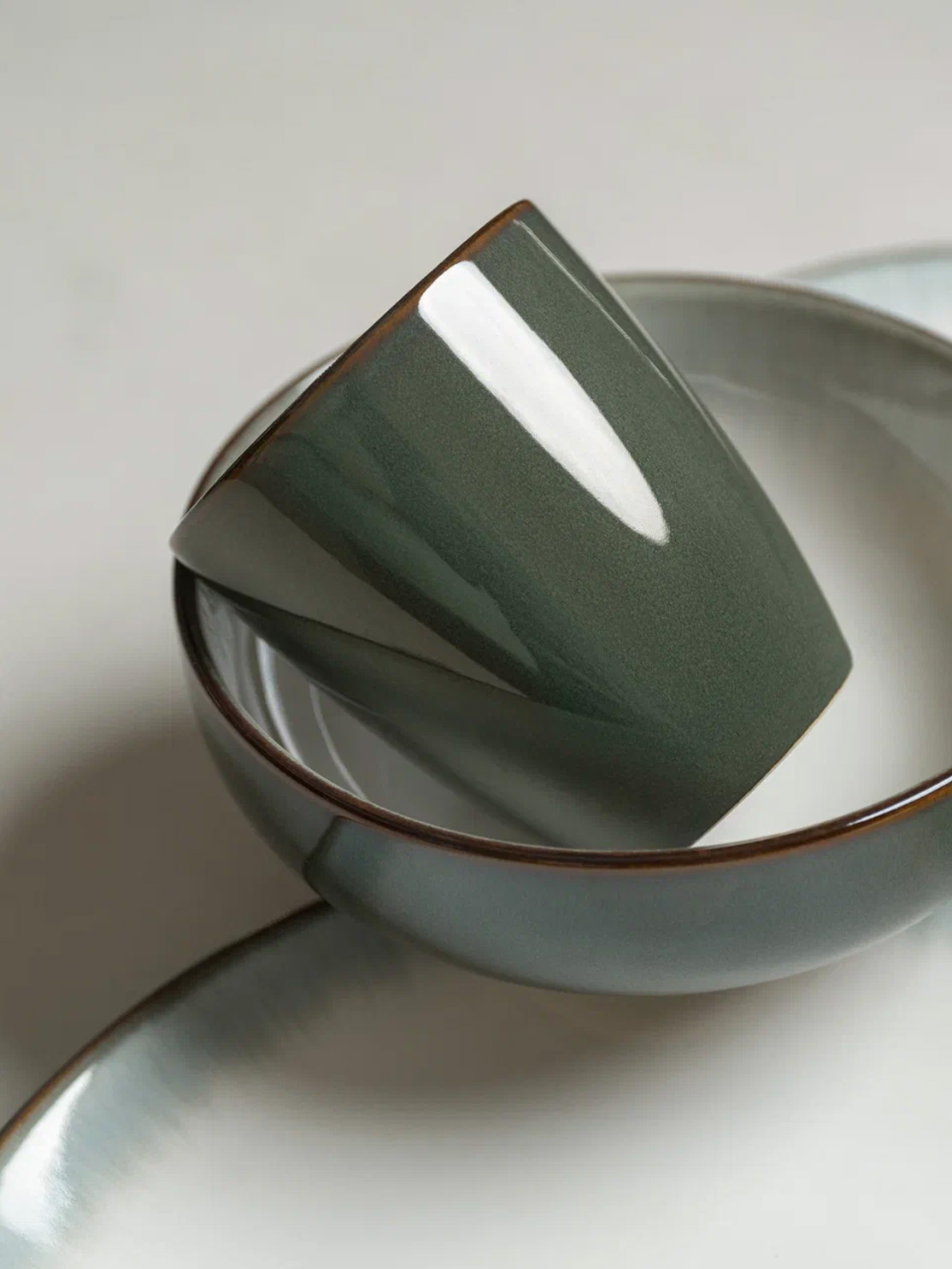
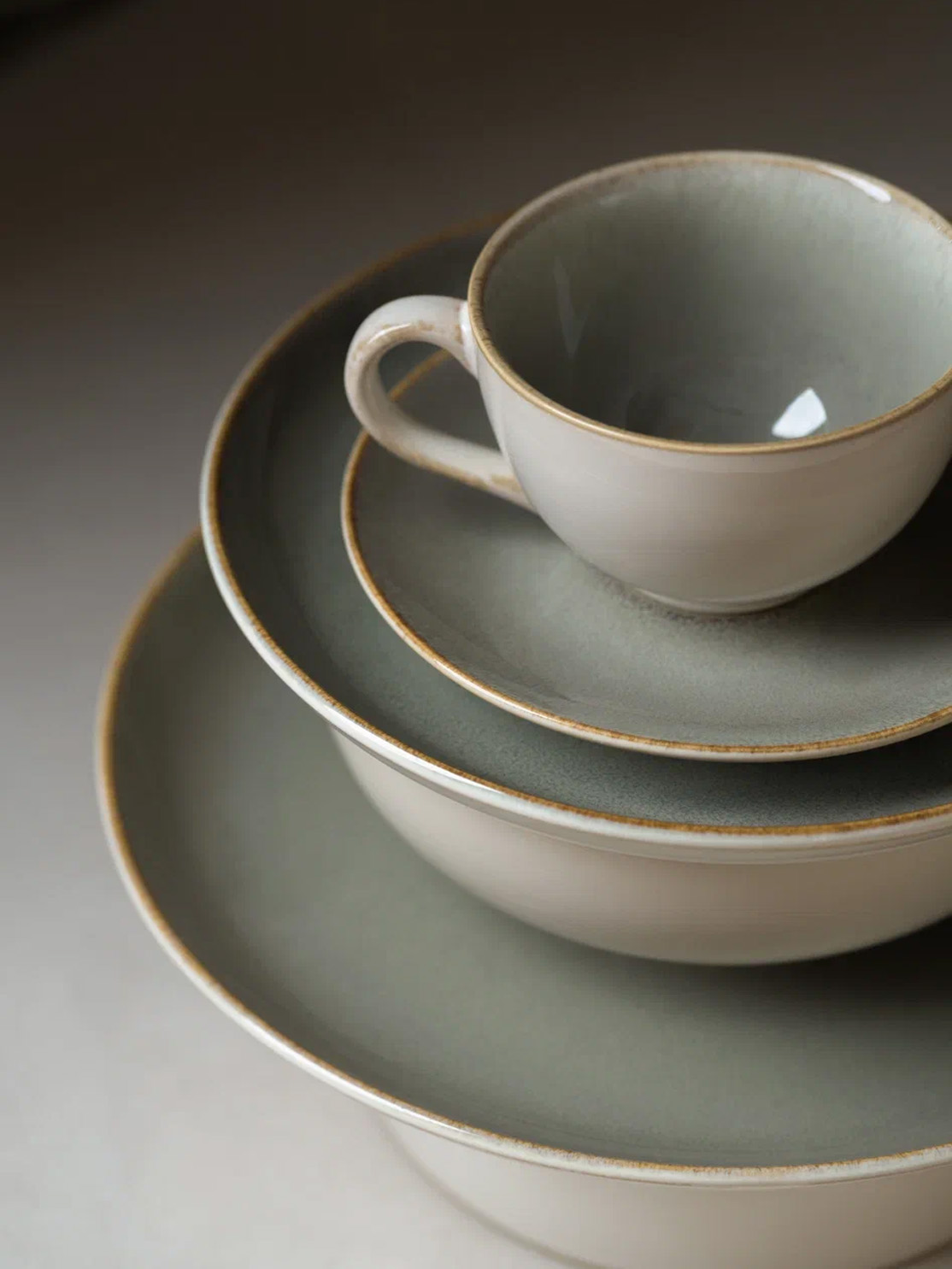
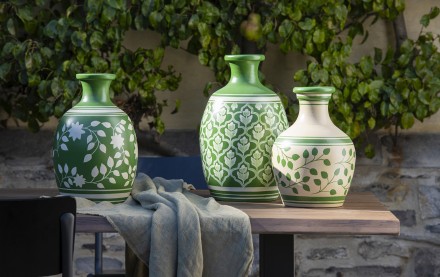
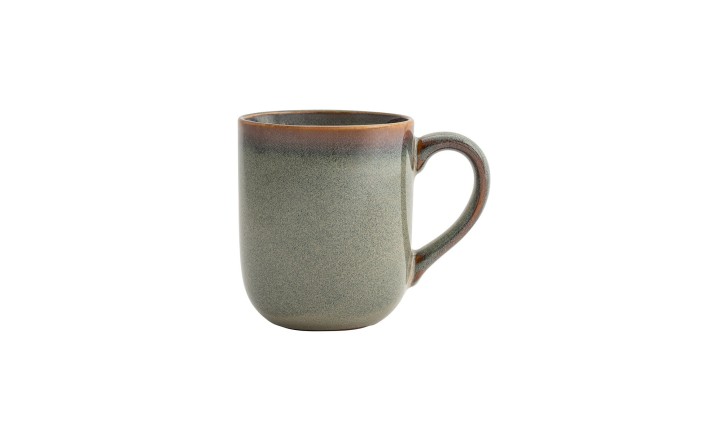
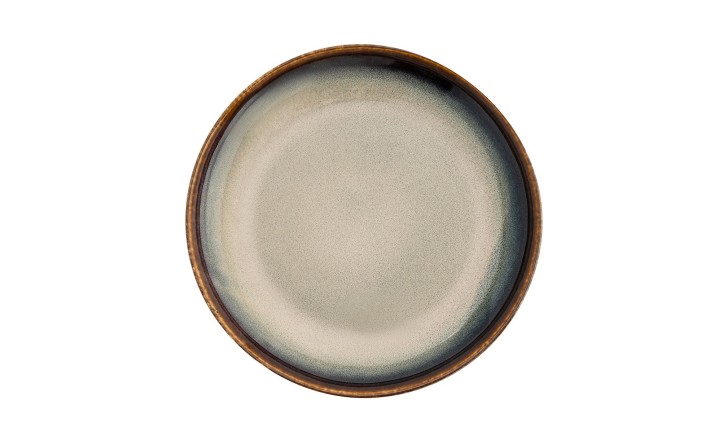
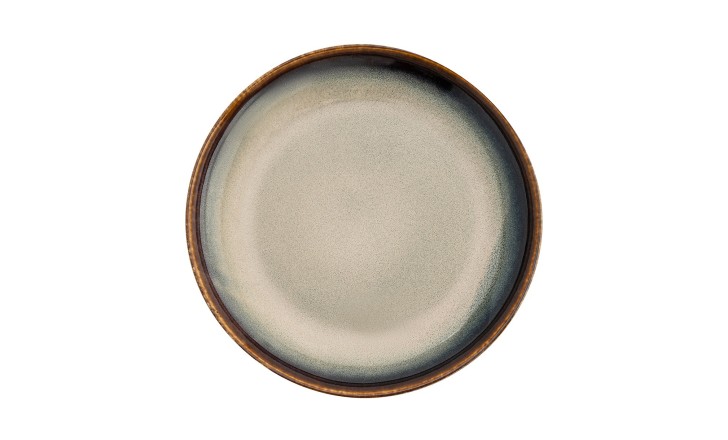
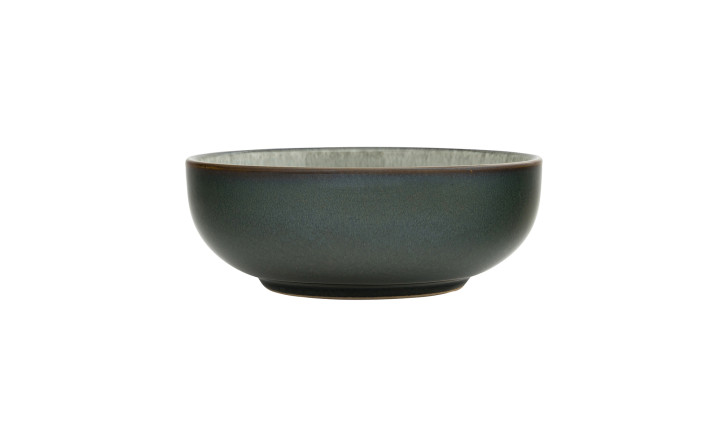
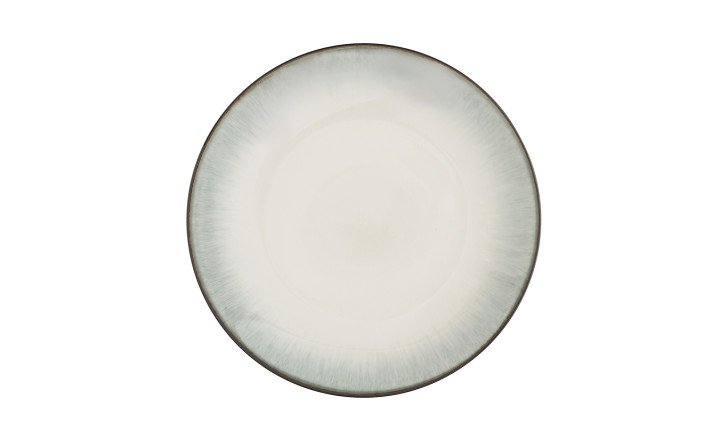
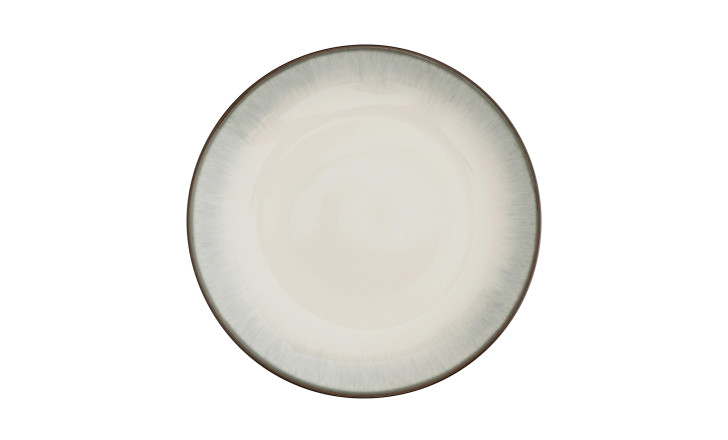
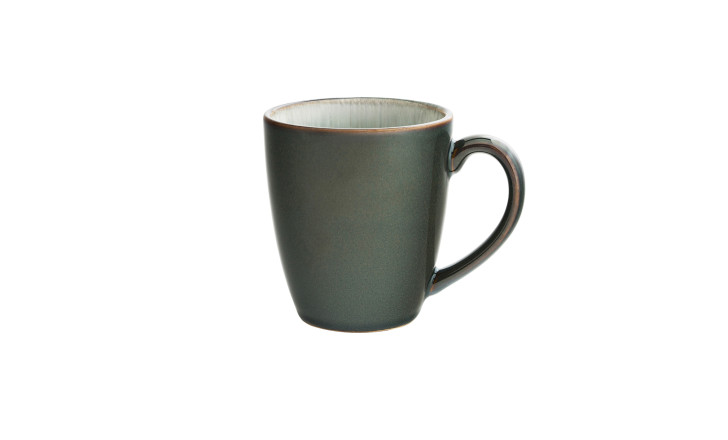
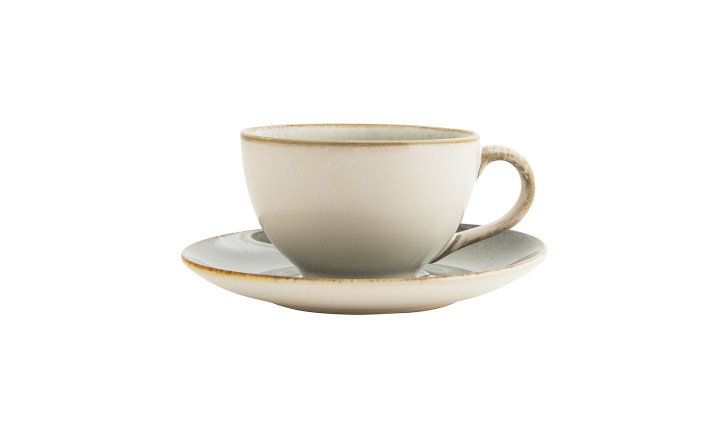
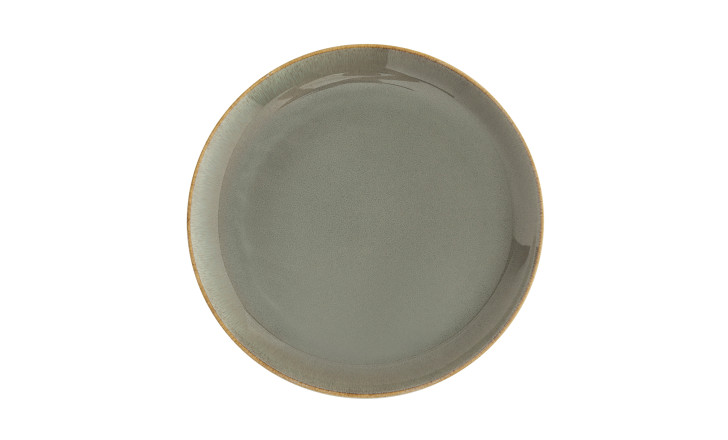
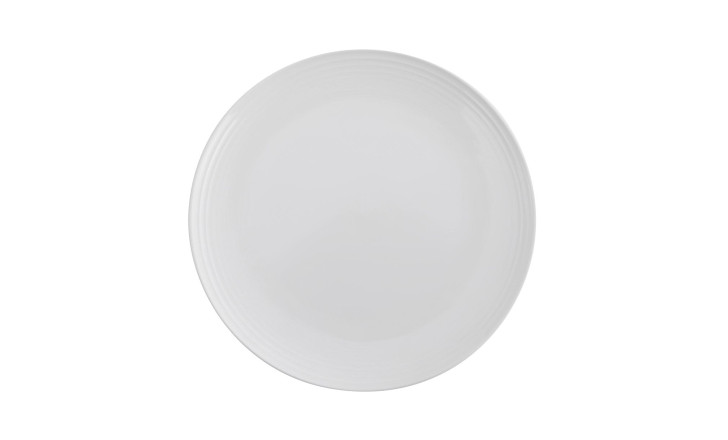
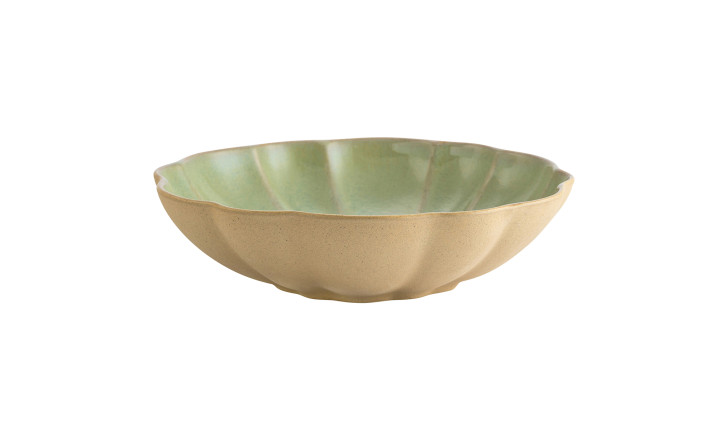
Glazes like these are never quite even, so no two plates match exactly, and that small irregularity is what makes a table feel laid by hand. The collections mix freely, because the greens agree with one another.
And if the colour is still welcome a month later, the sofa can follow.
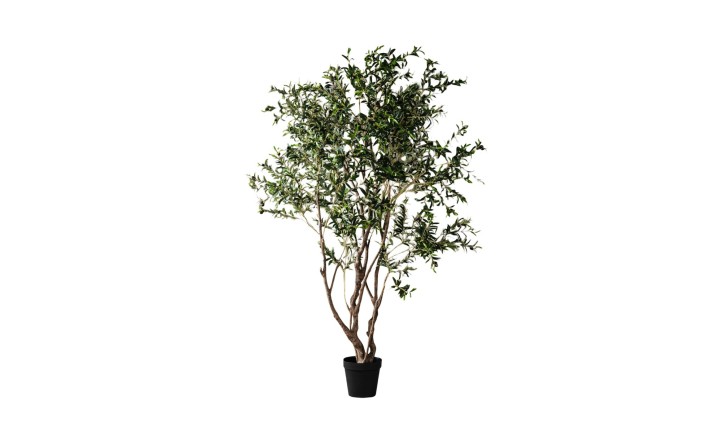
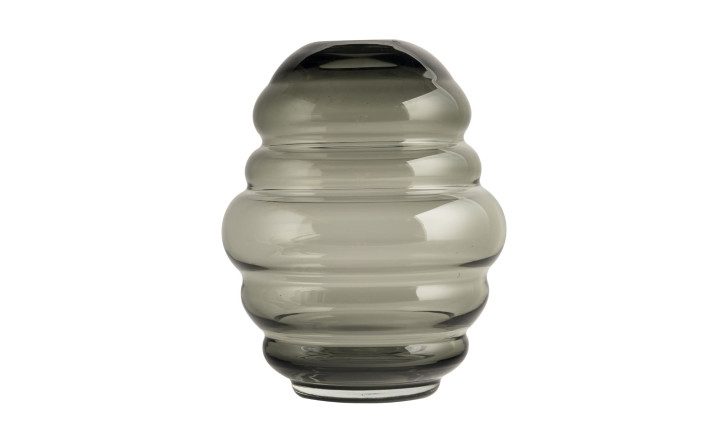
Green has more shades than any other colour in the range, and the right one depends on your light and your materials: the Dantone Home designers can find it with you, from a single cushion to a whole room