

The Long Dinner: A Room That Asks You to Stay

There is only one room in a house where everyone sits facing each other and nobody has anywhere else to be. A sofa lets people drift towards a screen, a kitchen keeps someone on their feet. At a table the evening slows to the pace of the conversation, and the furniture either holds that pace or works against it.
It rarely needs a room of its own. In a 60-square-metre apartment the dining room is a table by the window with four chairs. In a villa it is a slab of marble under a chandelier. The rules are the same at either scale.
A table you want to touch, chairs that hold the lower back, and light that stops at the table’s edge: the rest is conversation
Round or Long
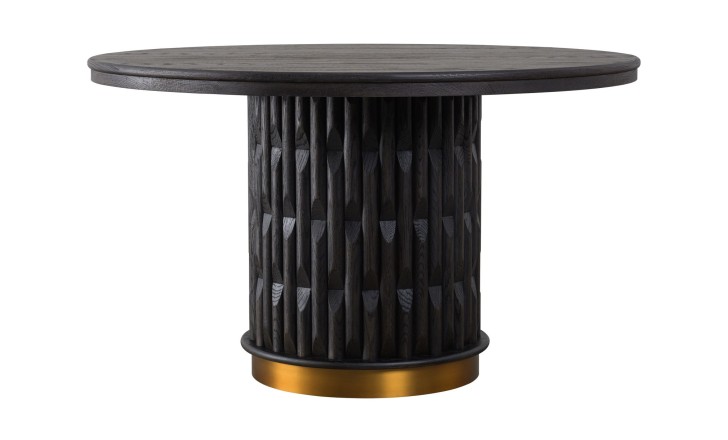
A round table settles the geometry of the evening before anyone sits down. Around the Luxe there is no head and no foot, every guest is the same distance from the centre, and six people talk without leaning past each other. In a smaller room it earns its place twice over: a round top turns through a doorway an oval would not, and every chair pushes in flush, so the table takes less floor than its diameter suggests.

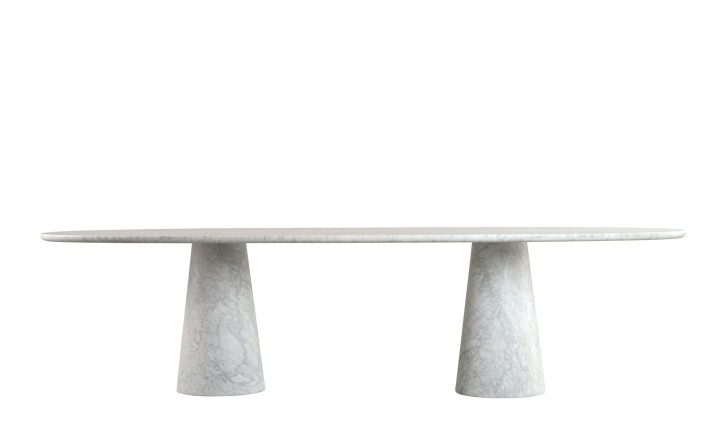
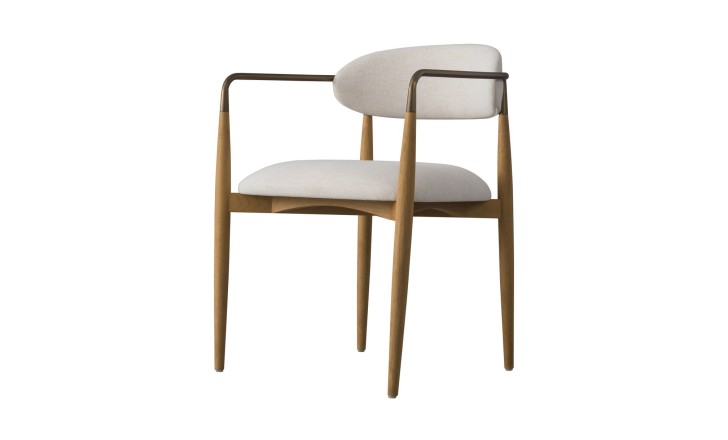
The three-metre Uno takes the opposite view: ten settings with depth between them, twelve at a closer spread, and the whole length of stone left open between the plates. Bradley, in solid oak with armrests, is the chair that belongs at a table this long. Its tapered legs keep the floor visible under a full house, and the arms give an elbow somewhere to rest between courses. Uno at this size ships only to villas and ground floors built to carry it, and those are the houses with the room for it in the first place.
The Carving and the Brass
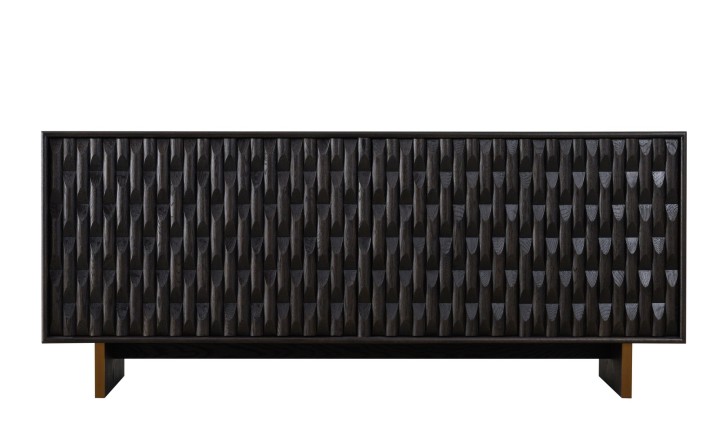
Luxe is a limited edition by James Patterson, the British designer whose Rustic, Textures, and City collections have stayed in the Dantone Home range for years. It began with a single decision: not one surface would be left flat. Six pieces, for the dining room, the living room, the hallway, and the bedroom, all in solid oak carved by hand in a black-brown dry finish, on a plinth of solid brass 10 mm thick. Carving into solid timber allows no corrections: every cut is final, and the rhythm has to hold from the first to the last.

Depth on a surface is worked in millimetres, and those millimetres decide how the piece lives with you. Flat fronts hand the light straight back. These hold shadow in every cut, so a table that reads almost black at noon gains its full relief under a lamp after dark, and the room changes between lunch and dinner without anyone touching it. The brass ring lifts the whole mass clear of the floor, so nothing gathers beneath it and a robot vacuum passes under the base on its own.

Stone That Decides for Itself
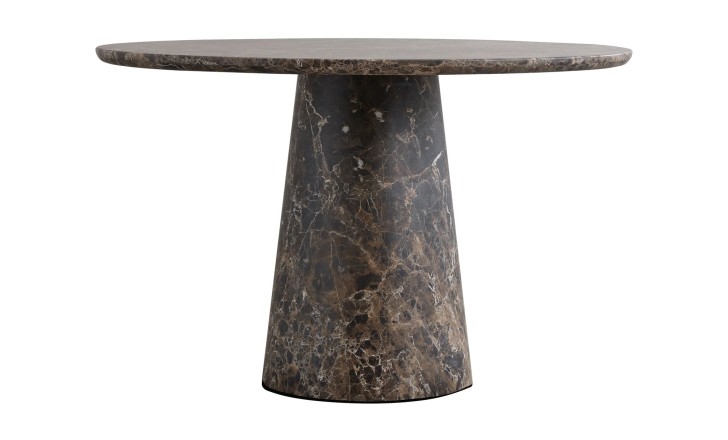
Uno is cut from a single block of marble in Italian workshops: the top one slab, the base a tapered cone of the same stone, nothing laminated, nothing veneered. Bianco Carrara comes from the Apuan Alps above Tuscany, the range that supplied Michelangelo. Dark Emperador is quarried in a narrow band of southern Spain and reads as deep brown until direct light brings its gold veins forward. Because every table is its own slab, no two surfaces share a pattern. The stone decides.

 Dima Ghanem
Senior Architect & Interior Designer at Dantone Home
Dima Ghanem
Senior Architect & Interior Designer at Dantone Home
"I ask one question before we talk about stone or wood: what does this table have to survive? Homework, a laptop, a toddler, a dinner for ten. If the answer is everything, I point people towards oak. If the table is where the house entertains, marble earns its place, and the small care it asks for becomes part of the evening."
The surfaces are hand-finished with a soft matt seal, which gives the stone a quieter presence than gloss and protects it from everyday marks. Under the forearm it stays cool on a September evening, a water glass leaves no ring, and a steel plate hidden beneath the top carries the load so the marble is never stressed at the join. It asks for one thing in return: a pad under a hot dish, and a wipe with warm water at the end of the night.

Where the Dinner Service Lives
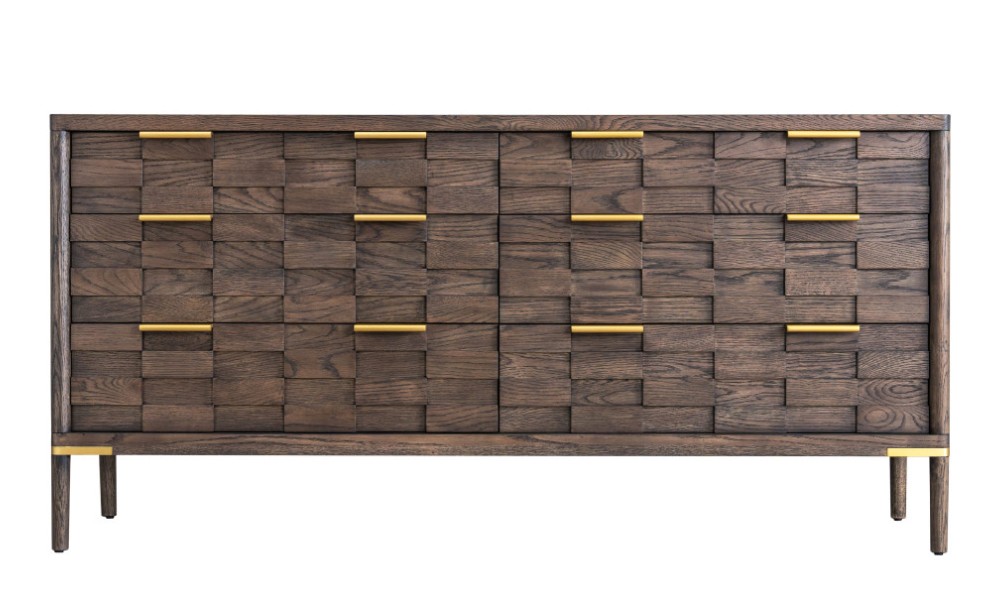
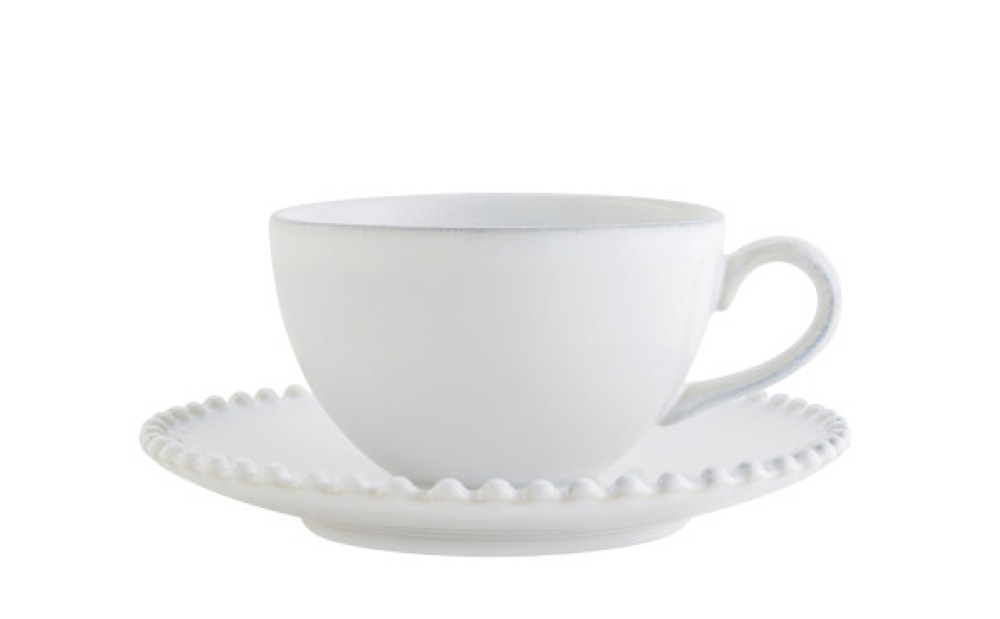
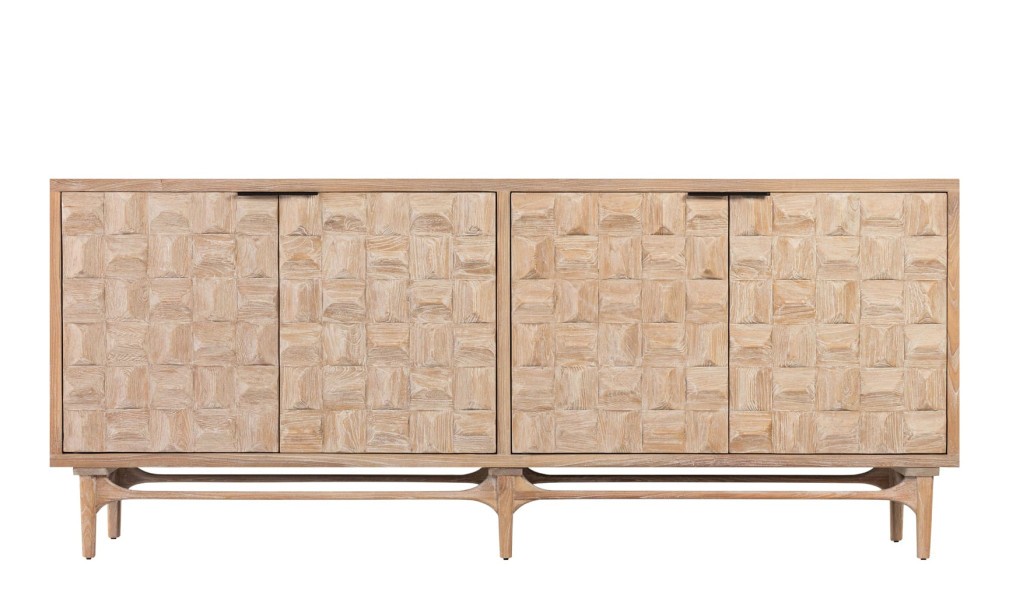
A dining room without storage sends someone to the kitchen for every second course. The Luxe sideboard keeps the service where dinner happens, and it carries the collection’s idea further than any other piece: the relief runs unbroken across the door joins, so four doors read as one carved panel, and no handle interrupts it, because the pattern gives the hand enough to hold. At 193 cm it takes a full set of Grace stoneware behind the doors, plates in stacks, mugs in a row, and leaves the top free for serving once the table has run out of room. The brass plinth keeps a clear gap at the floor, so crumbs have nowhere to hide.

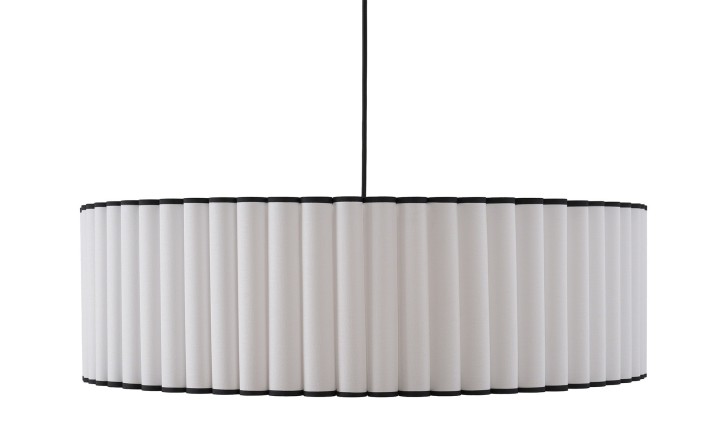
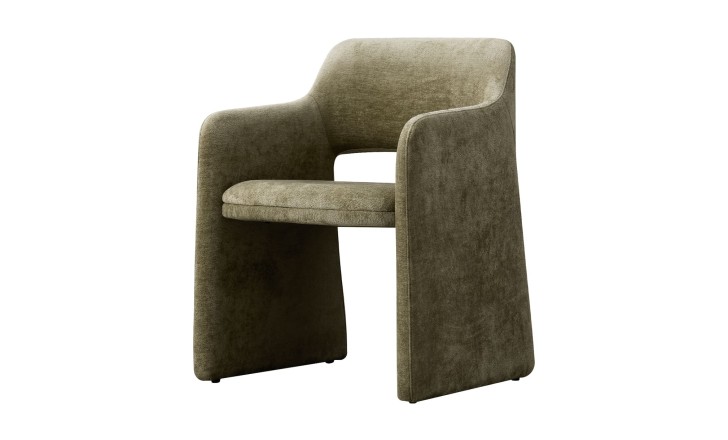
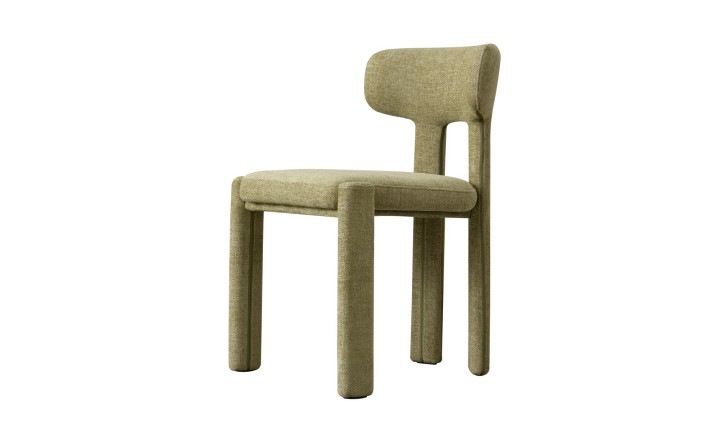
The Dantone Home designers can plan the room from the slab or the oak outwards, down to the height of the pendant and the chair for the end of the table
Items