
Two Tastes, One Living Room: The Nube Sectional Sofa in a French Chateau
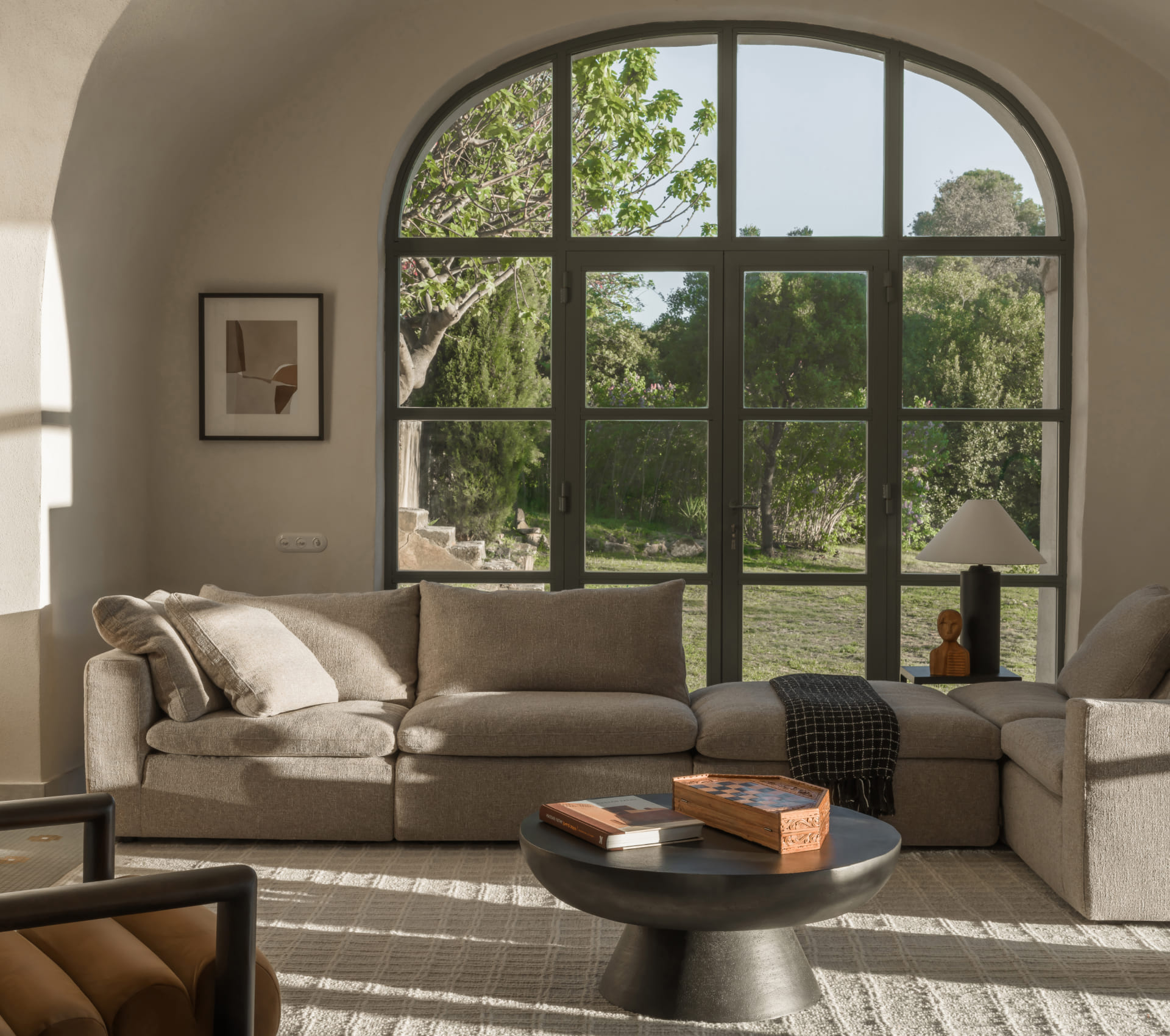
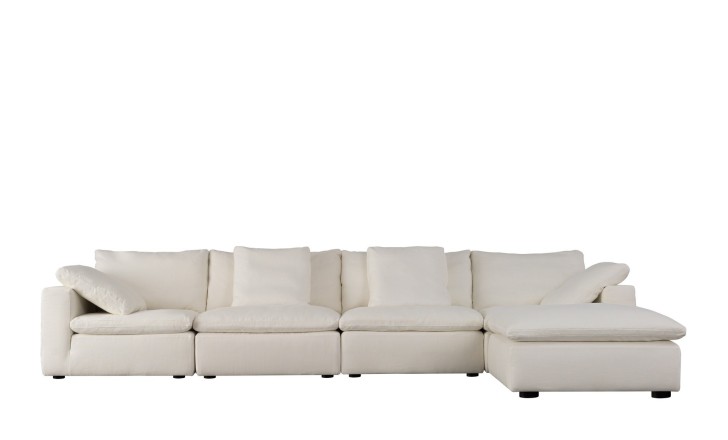
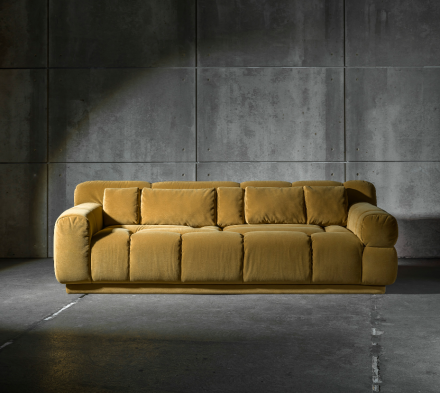
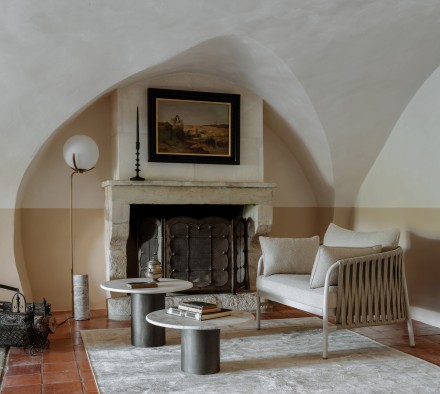
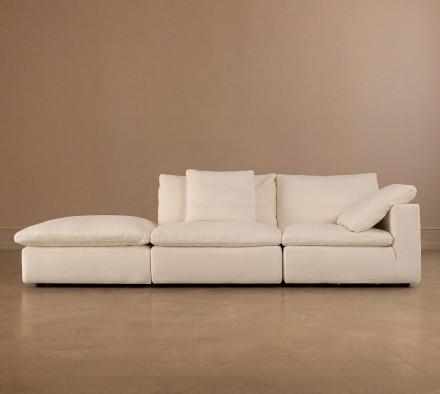
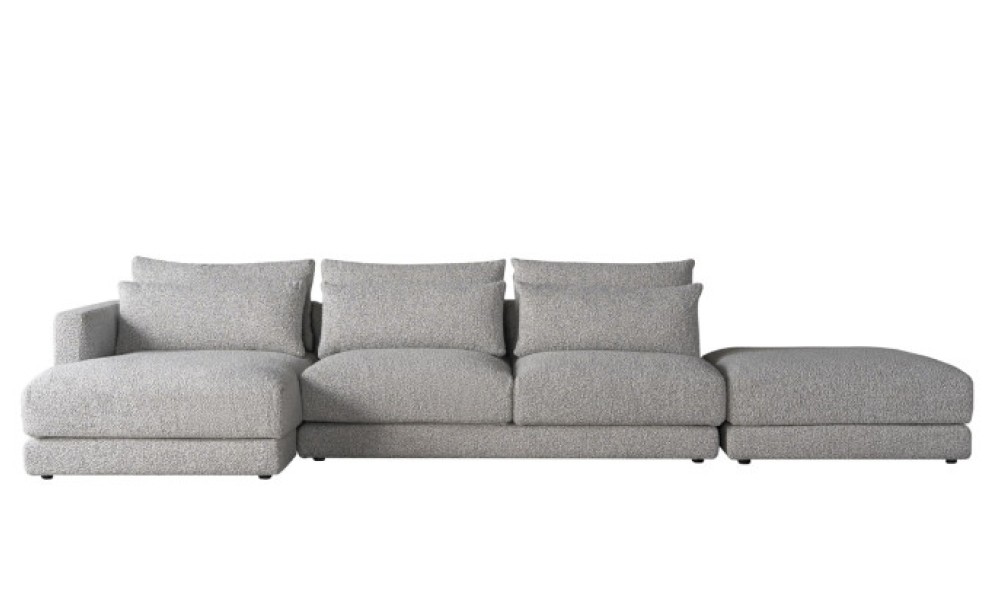
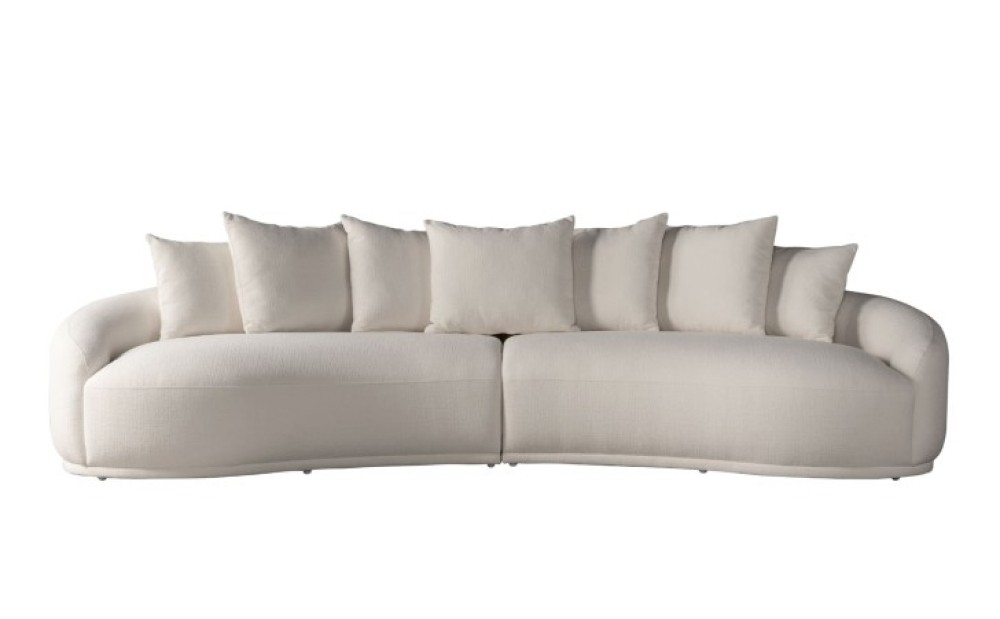
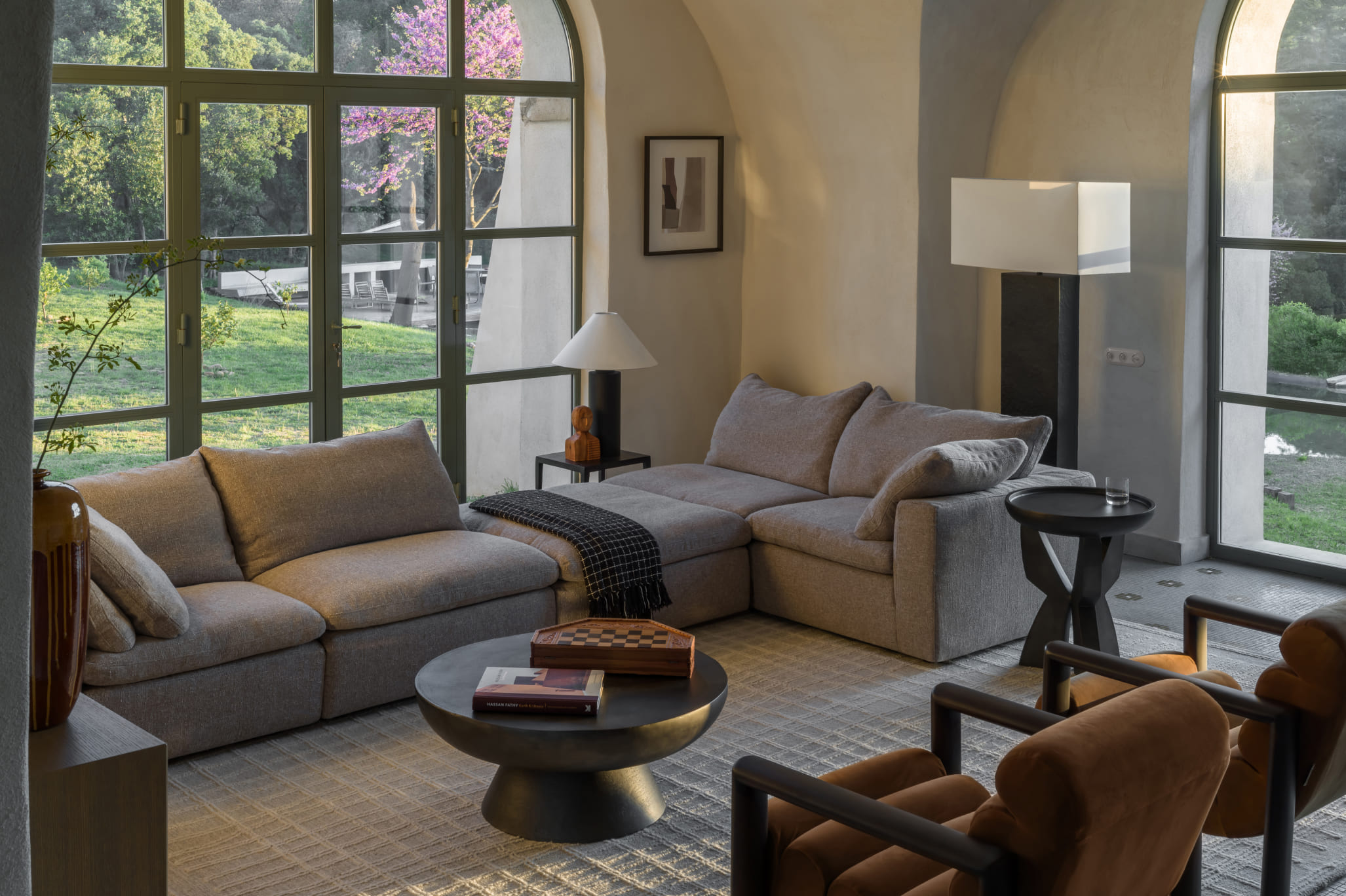
The architecture led the design. Vaulted ceilings and a generous volume called for refined proportions and balanced forms. The Nube Sectional Sofa anchors the living room – neutral, generous in scale, and built to be reshaped to the room rather than the other way round.
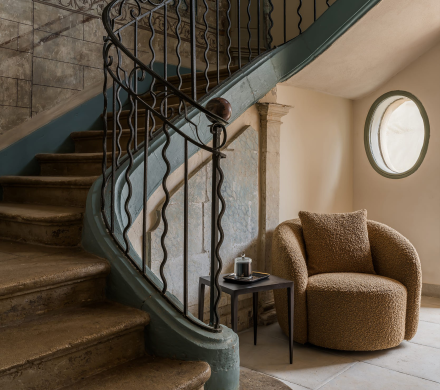
The setting: Château de la Tour in Vauvert, southern France. Its history stretches back to the twelfth century – from monastic property to aristocratic estate. Today's residents have brought their own rituals, rhythms, and sense of beauty
Character and Place
Two very different personalities share this home, both with impeccable taste. One values comfort – the ability to sink into a quiet, enveloping space. The other looks for stylistic precision, expressive form, and the architectural clarity of line. The result is a balance: experimentation tempered by restraint, rule-breaking tempered by respect for the canon.
The Architecture of the Seating Area
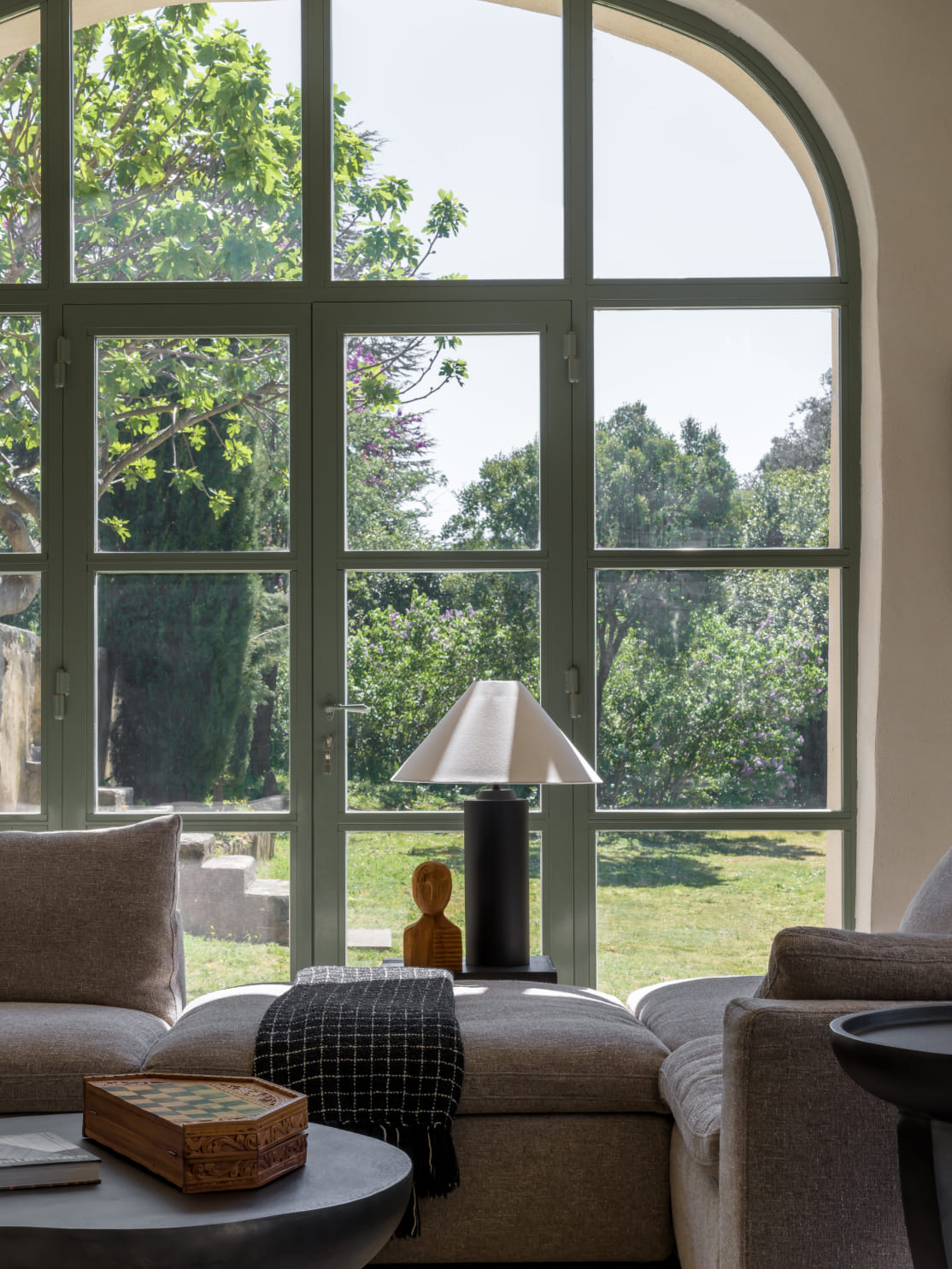
The vaulted ceiling called for an unexpected configuration: an asymmetric arrangement with a pouf-island at its centre. Rather than reading as a single mass, the seating area finds a punctuated rhythm – and the room stays open. The pouf is approachable from either side, with the terrace in view from both. The same logic works in any room with strong proportions: a Provençal chateau, a Dubai villa with double-height ceilings, an apartment built around a long terrace view.
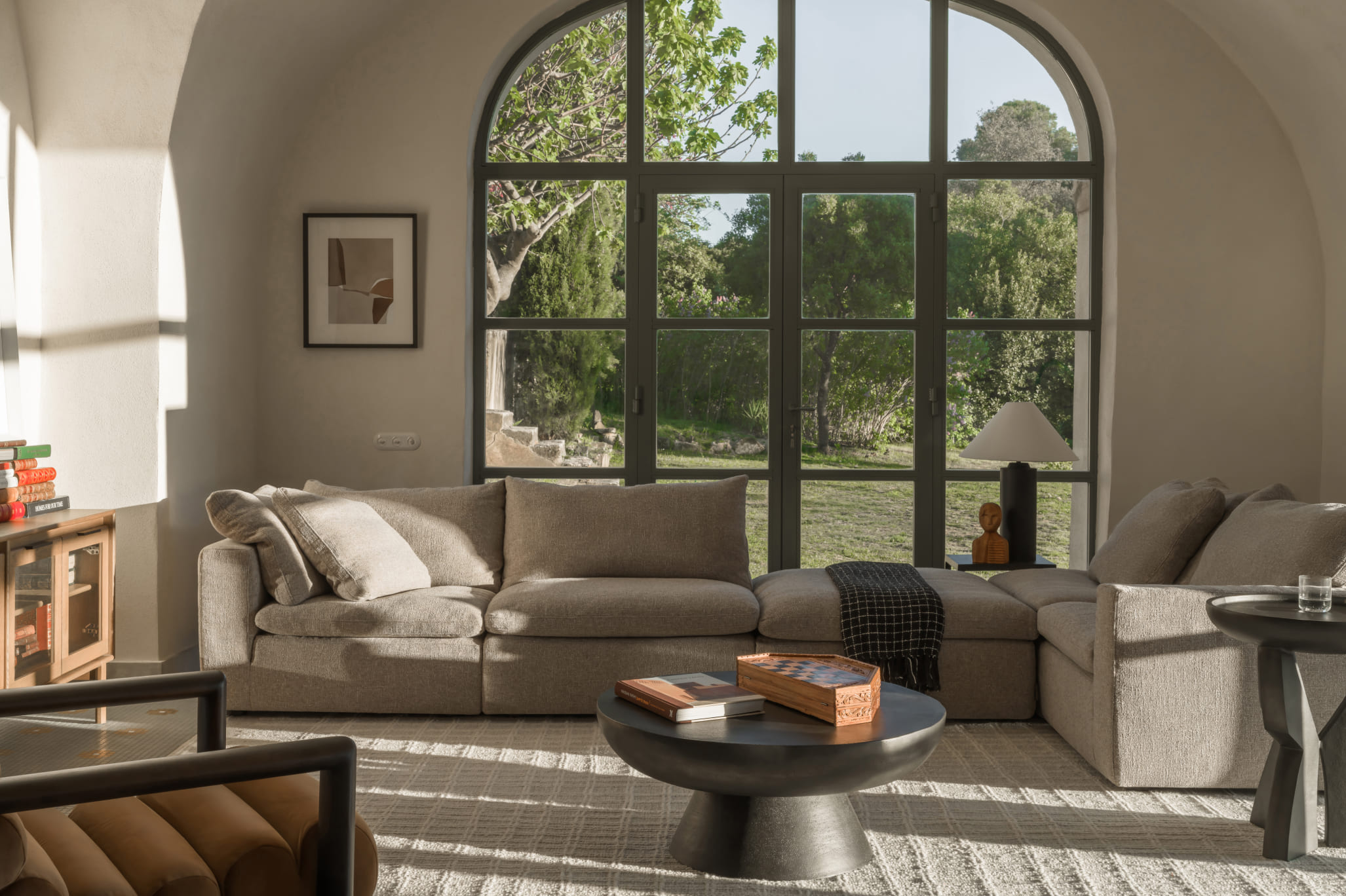
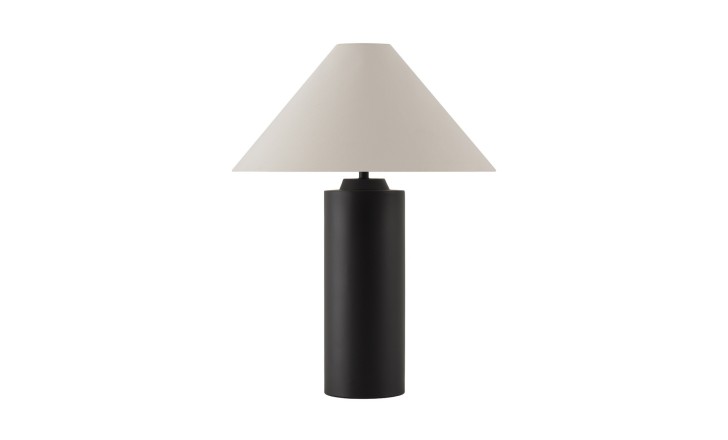
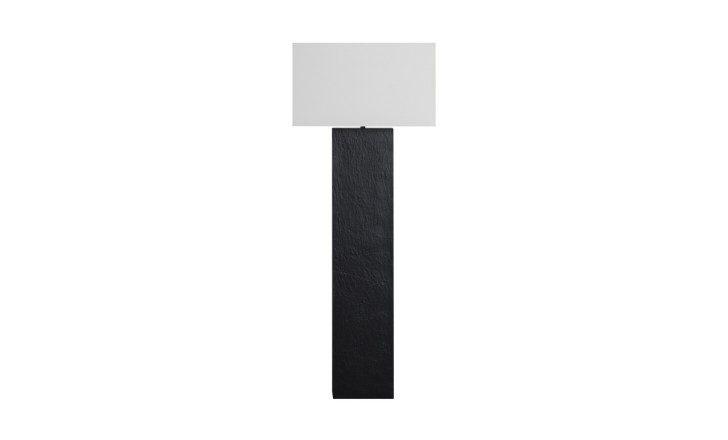
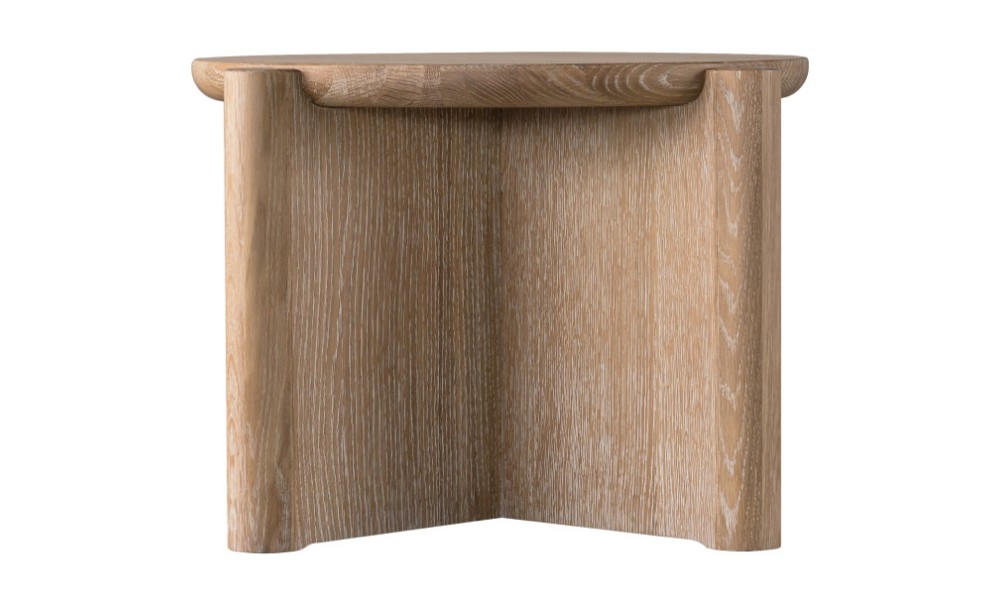
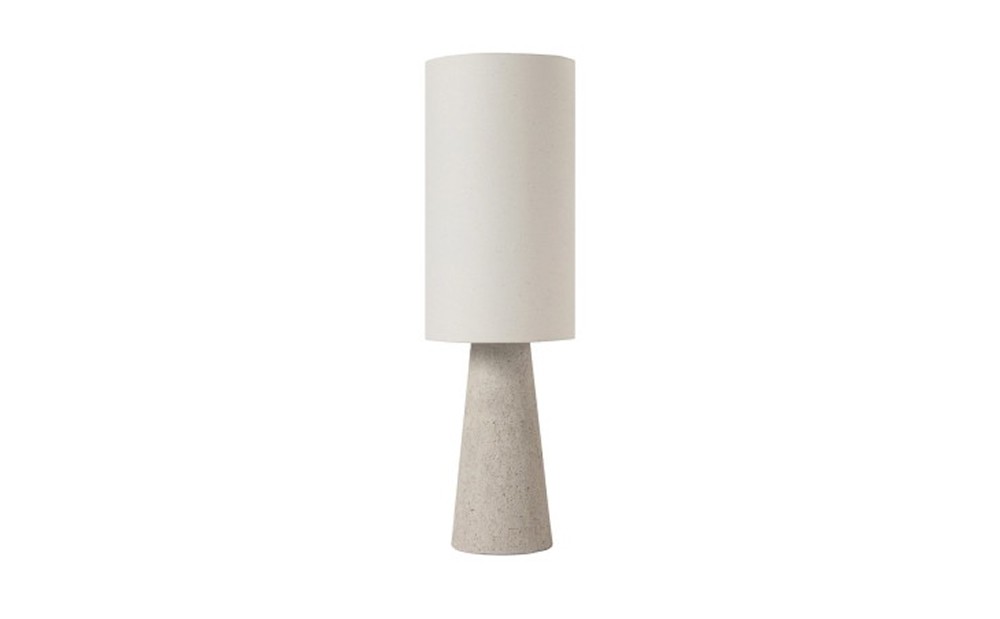
Two of the sections sit at right angles to the rest, creating a scene of their own – a quieter corner, where a companion seated on the adjacent sections stays in view and conversation can unfold at its own pace. Or stretch out and watch the landscape beyond the window. For a slow read, everything is to hand: the Ganges Table Lamp sits on the low side table, its fabric shade casting focused light onto the page. Behind it, the Sultan Floor Lamp casts a softer, ambient glow.
Accents and Textures
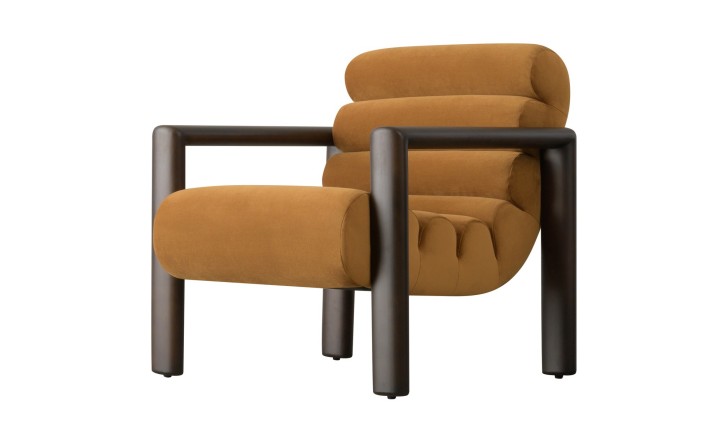
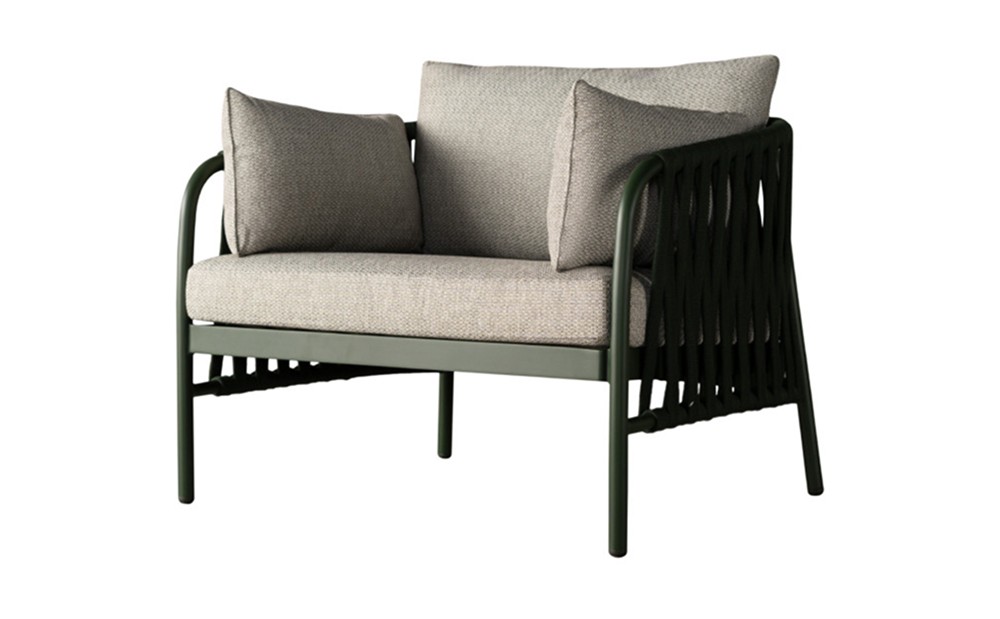
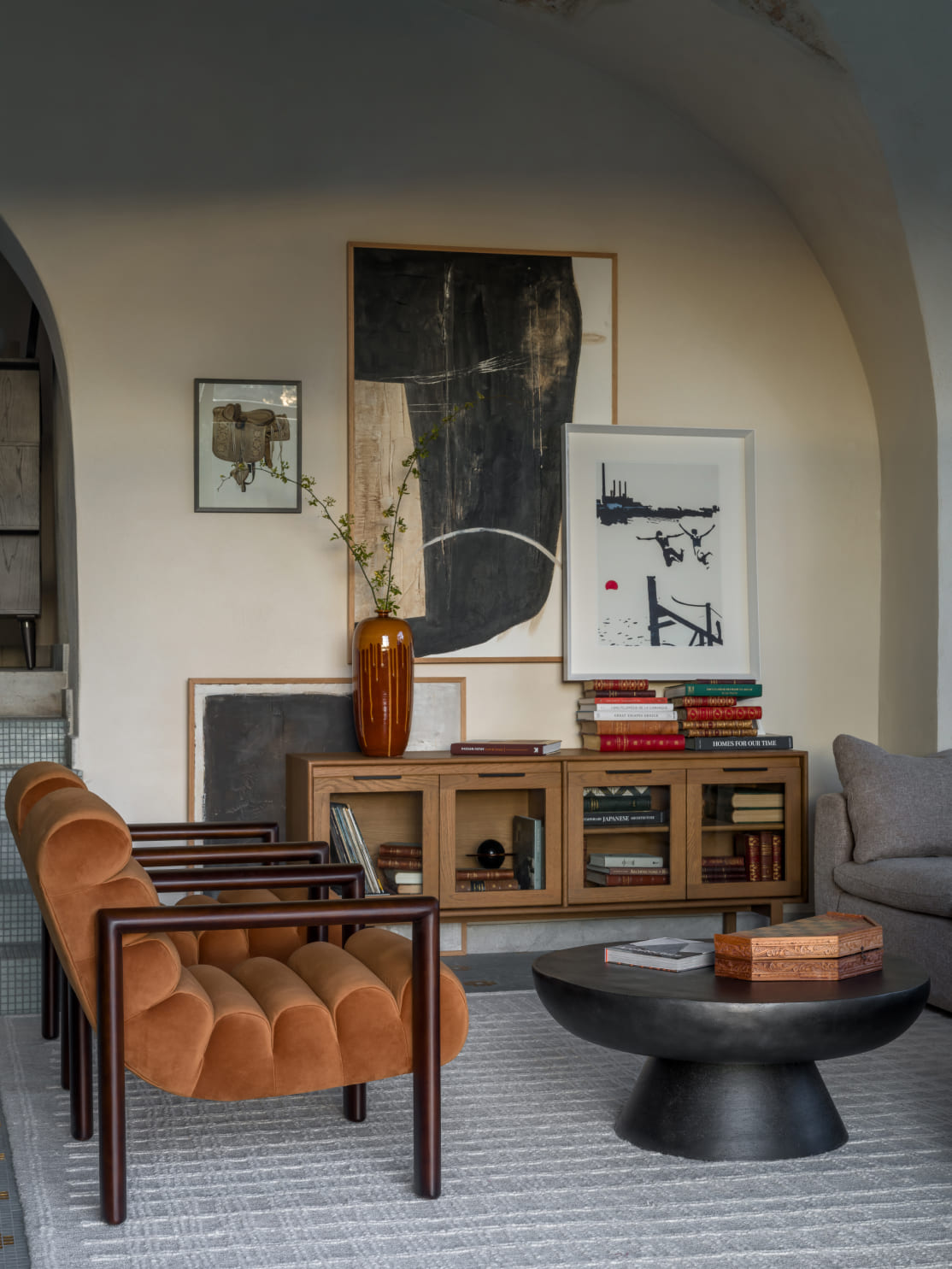
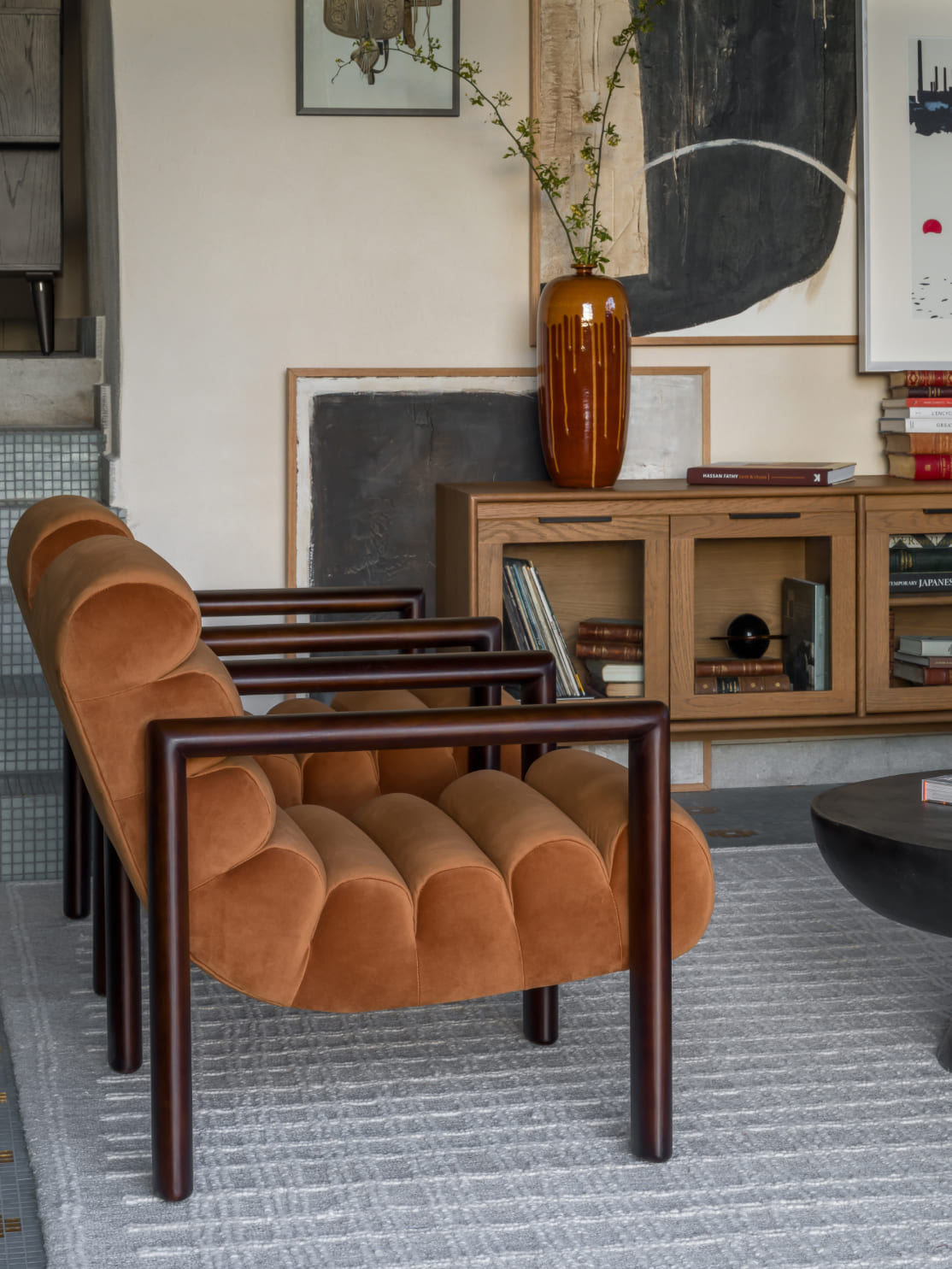
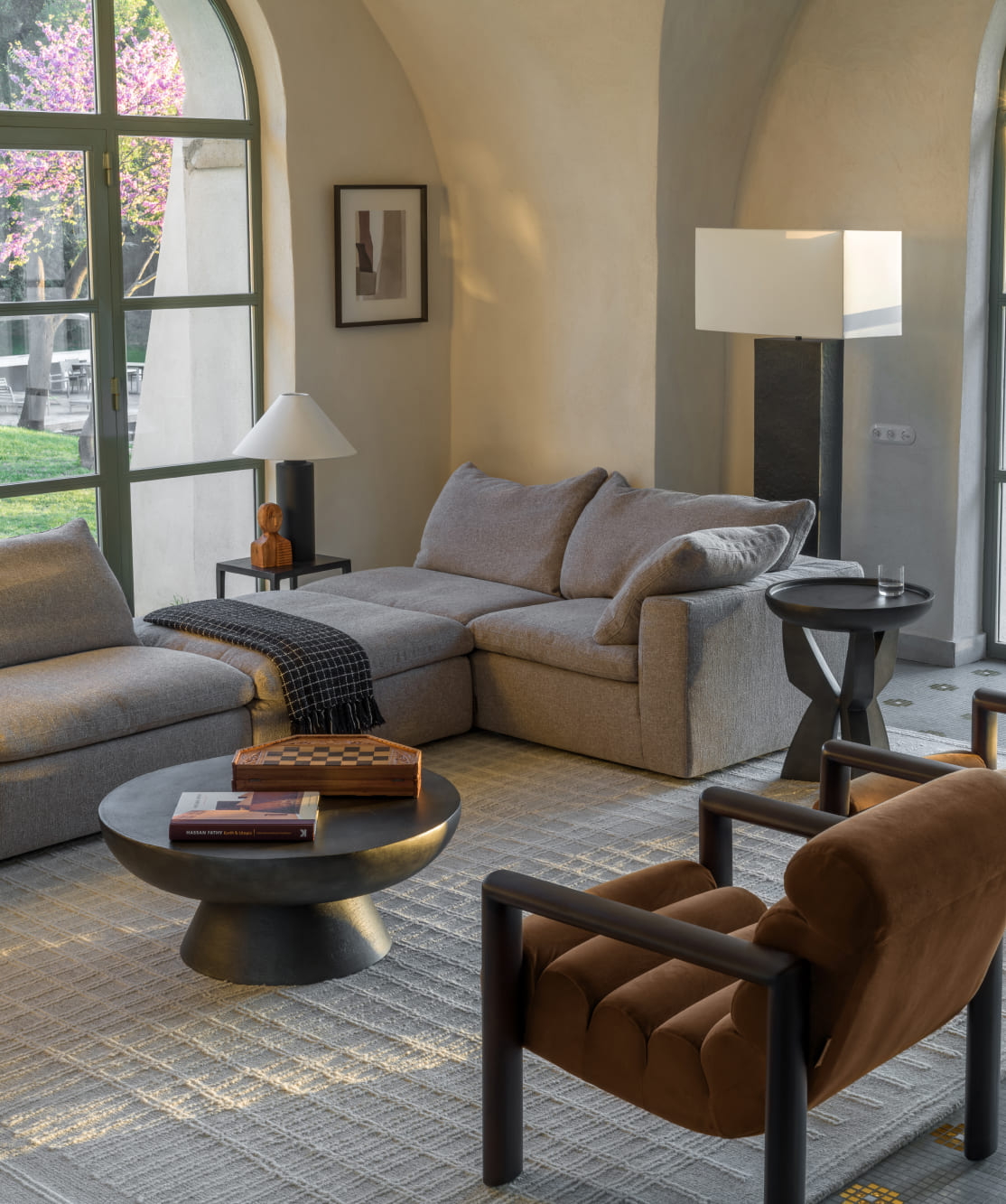
A pair of accent chairs – the Jerome Armchairs – set off the sofa's neutrality while gently playing against it. Their terracotta upholstery adds warmth and stylistic definition. The curves of the armrests and tubular frames echo the smooth lines of the arched windows and vaults – a motif that runs through the interior.
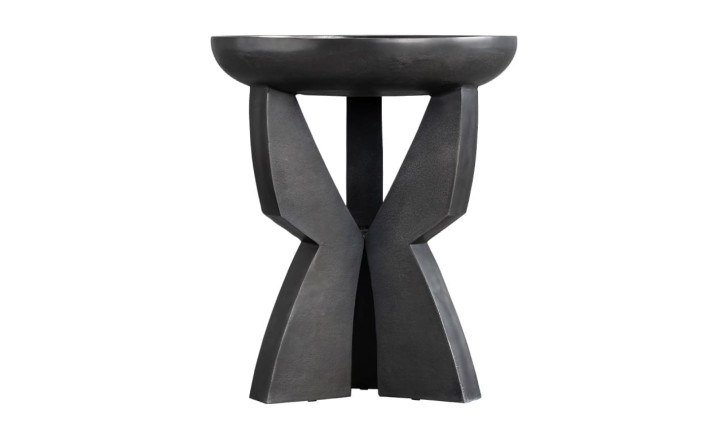
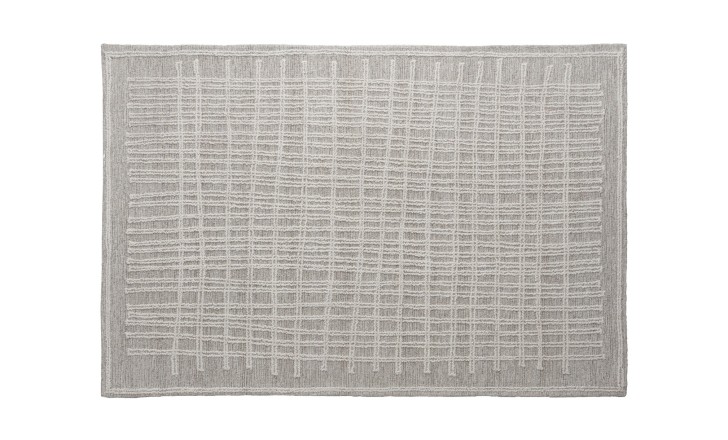
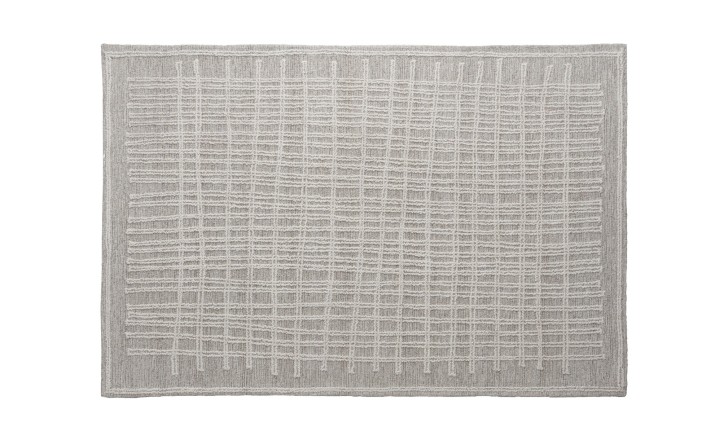
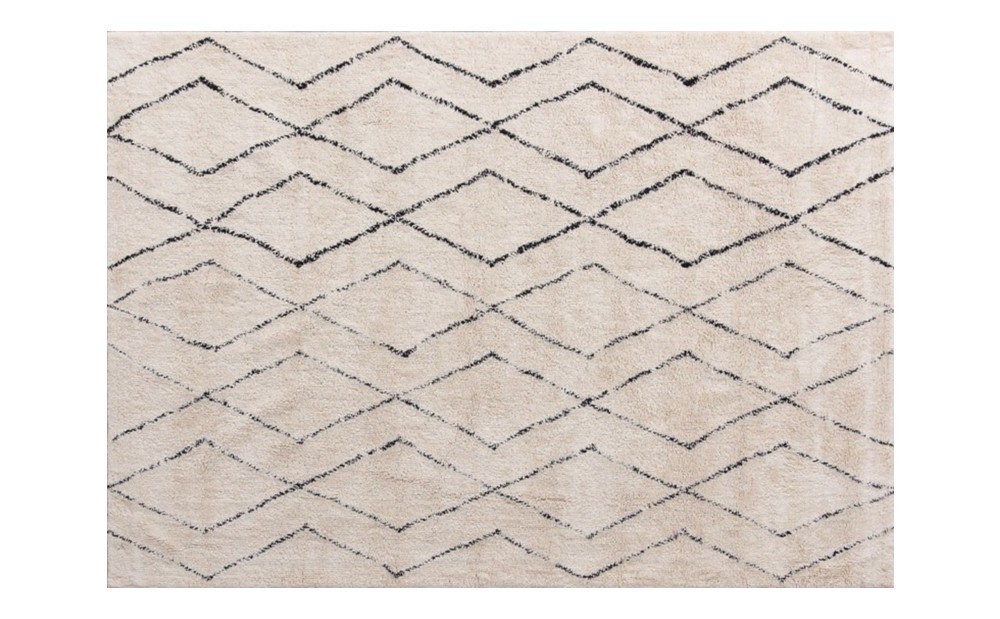
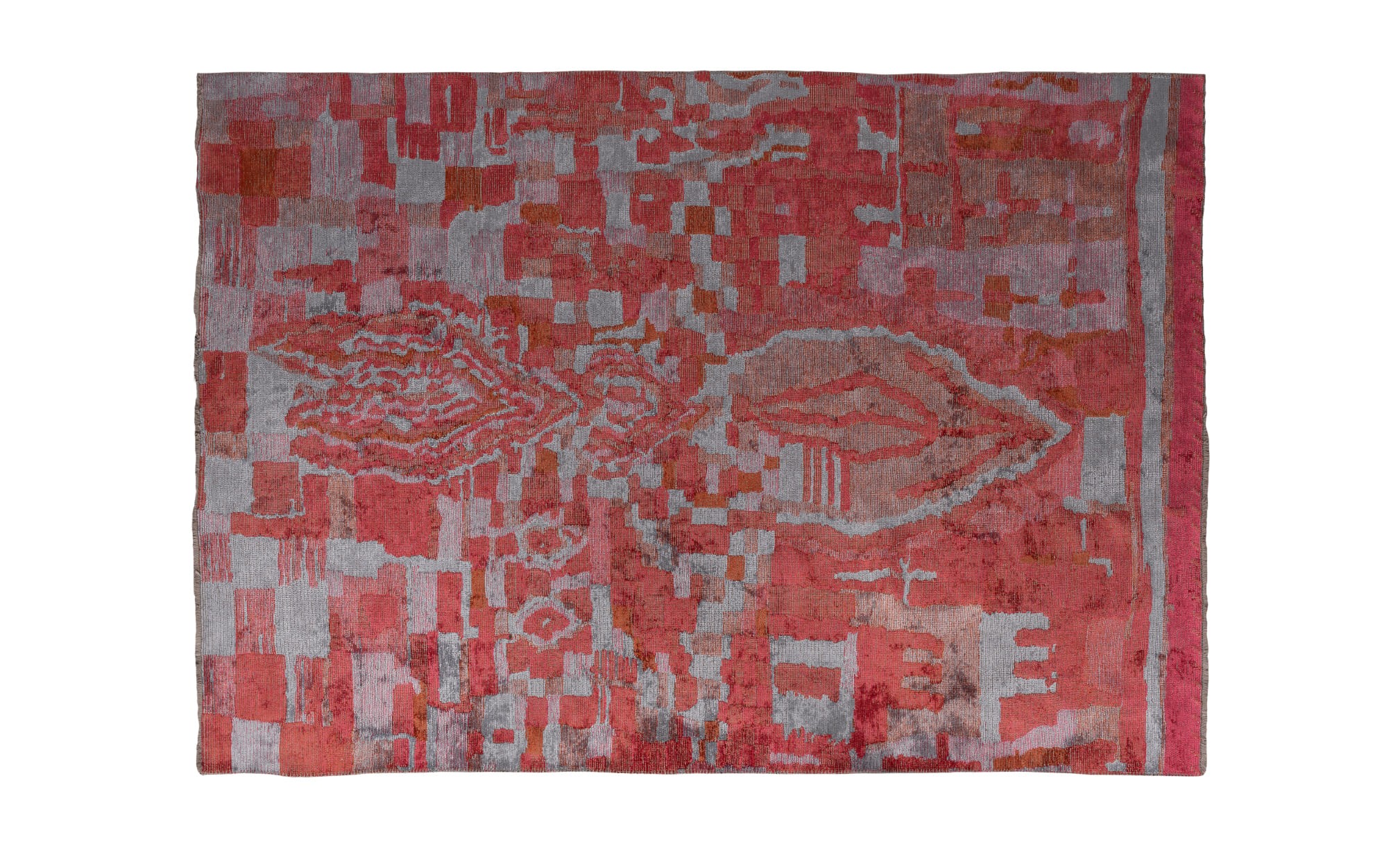
In daylight, the rug shows its sculpted grid pattern, never demanding attention. The visual weight comes from elsewhere: dark, heavy side tables and lamp bases echo the chair frames and ground the composition.
Acts of Display
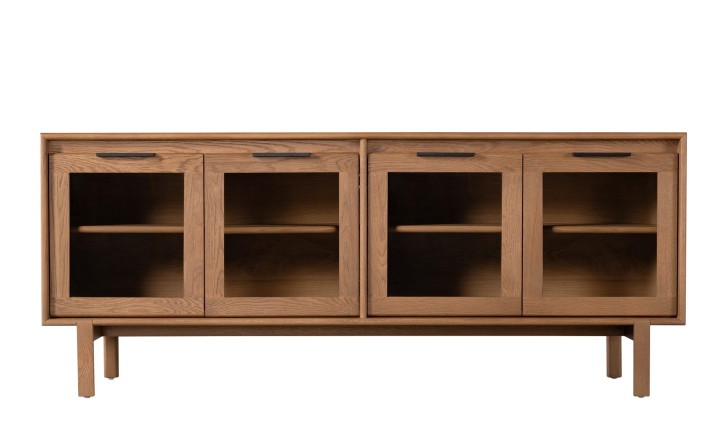
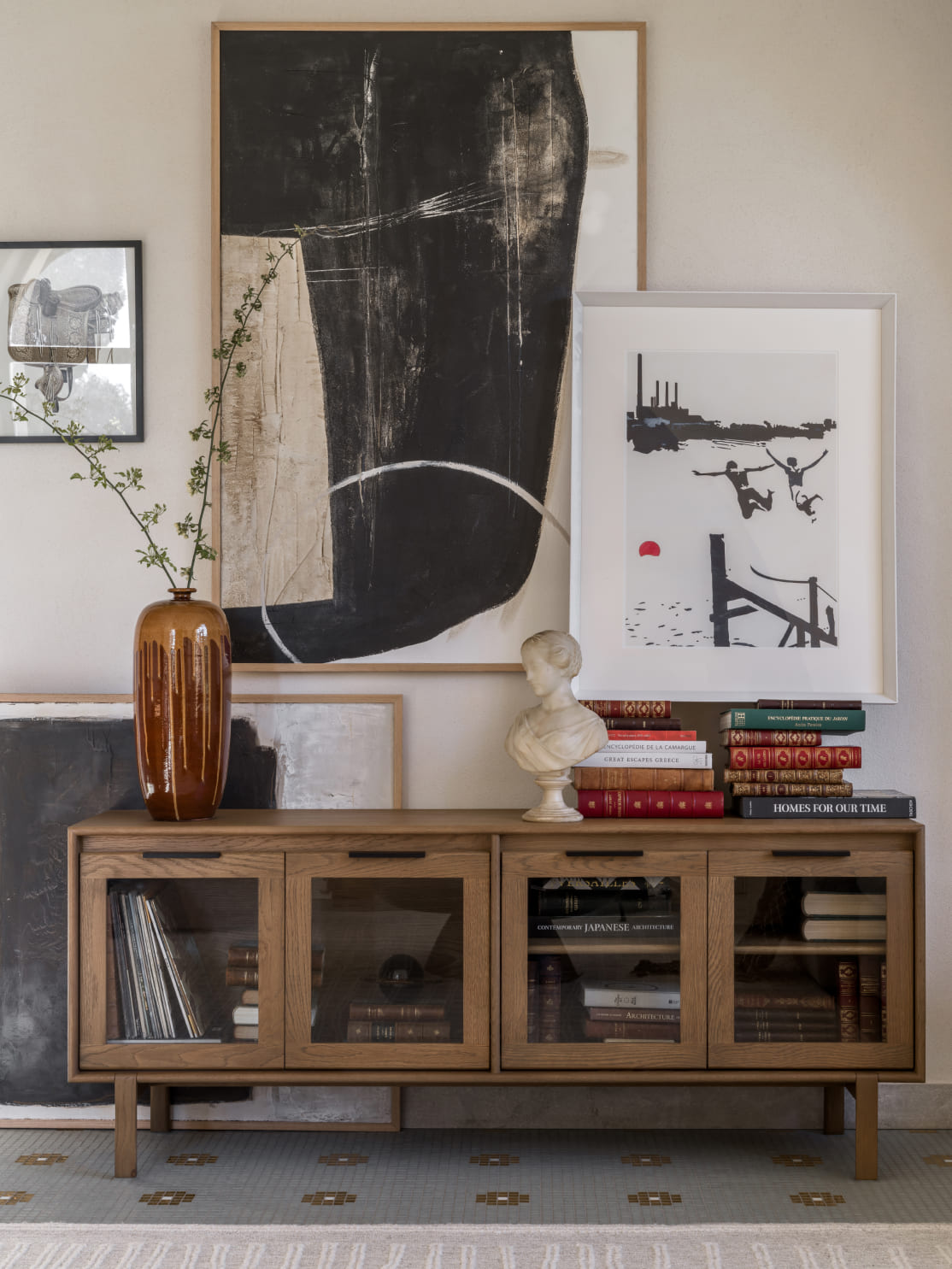
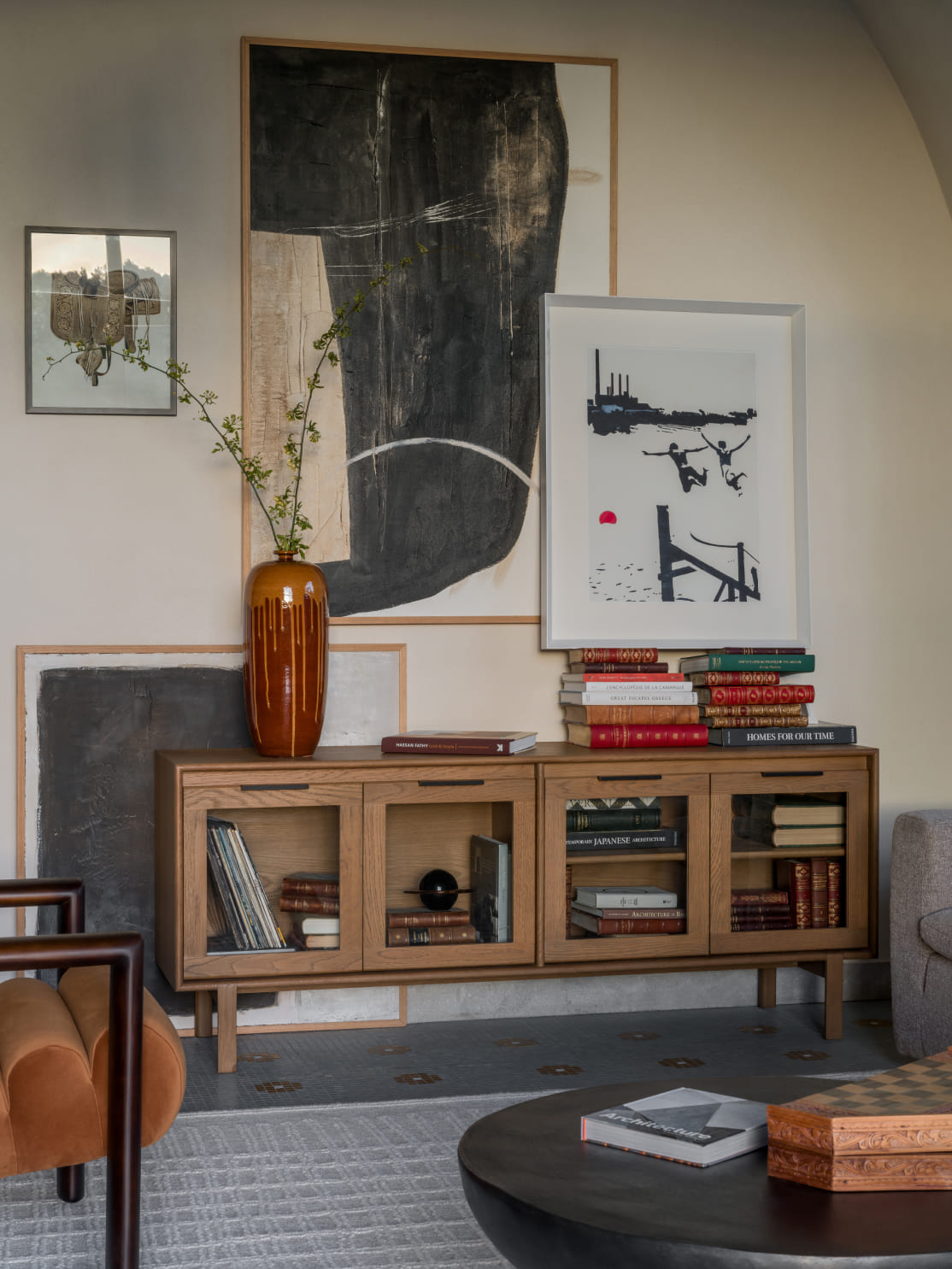
This cabinet comes from British designer James Patterson's JP Line 6.0 collection. It draws on the 1950s – low-slung, graphic, with a subtle retro feel. The glass doors keep it light: the texture inside reads through, and the cabinet itself takes on an almost museum-like presence.
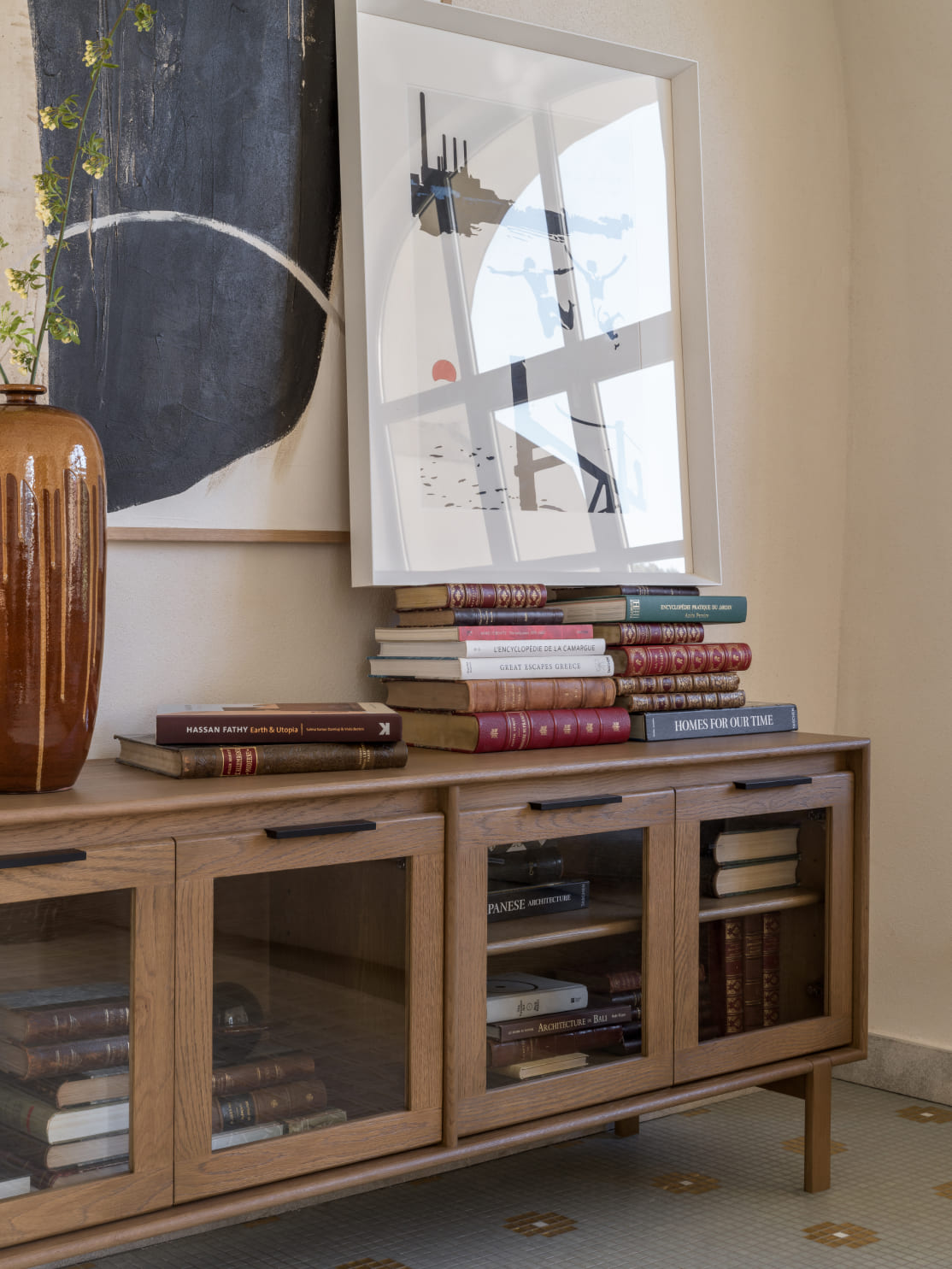
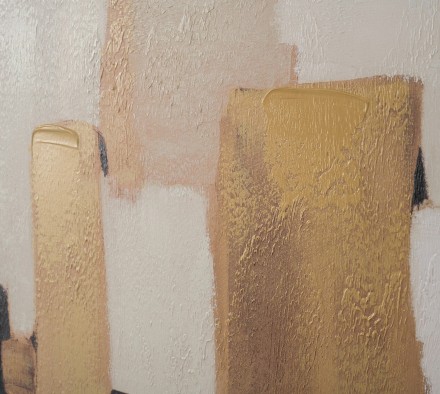
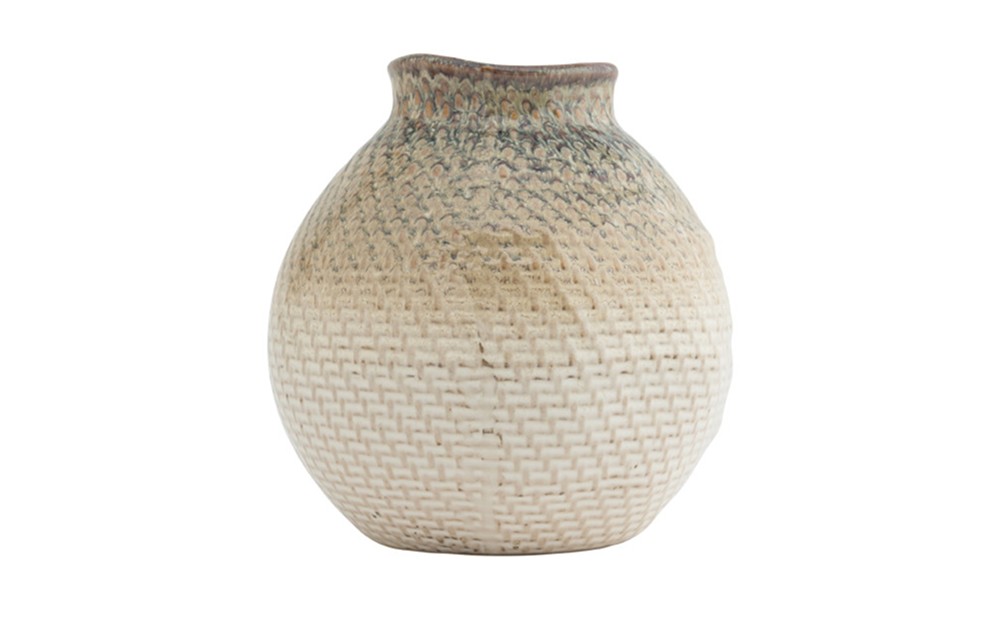
With the furniture mostly low, the verticality has to come from somewhere else. A tall vase pulls the eye up to the vaults. Next to it, a graphic print leans against the wall, propped on two stacks of books that serve as a makeshift pedestal. Nothing is quite fixed in place – the room still feels in the making.
Final Chord
The palette is mostly held back: red, emerald, and terracotta-clay appear in measured doses, giving the room a quiet vibrancy.
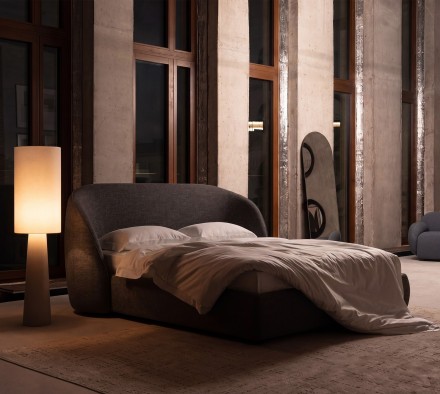
Everything in the room sits between two impulses: avant-garde and canon, the open garden and the contained library. In the evening, when the arched windows turn to dark mirrors, the room turns inward – to the books, to the conversation, to what's personal and what matters.
Items
All products