

Uno: Spanish Heritage, Italian Artistry
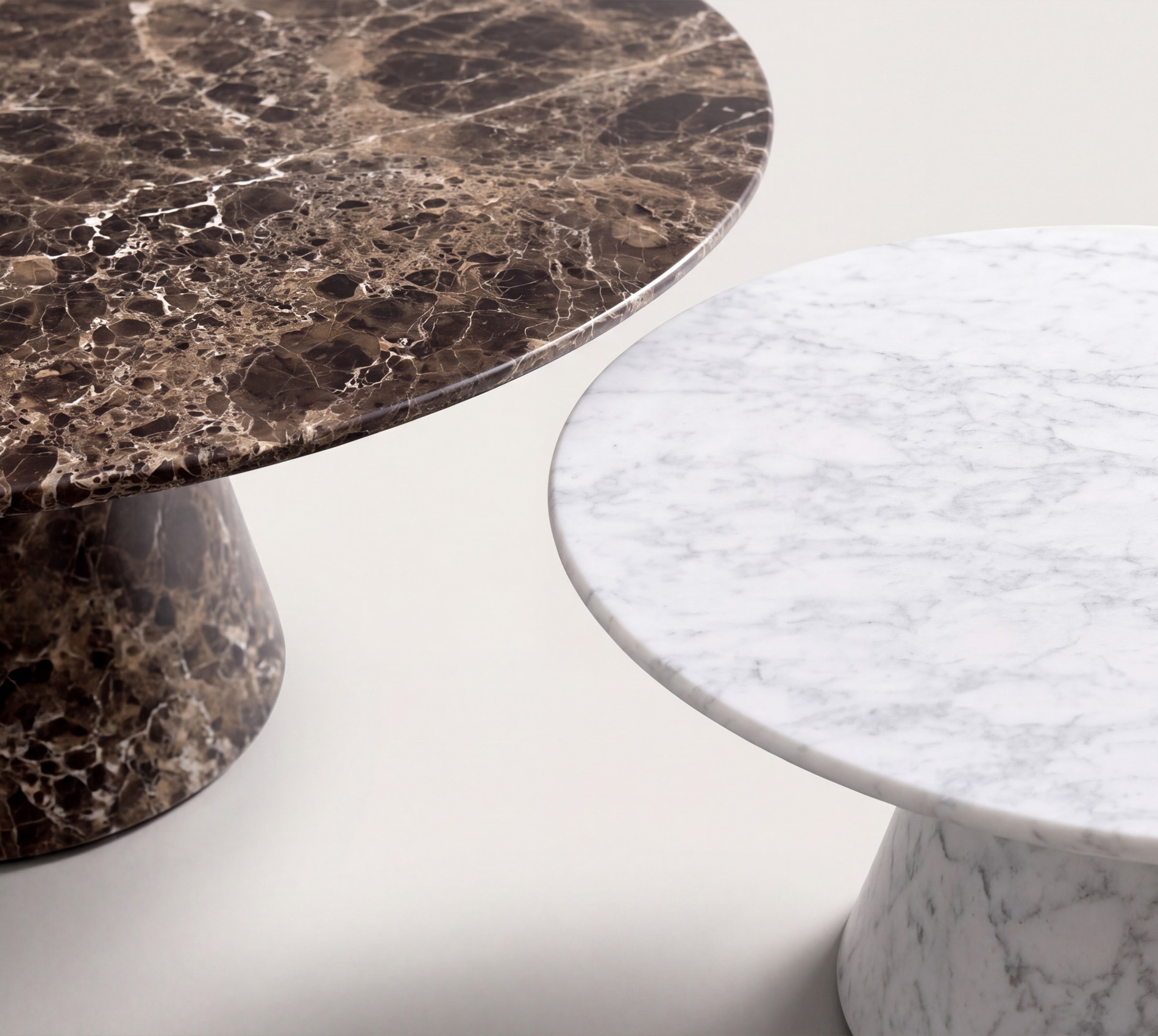
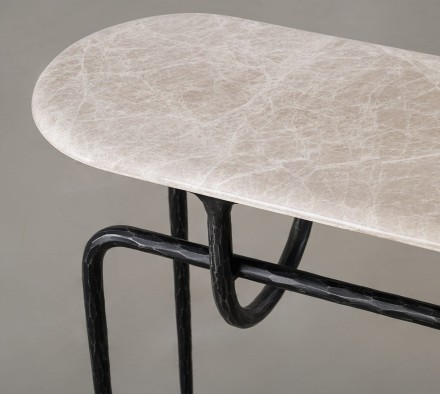
Carrara marble has been quarried from the Apuan Alps in northern Tuscany for more than two thousand years. The white stone, with its soft grey veining, was used by the Romans for the Pantheon. Michelangelo travelled to the quarries himself to choose the block for 'David', and stayed there for months. The same range now supplies the slabs for the new Uno collection – each table cut from a single piece of stone, hand-finished, with no two surfaces sharing the same pattern of veining.
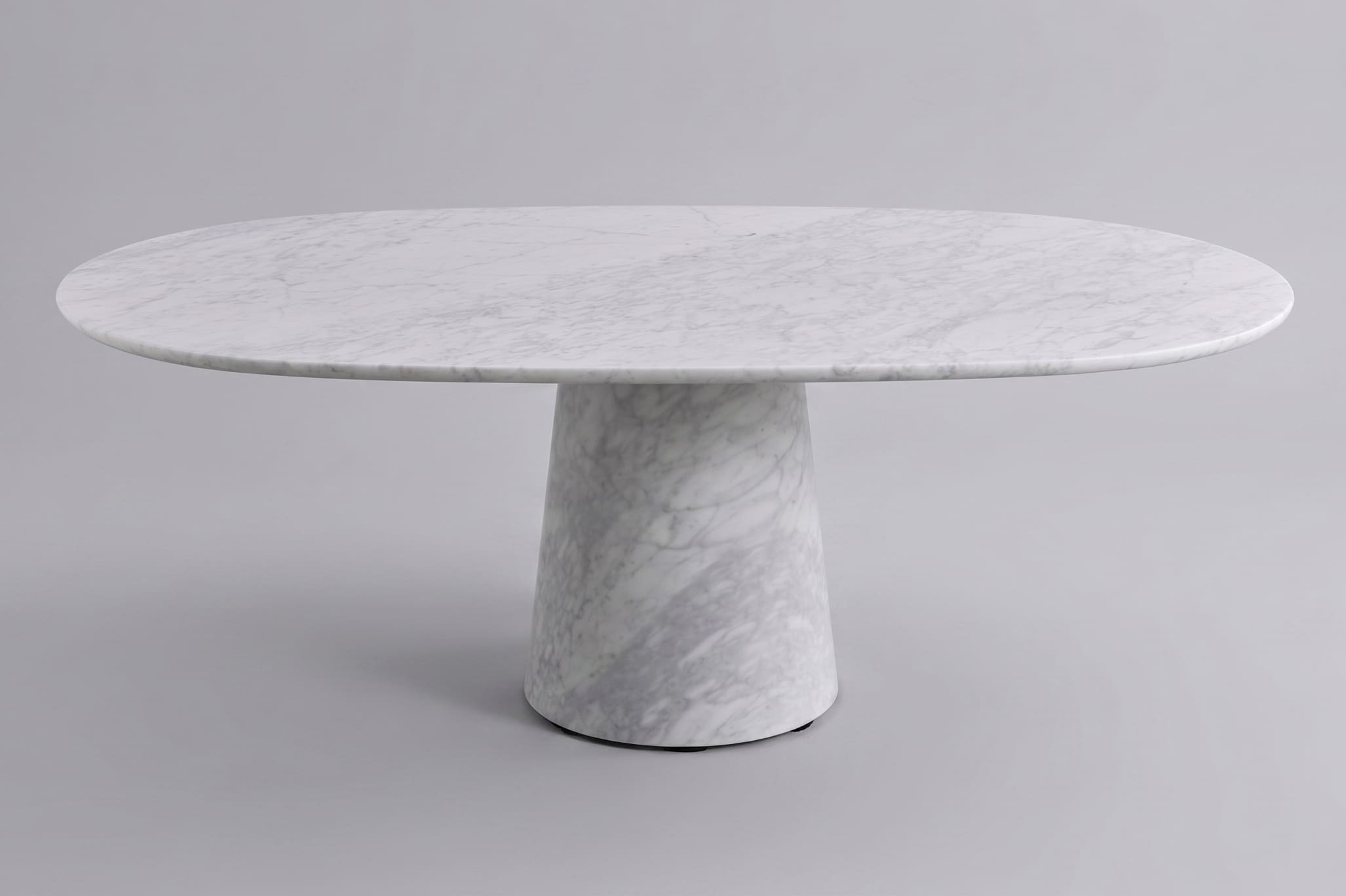
Uno means 'one' in Italian. In this collection, the name describes the construction as much as the idea. Each table is the stone itself – not a veneer on a substrate, but a single block of marble shaped by hand. Four tables in total: two forms, two materials.
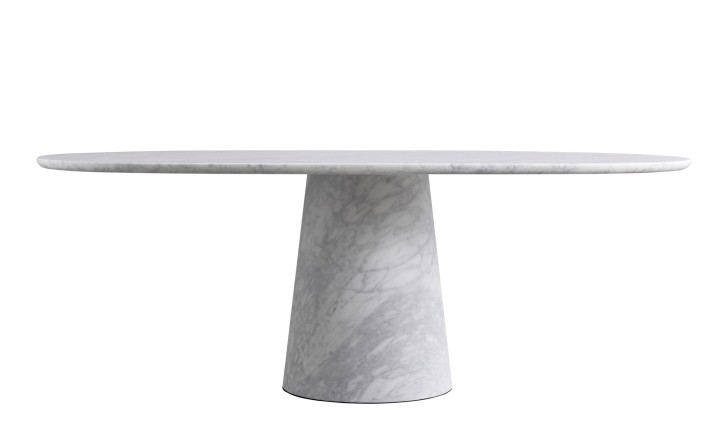
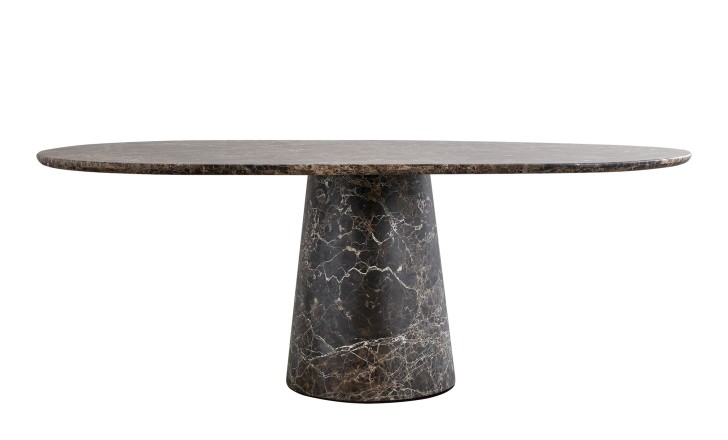
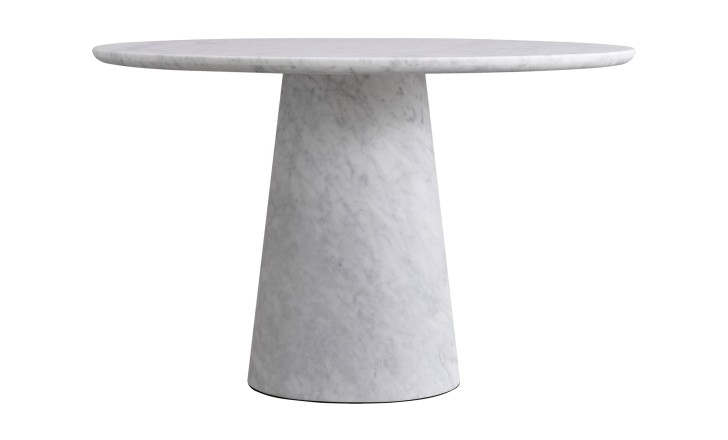
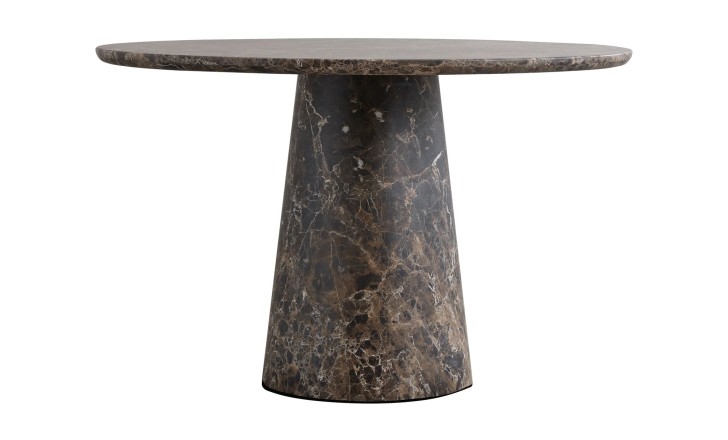
Hand-finished solid marble dining tables from the major Italian houses run into the high tens of thousands of AED, often into six figures. The Uno collection starts at AED 21,340
Carrara and Dark Emperador
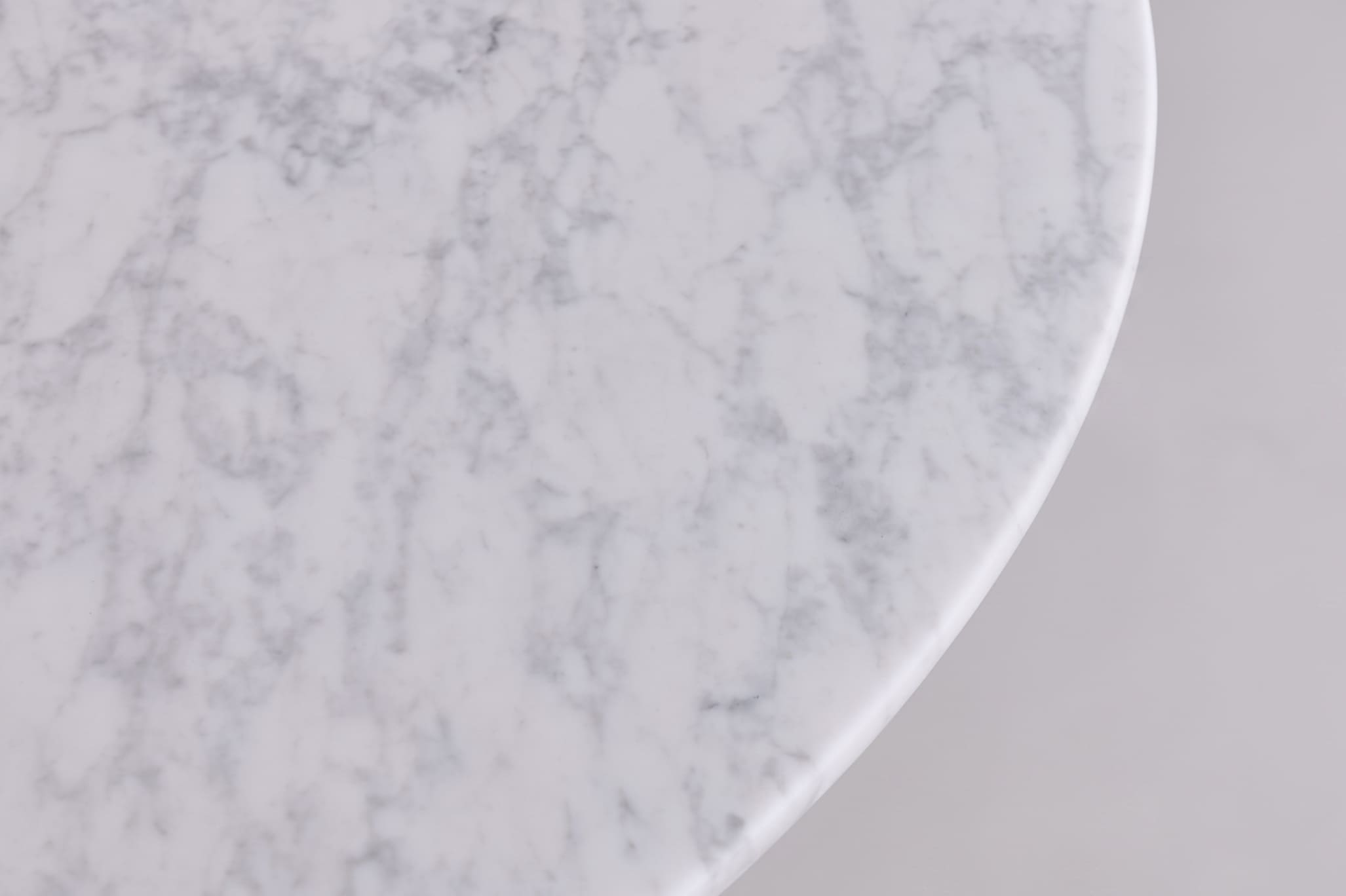
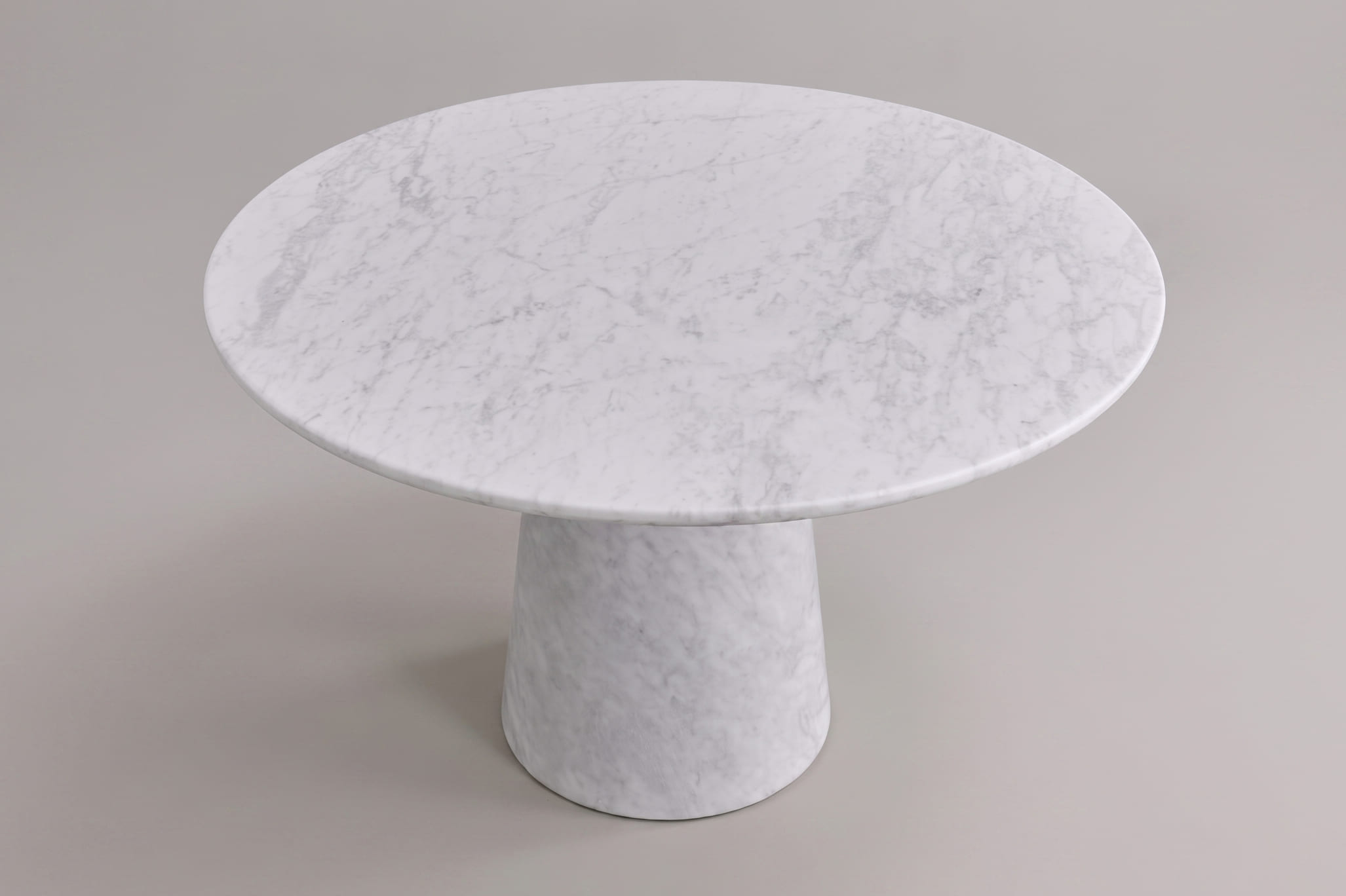
Carrara is named after the Tuscan town at the foot of the Apuan Alps, where the marble has been quarried since Roman times. The Pantheon, Trajan's Column, much of the sculpture in the Vatican – all of it was cut from this range. Michelangelo's 'David' and 'Pietà' are Carrara. So are Bernini's 'Apollo and Daphne' and 'Ecstasy of Saint Teresa'. Sculptors went there because the stone holds fine detail without crumbling, and because the colour – a soft white with grey-blue veining – takes light well. In the Uno tables, the same stone settles a room without dominating it.
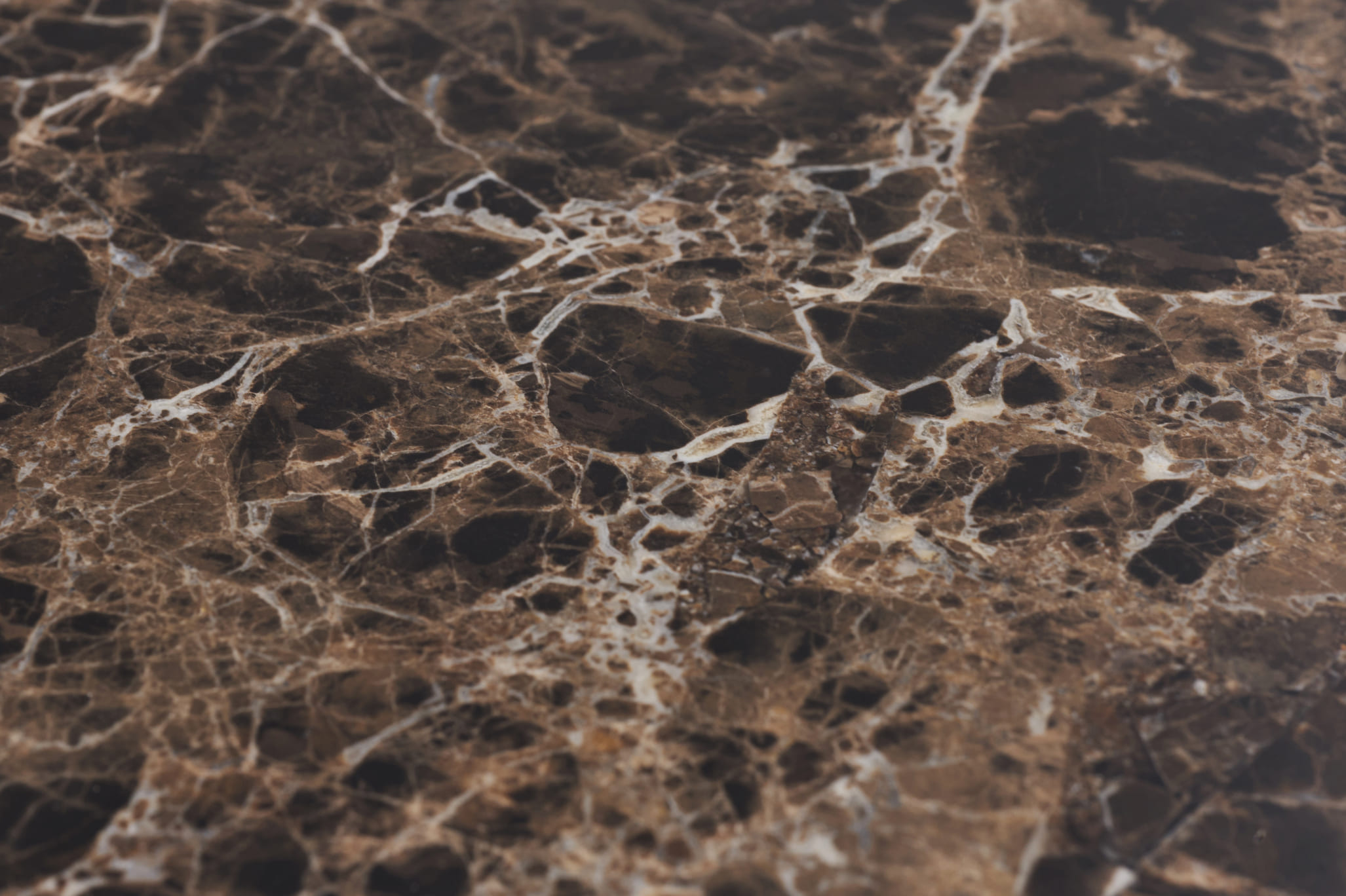
Dark Emperador is a Spanish marble, quarried in a narrow band of southern Spain across Murcia and Alicante. It was used widely in palace and church interiors across the Iberian peninsula. The colour reads as deep brown at first; under direct light, a network of golden veins comes forward. Where Carrara opens a room, Dark Emperador grounds it.
Cut From One Block
Each Uno table is shaped from a single piece of marble. The top is one slab; the base is a tapered cone of the same stone. Both are monolithic. Nothing is laminated, nothing veneered. The surfaces are finished by hand with a soft matt polish, which gives the stone a quieter presence than gloss and protects against everyday marks.
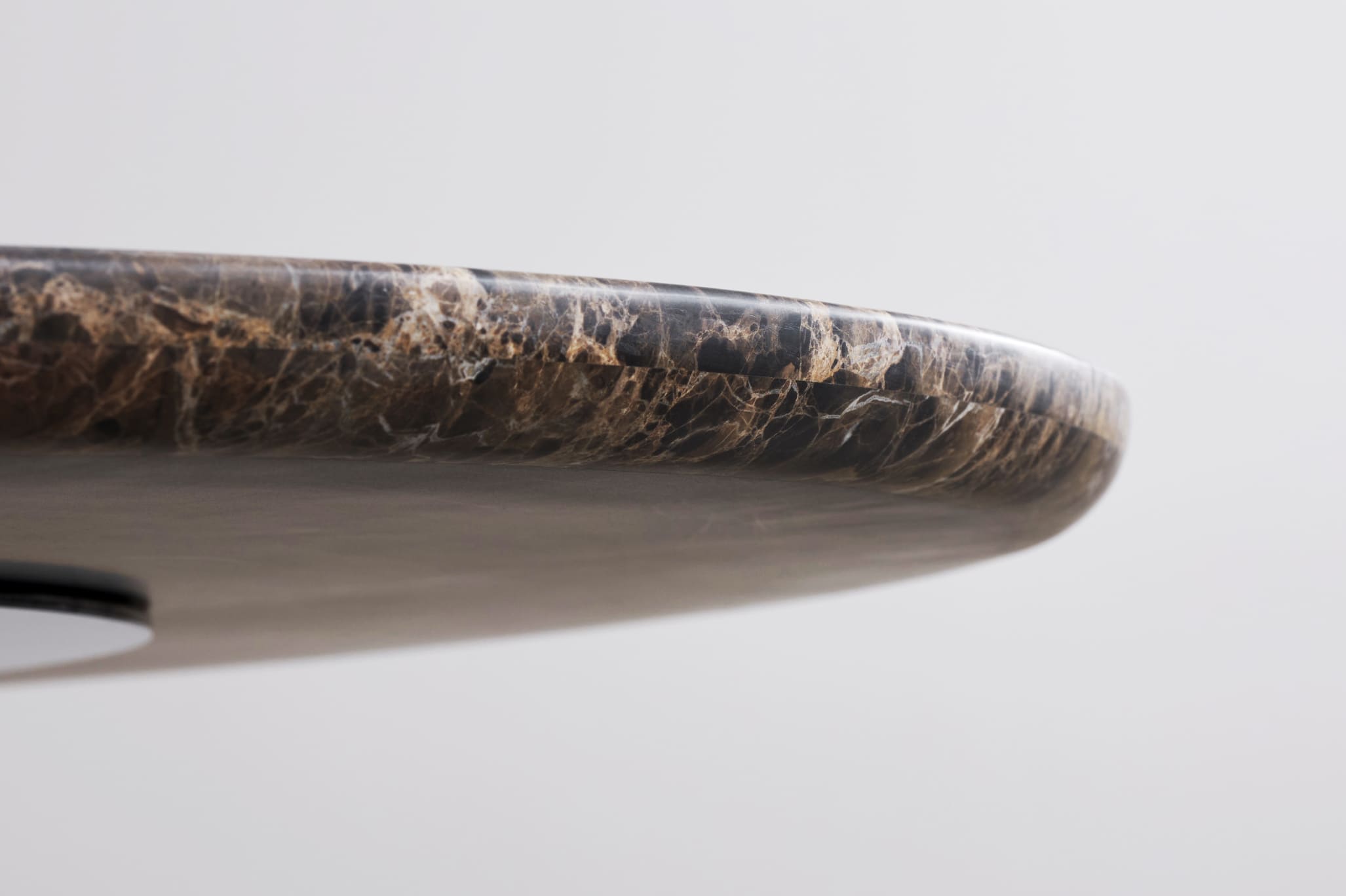
A steel plate is set into the underside of the top, where it meets the base. The plate distributes load across the join and keeps the stone supported from below; in use, it is invisible. The table arrives in two pieces – top and base – and can be separated again if the house moves. The marble is never stressed at the connection.
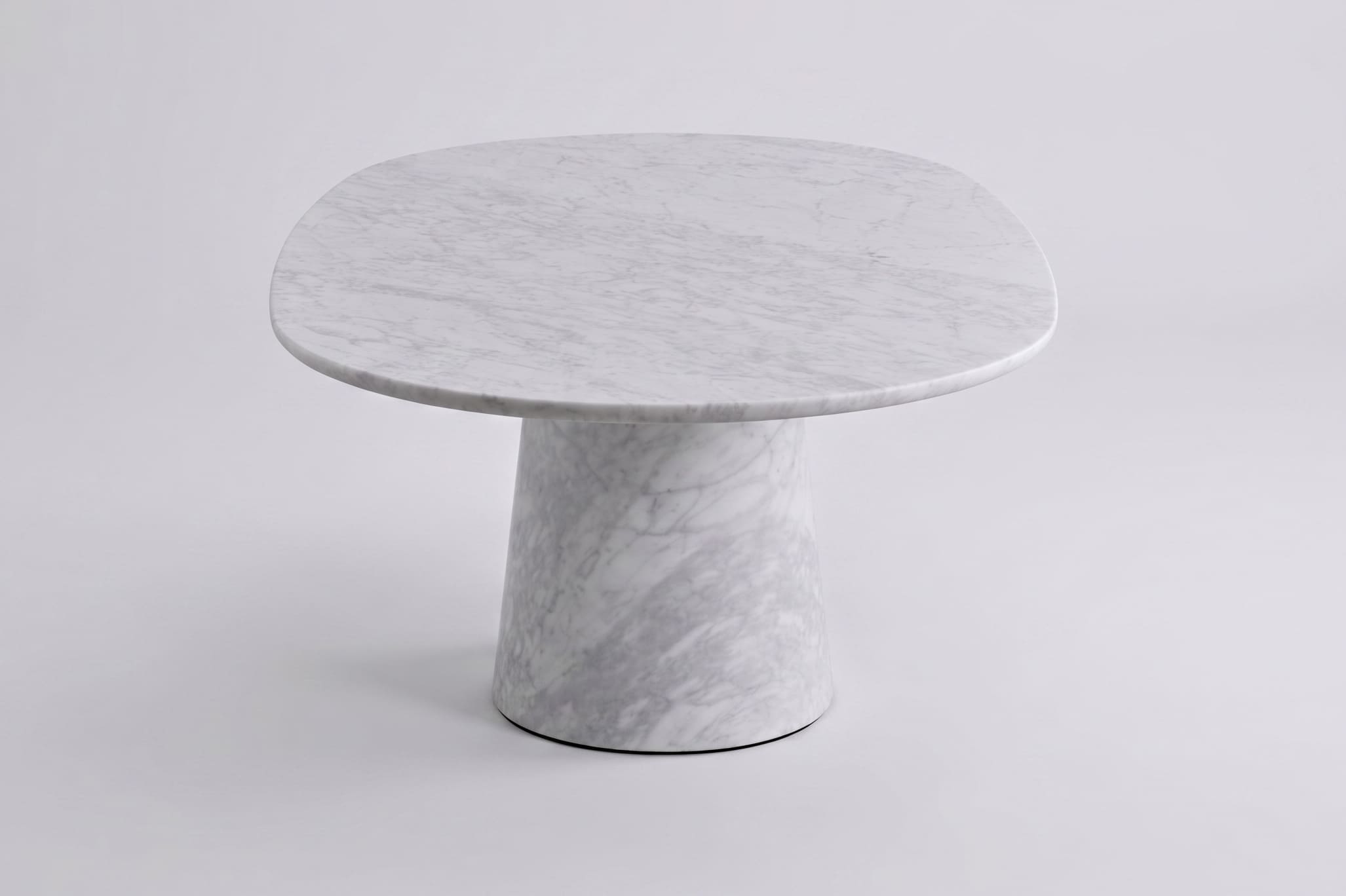
Because each piece is cut from its own slab, the veining is different on every table. Two tables of the same marble, the same form, the same dimensions will not have the same surface. The stone decides.
Round and Oval
The collection has two forms in each marble. The round table is 152 cm in diameter and seats six with no head or foot. Without corners, the geometry of the meal is even; conversation moves around the table rather than along it.
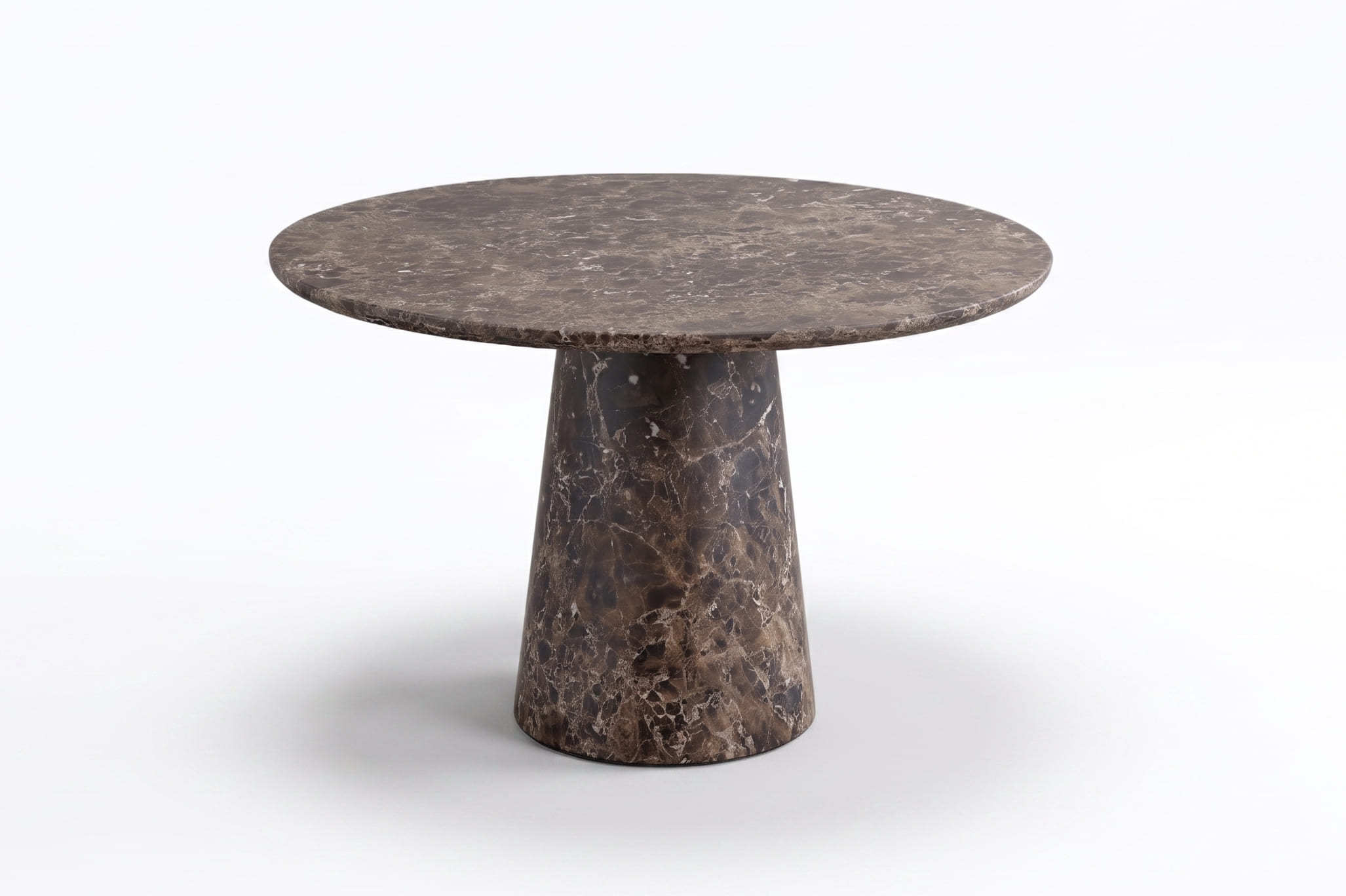
The oval is 210 cm long and seats eight or more. It keeps the soft contour of the round version but extends it for longer gatherings – the kind of dining room that opens onto a garden or onto a view, with the table holding the centre of a larger space.
Care
- Wipe the top with a soft microfibre cloth and warm water;
- Place a pad under hot dishes;
- Once or twice a year, clean with a pH-neutral product made for natural stone.
A care card ships with each table.
Where the Room Begins
The four Uno tables can be seen at the Dantone Home showrooms, where the veining, the matt surface and the weight of each piece can be read first-hand.
A design consultation is available for fitting the table into a specific room: choosing between Carrara and Dark Emperador, between round and oval, and pairing the stone with the right chairs. The session is with a Dantone Home designer, at no cost.